Hi! I’m Pastor Heath Pukallus, a pastor at Lutheran Mission Australia. On this site I seek to present Christ centred sermons, which clearly distinguish between Law and Gospel. The Law tells us what we are to be and do. Therefore, it shows us our sin. And, the Gospel tells us what God does for us, it blesses us unconditionally, dependant on Jesus' obedience. Therefore, it shows us God's grace despite our sin. Grace, Mercy & Peace to you. Friarpuk
In the wake of the Sydney
shooting massacre, let us pray:
Heavenly Father, yesterday,
the third Sunday of Advent, should have been a day of joy, wrapped in the arms
of hope, peace, and steadfast love - in your promise that Jesus is coming
again. Yet we tarry here in an existence that exposes the wretchedness
humanity faces with its own human condition. Sunday the fourteenth of
December now stands as a day of great turmoil, terror, and tragedy, in the
minds and hearts of Australians in the wake of the Sydney Bondi shooting.
Lord in your mercy… hear
our prayer.
Flood hearts and minds with
soothing that only the Holy Spirit can bring at a time like this. Be with
those who grieve the death of loved ones. Help them to grieve with a
Godly grief and keep them free from vengeful sin. Where hearts are angry
replace this with the compassion of your Son, Jesus Christ, who as the Son of
Man, became a servant of salvation to us all.
Lord in your mercy… hear
our prayer.
Be with those confused and
traumatised by the chaos of the shooting. Rally medical and mental
supports around them so ripples of resentment do not radiate through
them. Empower our Australian community with the forgiveness of our Lord
Jesus Christ who forgave us all from the cross and calls us to carry this cross
of compassion and sacrifice in our lives.
Lord in your mercy… hear
our prayer.
Heavenly Father, the Jewish
community are your chosen people, be with this community in Australia, and in
Sydney. Console hurting hearts! Comfort them in their grief and
confusion. Give to them hearts to receive their Messiah, Jesus Christ who
also died for them.
Lord in your mercy… hear
our prayer.
Renew your call to the Jewish
community in Israel and throughout the world. Help them to beat their
swords into ploughshares, to lay down their weapons of war, and walk the way of
peace. Help them to see the way of Jesus Christ in his cross of
salvation.
Lord in your mercy… hear
our prayer.
Be with the Gentile
communities, especially here in Australia, but also in the Middle East, and
across the world. Give them avenues to express their hurt and anger that
does not replicate the hostilities that have occurred. Fill their hearts with
compassion and forgiveness that can only come through your Holy Spirit.
Lord in your mercy… hear
our prayer.
Encourage your Holy Church,
the body of Christ, with boldness to “come out” as Christians. Help all
Christians to join in with the works of Jesus, our great High Priest at your
right hand, in his holy petitions of prayer. Help all Christians to
recognise that our prayers are powerful in Jesus’ name. When we are so
stunned and dumbstruck by what has happened, help us to trust in the
petitions of Lord’s Pray (Matthew 6:9-13, Luke 11:2-4) and the Psalms, knowing
that the Word of God is a double edged sword given to us by the Word made
Flesh, your Son, Jesus Christ. That it’s a sword dissecting sin from the
hearts of those who pray and from the hearts of those for whom we pray!
Lord in your mercy… hear
our prayer.
Overcome the temptation in us
to join the shooters in their sin. Help us to place our
self-righteousness, self-justification, and our natural tendency for revenge,
on the cross. Show us by the power of the Holy Spirit in Jesus’
word that hatred is akin to murder in God’s eyes (Matthew 5:21-22). Where
we struggle with resentment and feelings of revenge help us take up the call to
repentance and replace it with peace in your holy presence.
Lord in your mercy… hear
our prayer.
As we stand before you in
this season of Advent, help us all to consider our part in why you sent your
Son to die on the cross. Fill us with doubtless hope in the resurrection
of the dead, in your peace that surpasses all human understanding, joy in the
good news that you are coming again to put all things right, and love for each
other as Christ loves us.
The Apostle Paul writes to the Galatians because they’re in
the process of turning their backs on the freedom they have won in Jesus
Christ.
He gets straight to the point in chapter one, saying, “I am astonished that you are so quickly deserting him who called you in
the grace of Christ and are turning to a different gospel— not that there is
another one, but there are some who trouble you and want to distort the gospel
of Christ. But even if we or an angel from heaven should preach to you a gospel
contrary to the one we preached to you, let him be accursed. As we have said
before, so now I say again: If anyone is preaching to you a gospel contrary to
the one you received, let him be accursed.” (Galatians 1:6–9 ESV)
The issue is a group was seeking to reintroduced
circumcision as an addition for salvation, and the Galatians were welcoming it. Circumcision is nothing in itself, but the
requirement to be circumcised is righteousness through works, that destroys all
the works of God that brings a person to baptism and keeps one in their
baptism.
Saint Paul uses strong language since any works that one
adds to God’s works, makes you, me, and the Galatians liable of sinning against
the Holy Spirit. When you and I use freedom to sin against God,
you and I are addressed as ill witted Galatians, as Paul brings shame on them,
saying, “O foolish
Galatians! Who has bewitched you? It was before your eyes that Jesus Christ was
publicly portrayed as crucified. Let me ask you only this: Did you receive the
Spirit by works of the law or by hearing with faith? Are you so foolish? Having
begun by the Spirit, are you now being perfected by the flesh? Did you suffer
so many things in vain—if indeed it was in vain? Does he who supplies the
Spirit to you and works miracles among you do so by works of the law, or by
hearing with faith.” (Galatians 3:1–5 ESV)
The Galatians were on the brink of piling contempt on the
work of Jesus Christ and the Holy Spirit through their actions of freedom. To those who were forcing the Galatians back
to circumcision, Paul says, “I
wish those who unsettle you would emasculate themselves!”(Galatians 5:12 ESV) In other words, rather than forcing others
into works of circumcision, he would rather those who demanded this would
amputate everything off themselves, so there was no possibility of
circumcision.
However, rather than circumcision or emasculation, that
“cuts off”, Paul points out that all have, “put on” Jesus Christ in baptism —
both Jew and Gentile, slave or free, man and woman. All now share in the same discipleship! Anything one thinks they need to add to this,
to be effective, undermines the work of the Holy Spirit and submits one to a
yoke of slavery once again. Anyone who
requires someone else to do these additional works, be it circumcision or any other work,
works contrary to Jesus Christ, with a “different or distorted gospel”. When one seeks or orders this for effective
discipleship, Paul says, “Let them be accursed”!
Emasculation and being accursed are strong words that hopefully
move you to consider how you function as a Christian and as Christians. Or, better said, how you allow the Holy Spirit
to give you life! Paul says to you, “For you were called to freedom, brothers. Only
do not use your freedom as an opportunity for the flesh, but through love serve
one another.” (Galatians
5:13 ESV)
Today “love” can be a slippery word. Love is love, the worldly banners proclaim,
but the hidden truth, of the world, is all love is not the love the Holy Spirit
works in and through us! Three types of
love can be noted here, but there is only one love to which Paul points.
The first two are passions of the flesh. This is desire from within that is either
vulgar evil desires, or seemingly good righteous desires that sees one climb up
to God to do the greater good.
Vulgar evil desires or passions are self-explanatory. You and I know exactly what they are when one
lusts after, or hates, another person in their heart. But good righteous desires are a little more
difficult for us to discern. These
desires subtly deceive the faithful because they seem godly! But in fact, they’re the same fleshy desires
that deliver us ultimately into death.
Firstly, and foremostly, these good desires were the works
of circumcision amongst the Galatians.
But the works can be any works of righteousness that dilute and desecrate
the holy work of God the Father, in his Son, Jesus Christ, and the Holy
Spirit.
The problem of climbing up to do the work of greater good,
assumes we can climb up to God in the first place. Even in our minds, if we believe we have
ascended to the heights of God, we want to be like God. Then, like the circumcision party or any other
pietistic or self-righteous group, our own law is proclaimed for others to follow.
In the second place, the problem of climbing up to do the
work of greater good shows contempt for God’s will, his Word of law and gospel,
and for God himself, who always comes down, to create and recreate. We heard on Pentecost Sunday at Babel when
the world worked as one to build themselves up to God, God still had to come
down. And once there, he destroyed their
collective good, which in reality was not good at all.
Similarly, any greater good worked in God’s church needs to
be enacted by the Holy Spirit, lest it’s only an act of self-righteousness
against God’s righteousness. A work of Divine
love always begins with God, and ends with God, and it works in us to work for
God. Any other work just does not work.
When we realise our passions and desires don’t work, the
work of God has begun to bring Jew and gentile, slave and free, man and woman,
into step with the Holy Spirit. This is
the Holy Spirit, two step, of law and gospel!
This is the place where the Holy Spirit begins to teach you and me how
to be one church, in a beautiful dance with our Saviour, Jesus Christ. The Holy Spirit perfectly aligns us, the body
of Christ, and individual members of it, with the Head, our Lord Jesus Christ.
Jesus Christ came down to us and allowed the Holy Spirit to
choreograph him in his life and ministry.
This is the love of God to which Paul and the Apostles point us in God’s
Word. Now, Jesus and our Father send the
Holy Spirit to choreograph us, with the Word, to dance with Jesus in a Divine
Dance.
With this picture we can see how Paul calls us to allow the
Spirit to direct us into the fluidity of Christ’s love with him in this Divine
Duet. This is not a dance like a disco,
where individuals decide to do “whatever they like”, chaotically bouncing up and
immediately falling right back down, crashing into each other, like out-of-control
human pogo sticks!
Paul says, “But I say, walk by the Spirit, and
you will not gratify the desires of the flesh. For the desires of the flesh are
against the Spirit, and the desires of the Spirit are against the flesh, for
these are opposed to each other, to keep you from doing the things you want to
do. But if you are led by the Spirit, you are not under the law.”
(Galatians
5:16–18 ESV)
And so, Paul gives us the first of two lists in which we
are called to see ourselves in the reflection of God’s Word. In showing you the law in the first list, you
see the fickle fleshy reality of your dance moves, so the Holy Spirit can move
you and lead you, from the disjointed desire for a disco disaster, into the
dance that bears all the holy fruit in the second list.
In our
dance with Jesus Paul tells us exactly what the work of the Holy Spirit
is. “Those who belong to Christ Jesus
have crucified the flesh with its passions and desires.” (Galatians 5:24 ESV)
Therefore, “If we live by the Spirit, let us
also keep in step with the Spirit.” (Galatians 5:
25 ESV) Let us let the Holy Spirit keep on crucifying the flesh with its
passions and desires. Amen.
Extras for Contemplation
Let’s now look at the lists to
hear how the Holy Spirit works to keep us with in step with him, Jesus Christ,
and our Father in heaven.
Unhelpful fleshy desired
dance moves Paul warns won’t work to inherit the kingdom of God. (Galatians
5:19–21 ESV)
Sexual immorality – the Greek
word used here is from where we get the word pornography and includes all
sexual vulgar activities in heart or deed outside what God orders in creation.
Impurity – is to not be
cleansed, pruned, purged, or expiated by the work of Jesus Christ on the cross.
Sensuality – is to be
incontinent or filthy in the sense of lacking self-restraint of emotional
actions.
Idolatry – is worship of
created images.An idol is anything that
breaks the First Commandment, created physically, spiritually, or mentally.
Sorcery – this is a Greek word
from where we get the word pharmacy, and means magic and crafts, including but
not limited to, means of medication.The
spells and potions of occultic activity.
Enmity – Hostility, hatred,
being contrary or an adversary.
Strife – quarrelling,
disputing, wrangling.
Jealousy – indignation, being
offended, to covert.
Fits of Anger – heated
impassioned outbursts
Rivalries – Factions that
stimulate undermining behaviour.
Dissensions – Disunion that
causes two positions or standings.
Divisions – this is often
confused with division between people but comes from the Greek word from where
we get the English word heresy.So, it
is division or sect against God and his Word.
Envy (and Murder) – Ill will,
character assassination, to spoil, to shrivel, to wither, to ruin, (therefore
some manuscripts add murder).
Drunkenness – intoxication of
various substances.
Orgies, and things like these –
Revelry or rioting in various manners, from the Greek to lie outstretched for
self-indulgent pleasures of the senses.
Helpful Holy Spirit worked
fruit. (Galatians
5:22–23 ESV) The things the Holy Spirit wills to work within those who
allow him.
Love – Greek here is agape, love of God that
comes down.Charity, benevolence,
compassion, generosity.
Joy – a common delight or cheerfulness.Greater than happiness.Where one can be happy in themselves, joy
involves more than just an individual.
Peace – from the Greek word “to join”, so rest,
quietness, prosperity in the spiritual sense, but comes from being joined to
that which gives the qualities of peace.
Patience – long tempered, as in holding one’s
heated breath to cool.
Kindness – being useful, employable, easy, to
furnish what is needed, to act towards one in a given manner.
Goodness – in all senses, benefit, goods (as in
things), wellness, good.
Faithfulness – conviction, belief, reliance
upon Christ, unhidden truthfulness, fidelity.
Gentleness – humility, to be mild.
Self-control–
power over the self’s desires, and passions.
The Spirit doesn’t demand perfect
footwork; He perfects as one yields their steps to Him. Learn trust in the
trust-worthy Choreographer.
How does this Spirit-led dance shape the
way we receive God and give thanks in the Divine Service?
In what ways did the early church’s
gatherings reflect Paul’s call to freedom?
We thank God for Paul and the other
Apostle’s determination to put glory in themselves aside so the Holy Spirit
could use them in his instruction of the Church’s Divine Dance with Jesus
Christ our Saviour.
Picture yourself in this situation.You’ve being set up, falsely accused!Your betrayer is one of your inner circle; a
person in whom you have placed your trust.It’s a person with whom you have been honest; you’ve been completely transparent
and have told them the truth.
You love them knowing they have set you up and will let you
down!They have heard the truth; the
truth has revealed all things about yourself and them.You love them anyway despite what they depart
to do.
Judas Iscariot departed from Jesus to betray him.How do you react to those who you believe
have betrayed you?This is how Jesus
reacts…
“When he (Judas
Iscariot) had gone out, Jesus said, “Now
is the Son of Man glorified, and God is glorified in him. If God is glorified
in him, God will also glorify him in himself, and glorify him at once.”
(John 13:31–32 ESV)
When I’m betrayed by someone in whom I trust, I don’t feel
glorified.I imagine, like me you don’t
feel that way either!Rather, the sense
of being betrayed or deceived leaves us with feelings of debilitating disbelief
and distress, at first.Then after the
shock wears off, sorrow and anger moves one to protect their self-interests,
and even plot revenge.There’s definitely
not much love for the person whose betrayed your confidence!
However, Jesus knowing his mission as the Son of Man has been
set in motion by Judas, testifies to the glory of God’s truth and love, and
gives the commandment to love.
As Judas leaves to betray him he charges his eleven
disciples, “A new commandment I give to
you, that you love one another: just as I have loved you, you also are to love
one another. By this all people will know that you are my disciples, if you
have love for one another.” (John 13:34–35 ESV)
The love that Jesus brings to life just before his betrayal
is a love that’s perfect.At the Sermon
on the Mount Jesus speaks to the truth of this love, saying, “Love your enemies and pray for those who
persecute you, so that you may be sons of your Father who is in heaven.You therefore must be perfect, as your
heavenly Father is perfect.” (Matthew 5:44–45a, 48 ESV)
Here Jesus reveals the love God expects of us and it’s a
hard truth!The love we so often submit
to others as God’s love is not a love that submits to God’s truth.Love without God’s truth can be just about
any kind of passion or pleasure, desire or selfish whim, deceiving ourselves
and others, with our love, opposing the love God commands.God’s love and truth, reveals that all other “loves”
fall short of God’s holy love, as imperfect, impassioned, partial, and eternally
hopeless.
The themes of truth and love run concurrently throughout
God’s Word.Paul tells the Corinthians
that, “Love is patient and kind… it does
not rejoice at wrongdoing, but rejoices with the truth… Love never ends.” (1
Corinthians 13:4–8 ESV)
Love and truth are developed in John’s Gospel.Right from the introduction, written down by
his congregation we hear, “And the Word
became flesh and dwelt among us, and we have seen his glory, glory as of the
only Son from the Father, full of grace and truth.” (John 1:14 ESV)
John proclaimed the grace and truth of Jesus to his
congregation, and through John they saw Jesus’ glory, a glory that was
manifested at the cross in his death for his believers, his church.
This is the glory to which Jesus himself testifies after
Judas departs to betray him.Peter could
not follow the gracious glory of God’s love and truth in Jesus Christ.Instead, Peter denied Jesus three times and deserts
him at his trial.Jesus was the only one
lifted up in glory, but for the rest of us we only see the way of the cross as a
gory death killing our human glory.
Love and truth come to us in that Jesus is the
personification of truth and love.Jesus
says to you who believe him, “If you
abide in my word, you are truly my disciples, and you will know the truth, and
the truth will set you free.” (John 8:31–32 ESV)
Jesus says, “I am the
way, and the truth, and the life. No one comes to the Father except through me.”
(John 14:6 ESV) And he prays for those who are his, “Sanctify them in the truth; your word is truth.” (John 17:17 ESV)
Jesus makes us holy or sanctifies us in himself and his Word,
which is truth, but with this truth he commands us to love, just as he has
loved us.He knows the heart of
humanity, he knew the heart of Judas who rejected his Word, and he knew the
heart of Peter who despite hearing the commandment to love, couldn’t see the
love of God over his love of self in the face of death.
Truth and love need to be bound together within us, and the
only way that can occur is with external help.We cannot keep the commandment to love, and we struggle with the truth
the cross reveals about us.We have an
inbuilt inability to fear and love God, revealing us as fearful enemies of God’s
glory that comes to us in truth and love.
For us to be made holy in the truth of Jesus’ glory, Jesus
promises the Holy Spirit.He says, “If you love me, you will keep my
commandments. And I will ask the Father, and he will give you another Helper,
to be with you forever, even the Spirit of truth, whom the world cannot
receive, because it neither sees him nor knows him. You know him, for he dwells
with you and will be in you.” (John 14:15–17 ESV)
Paul also agrees that the Spirit of Truth helps us to love,
saying to the Romans, “God’s love has
been poured into our hearts through the Holy Spirit who has been given to us.”
(Romans 5:5 ESV) And to the Galatians he proclaims, the fruit of the Spirit is
firstly, love, then other things. (Galatians 5:22)
The theme of love and truth, developed in God’s Word, and
especially the Gospel of John are pulled together in John’s three Epistles
where John says, “Whoever says ‘I know
him’ but does not keep his commandments is a liar, and the truth is not in him,
but whoever keeps his word, in him truly the love of God is perfected.” (1
John 2:4–5 ESV) And, “Little children, let us not love in word or
talk but in deed and in truth.” (1 John 3:18 ESV)
In Revelation, Jesus Christ shows himself to John who, “saw heaven opened, and behold, a white
horse! The one sitting on it is called Faithful and True, and in righteousness
he judges and makes war. His eyes are like a flame of fire, and on his head are
many diadems, and he has a name written that no one knows but himself. He is
clothed in a robe dipped in blood, and the name by which he is called is The
Word of God.” (Revelation 19:11–13 ESV)
Jesus, the Word of God, is Truth and Love, and he calls his
church, his bride into his truth and love.Like Cornelius we are Gentiles baptised into God’s church of Jesus’ truth
and love.We hear the circumcised believers glorifying
God that the Gentiles have been granted “repentance
that leads to life” (Acts 11: 18 ESV), after Peter brings this good news to
Jerusalem.
Like Cornelius and his family, we have been granted by the
Holy Spirit repentance that leads to life, through Jesus’ truth and love.God is truth! In the Father, Son, and Holy Spirit all truth
is revealed by the truth in his Word of Law and Gospel.God is love! This love is perfect, impartial, and
holy!In his Word of Law and Gospel, he
shows you your sin, is saving you from it, and is making you holy!By the power of the Holy Spirit he works in
you deeds of truth and love.That is, to
be loved by God through continual repentance and forgiveness, to love the truth
of God’s Law and Gospel, to love God, and to love one another as God has loved
us.
Do you want to conquer and be a part of God’s one holy
eternal and apostolic church?Jesus, the
faithful and true witness speaks his great word of the Amen, the Yes, the Truth
and the Love, calling us from being lukewarm in God’s truth and love, saying, “Those
whom I love, I reprove and discipline, so be zealous and repent.’” (Revelation
3:19 ESV) Amen.
Dear
Heavenly Father, God of truth and love, remove all half-truths and lukewarm love from our hearts. Work in us the burning desire of Jesus’ truth
and love, with the Spirit of truth and love, your Holy Spirit. Amen.
John 20:19–22 (ESV) On
the evening of that day, the first day of the week, the doors being locked
where the disciples were for fear of the Jews, Jesus came and stood among them
and said to them, “Peace be with you.”
When he had said this, he showed them his hands and his side. Then the
disciples were glad when they saw the Lord.
Jesus said to them again, “Peace be with you. As the Father has sent me,
even so I am sending you.” And when he
had said this, he breathed on them and said to them, “Receive the Holy Spirit”.
Today, we in the kingdom of God, hear of God’s first
ordination in the evening of Jesus’ resurrection. Ten men are ordained in very simple fashion. Twice he says to the ten, “Peace be with you”, before saying, “As the
Father has sent me, even so I am sending you.” (John 20:21)
These men, referred to as disciples, are sent or called to be
apostles, by our Risen Lord Jesus, just as he was by his Father.
Earlier in his ministry, Jesus had designated twelve
disciples as apostles and sent them out.
(Matthew 10; Mark 3:13-19; Luke 6:12-16) After his resurrection, Jesus prepares ten
of them with peace and the Holy Spirit.
He does this so they can function in the way God intended them to
function as shepherds in his body, his church, after Pentecost.
The last time Jesus spoke of peace was to his eleven
disciples after Judas had departed to betray him. Three times Jesus teaches them about why they
need peace, and how they would receive it.
Notice two very important things that cannot be separated
from Jesus’ peace and love — God’s Word and the Holy Spirit.
“If anyone loves me, he will keep my word, and
my Father will love him, and we will come to him and make our home with
him. Whoever does not love me does not
keep my words. And the word that you hear is not mine but the Father’s who sent
me. “These things I have spoken to you
while I am still with you. But the
Helper, the Holy Spirit, whom the Father will send in my name, he will teach
you all things and bring to your remembrance all that I have said to you. Peace I leave with you; my peace I give to you.
Not as the world gives do I give to you. Let not your hearts be troubled,
neither let them be afraid. (John 14:23–27 ESV)
Jesus then goes on to elaborate about the works of the world’s
hatred, and the works of the Holy Spirit in those who love God. They leave the location of the foot washing and
travel to the location where Jesus prays his high priestly prayer. But before he prays, he places his peace upon
them for the third and final time, before his crucifixion, saying, “I have said these things to you, that in me you may have peace. In the
world you will have tribulation. But take heart; I have overcome the world.”(John 16:33 ESV)
Three times he leaves his peace with them before his
resurrection. Now after his resurrection
he recalls to remembrance and reinstates this peace. Twice with the ten disciples and the third time
a week later with Thomas the eleventh disciple.
When Jesus left his peace with his disciples before his
death, he also taught them about the gift of the Holy Spirit. So too
after his resurrection! Jesus places his
peace and breathes the Holy Spirit upon them with his Word.
God’s love in Jesus Christ, the peace of God, Jesus’ Word,
and the Holy Spirit cannot be disconnected and seen in isolation from each
other. Therefore, here after the
resurrection Jesus no longer promises the gift of the Holy Spirit, he makes it
a command. Hear Jesus’ command, “he breathed on them
and said to them, “Receive the Holy Spirit.” (John 20:22 ESV)
Although the Holy Spirit is a gift, the ten apostles are
commanded to “receive” the Holy Spirit. Some
might say, Thomas did not receive the Holy Spirit a week later. However, Thomas, the doubting one, receives
the peace and then receives the Holy Spirit after Jesus gives him the command
to believe.
Receiving the Holy Spirit and believing are one in the same
thing. If you don’t believe, you don’t receive
the Holy Spirit. If you believe Jesus,
you receive the Holy Spirit and allow the Holy Spirit to put off all doubts, as
well as beliefs in the self and the world that oppose Jesus Christ and his Word. One who allows the Holy Spirit to do this,
allows God’s Word to remain supreme and lives in peace, despite how much the
world hates you for bearing the peace of God.
Jesus ordains the eleven apostles in two ways. The ten get one command, to “Receive the Holy
Spirit”. Thomas, the doubter, however, gets five very practical commands.
He said to Thomas in the presence of the other ten, “Put your finger here, and see
my hands; and put out your hand, and place it in my side. Do
not disbelieve, but believe.” (John 20:27 ESV) Thomas then makes the confession of belief, “My Lord and my God!”(John 20:28 ESV) Not only is
Jesus, master or Lord, but Thomas confesses him as God.
The eleven apostles have received the Holy Spirit and the peace
of God which surpasses all human understanding, so their hearts and minds are guarded
in Christ Jesus (Phil 4:7). The eleven
apostles and all other disciples need the Holy Spirit to guard their hearts and
minds. The treatment Jesus received, they
received and more, as the body of Christ, the church, grew.
We hear the high priest questioned them, saying, “We
strictly charged you not to teach in this name, yet here you have filled
Jerusalem with your teaching, and you intend to bring this man’s blood upon
us.” But Peter and the apostles
answered, “We must obey God rather than men.
The God of our fathers raised Jesus, whom you killed by hanging him on a
tree. God exalted him at his right hand
as Leader and Saviour, to give repentance to Israel and forgiveness of
sins. And we are witnesses to these
things, and so is the Holy Spirit, whom God has given to those who obey him.”
(Acts 5:27b–32 ESV)
Here again, God’s Word and the Holy Spirit are
connected. The Acts of the Apostles are
really the acts of the Holy Spirit and the Word of God. The apostles are the means through which the
word and the Holy Spirit work.
Today we need God’s Word and the Holy Spirit to function as
church. In John chapter fourteen to sixteen
Jesus prepares his eleven disciples with his peace, teaching them about the
hatred of the world, loving one’s neighbour, and the coming of the Holy Spirit.
Just as Jesus appointed twelve apostles from the disciples and
sent them out. Pastors have been called
and sent to shepherd the flock, to be under shepherds and slaves, of Christ and
those sheep whom Christ has called them to serve. Similar to the apostles, they serve in the love
of Christ with the command to bind and loose sinners and their sins, by the
power of the Holy Spirit and the word of God, in the stead of Christ.
We call this the office of the keys in the Lutheran Church. Those who reject the call to repentance, actively
work against God’s work through his servants, to bind their sin to the cross and
free them, a sinner. They’re in danger
of sinning against the Holy Spirit, as their sin remains free from the cross, treating
Christ’s crucifixion with contempt.
During Jesus’ ministry, he also sent out seventy-two
disciples ahead of where he went. The post-Pentecost
church is a church of disciples and disciples called in the apostolic tradition
to be pastors. Disciples are learners of
Jesus Christ, students of the Holy Spirit.
Parishioners and Pastors, alike, are all disciples in the body of
Christ.
John tells us what being a disciple is, at the beginning of
Revelation, “To him who loves us and has
freed us from our sins by his blood and made us a kingdom, priests to his God
and Father, to him be glory and dominion forever and ever. Amen.” (Revelation
1:5b –6 ESV)
Every one of us are priests in God’s kingdom, called to
practise our priesthood in the world, by loving others with forgiveness as the Father
has forgiven us. Inside God’s church,
however, we live in a two-fold priesthood.
This has been the case throughout the history of God’s redemption of
humanity.
God called Moses and Aaron to be his mediators or priests for
Israel, so he could consecrate Israel through them, saying, “if you will indeed obey my voice and keep my covenant, you shall be my
treasured possession among all peoples, for all the earth is mine; and you
shall be to me a kingdom of priests and a holy nation.” (Exodus 19:5–6a ESV)
The Apostle Peter picks this up calling all disciples of Christ’s
body “living stones” and Christ “the corner stone”. He
says, “As you come to him, a living stone rejected by men but in the sight of
God chosen and precious, you yourselves like living stones are being built up
as a spiritual house, to be a holy priesthood, to offer spiritual sacrifices
acceptable to God through Jesus Christ.”(1 Peter 2:4–5 ESV)
In these days of disobedience, it seems God’s peace has disappeared. To some it has for the very reason that they
have not received the Holy Spirit, nor have they hung onto God’s Word.
John speaks further to this in our situation today, saying,
“Children, it is the last hour, and as you have heard that antichrist is
coming, so now many antichrists have come. Therefore we know that it is the
last hour. They went out from us, but they were not of us; for if they had been
of us, they would have continued with us. But they went out, that it might
become plain that they all are not of us. But you have been anointed by the
Holy One, and you all have knowledge.”(1 John 2:18–20 ESV)
You have been anointed in baptism, as one in the royal priesthood
of believers. Don’t be ignorant to God’s
Word nor the world’s influence on you and God’s church. Remain in God’s kingdom, remain in Jesus Christ,
receive his Word, allow it to breathe the Holy Spirit on you, and the Holy Spirit
to breathe Christ in you.
And the
peace of God, which surpasses all understanding, will guard your hearts and
your minds in Christ Jesus.(Philippians 4:7 ESV) Amen.
There is a greet paradox in the readings for Maundy Thursday. The Old Testament reading tells us of what
happened when God passed over Egypt and handed out judgement on the gods of
Egypt. This is a powerful picture
of the destroyer, passing through Egypt, killing the firstborn sons of those
who did not paint the blood of the Passover Lamb over the door frames of their
homes. The Israelites who did, were
spared death as God moved to free them from slavery under Pharoah, four hundred
years after Israel found a haven from famine under Joseph in Egypt.
Then we have the picture of Jesus washing feet.Not a glamorous picture by any stretch of the
imagination.This is a picture of
servanthood.A picture of stooping down
in vulnerability without much clothing, taking off other’s footwear, and
washing their feet.Washing someone
else’s feet today might seem humiliating enough, dealing with body odour or
fungal rashes.But washing the feet of
those who walked in the dusty filth of Roman roads in footwear such as sandals,
washing feet was a very unsavoury task.This was a job for the lowest of slaves.
So, we have this pictorial paradox before us.God passing over Israel, but God the Son
stopping over the feet of his apostles, to wash their feet.
Simon Peter pridefully shuns Jesus in his attempt to enact a
servant’s cleansing of Peter’s feet. According to Peter, this was not a job for
the Messiah!But little did Peter
understand that this was a demonstration of the duties the Messiah needed to
perform physically and spiritually, so all would have a part in the cleansing
of the cross.Little did Peter know, Jesus
would commission him and the apostles, after the resurrection, in sharing the
glorification of God in what Jesus taught them, how he served them, and in what
they witnessed at the cross.
Little did Peter know that Jesus would have to pass over
Peter’s sin of denying him three times and then restore him to lead the church
in “feeding the lambs”.Peter and the
apostles in their witness and proclamation of what happened to Jesus would
cleanse those who allowed Jesus to cover and cleanse their hearts with his
blood.
Beginning the start of the three-day event of Jesus’ death
and resurrection always occurs near the Jewish Passover.This is why Easter Sunday is not nailed down
to a single date.Easter Sunday is a
movable feast in the church calendar year.It occurs after the Paschal full moon.
The Hebrew calendar is a lunar calendar, and the Passover
occurs on the 15th day of the month of Nisan, the first month of the
Hebrew Year.This relates to the spring
equinox in the northern hemisphere; that is the 21st of March, in
our calendar.Therefore, the Easter
festival begins on the first Sunday, after the first full moon (that is, the
Paschal full moon) after the 21st of March.Easter Sunday always falls between the 22nd
of March and the 25th of April.
Maundy Thursday means mandate or commandment Thursday and
it’s connected with Jesus’ foot washing in John’s Gospel and Jesus’ institution
of the Last Supper in the synoptic Gospels.
The time of the Passover differs between John’s Gospel and
the synoptic Gospels of Matthew, Mark, and Luke.The Passover begins in John at six pm Friday
evening and concludes at six pm Saturday.Therefore, John refers to the Passover occurring on the Sabbath in his
Gospel as a high day.In the synoptic
Gospels the Passover begins on Thursday evening and ends at six pm Friday when
the Sabbath (Saturday) begins.
This means the Passover feast in John’s Gospel occurs when
Jesus is already in the tomb, after 6pm on Friday evening (the Sabbath).Hence, John’s Gospel brings to the fore, the
theological truth of Jesus’ servanthood in the foot washing. Also in John’s Gospel account, the Passover
preparation of slaughtering the Passover Lamb is aligned to the same time as
Jesus is crucified on the cross, so our sin is passed over with the spilling of
his blood.
In the synoptic Gospels the Lambs were slaughtered for the
Passover on Thursday evening, where afterwards Jesus shares in the Passover meal,
come Last Supper, with the twelve disciples.
Peter and the disciples did not understand the significance
of the foot washing, nor what Jesus did at the Last Supper.They thought they were just remembering the
Israelites’ escape from Egypt and following God’s command to remember and eat
the Passover.But this supper of remembrance
was the Last Supper they had with Jesus Christ before his death and
resurrection, and the first celebratory communion where our being passed over,
from death to life, would be connected eternally to Jesus’ death and
resurrection.But even more so, this
celebratory commanded meal, looks forward to the heavenly eternal feast after
our eternal resurrection from death.
That means now the church gathers regularly for a new feast
to continue the remembrance of what Jesus did, what happened to him after he
did it, and what’s in store for you in receiving and believing what he did and
commands!
With his word, Jesus connects the Last Supper with a new
commandment!To take, to eat, and to drink,
the bread and the wine as his body and blood.The blood of the lamb that covered the lintel of the doorframe of the
Israelite homes in Egypt, now, physically and spiritually covers the frames of
believers in the consecration of the bread and wine. Jesus commands us to consecrate the bread and
the wine in remembrance of God’s action in Jesus’ incarnation, ministry, death,
resurrection, and ascension to his right hand.We are commanded to do all this in remembrance, but we also do it in
celebration of our forgiveness of sins, the life we receive from Jesus through
faith, and the hope of our resurrection and salvation.
The other command Jesus gives on this Last Supper at the
first Maundy, mandate, or commandment Thursday is the church’s command to love
as he has loved us.The servanthood love
of Jesus’ foot washing and the celebration of the Sacrament of Holy Communion are
now connected with our forgiveness of sins, life, and salvation.
In the Early Church the celebration of the sacrament was
called a love feast.Those outside the
church were suspicious of it as some kind of debaucherous orgy of human
pleasure seeking.Indeed, Paul had to
correct the Corinthians when the love feast began to turn into a pursuit of
personal pleasures to the detriment of the community gathered in Christ.
Tonight, we continue the celebrations of having our sin
passed over and covered by the blood of Jesus Christ.Paradoxically, we also have Jesus’ command
not to pass over our neighbour in sharing that same love, which he shares with
us at the cross and continues to do so as we receive the forgiveness of sins,
life, and salvation in the mandated meal of his body and blood.
Our meal is one of remembrance, but not just that.It’s the refuelling of our being to be
outwardly looking! We’re not hidden away
from the world as the disciples were on the day of Jesus’ resurrection.But rather, God prepares us for his service
as we leave this place, each time we receive his love in the body and blood of
Jesus Christ.God empowers you and me to
take that forgiveness to the world as have the apostles and countless disciples
ever since. Amen.
Luke 4:28–30 (ESV) When
they heard these things, all in the synagogue were filled with wrath. And they
rose up and drove him out of the town and brought him to the brow of the hill
on which their town was built, so that they could throw him down the cliff. But
passing through their midst, he went away.
Standing on the precipice, the cliff’s edge, many feelings
can flow through the body.A glorious
sunrise or sunset can invigorate.Looking down at the waves against the rocks can give one giddiness from
vertigo, making one cautiously pull back from the edge.The thought of going over the edge and
falling into the rocks and waves of suffering and certain death gives one that
funny feeling within that really isn’t that funny at all.
As you look over the edge you might see things washed up on
the rocks, jetsam and flotsam, piles of dead seaweed, rubbish or maybe you’ve
come to see for yourself a ship that’s run aground in huge seas.
It also depends on the weather too.Standing at the cliff’s edge might be quite
pleasant on a balmy summer’s day. But
when the wind is howling in from the frigid zone and the sleet is stinging your
face, on the edge is no place to be. One
wonders, “Why on earth am I trying to stand here at this place, at this time”.As the wind pushes one leans into the wind to
have a look over the edge. If there’s a wind sheer for a moment, a pause in
being held back, it’s over the edge and down to death.It makes one queasy in the gut just thinking
about it.
Now picture being at the bottom of the cliff in big
seas.You’ve been tossed about in a boat
without a rudder and run aground.Huge
waves have pounded your punt to pieces.Disaster has dashed your dinghy.Climbing the cliff will save you from the waves bashing you to
bits.But it’s wet and you're too weak with
cold to see or climb a way up the impenetrable slippery cliff.
Two loves emerge from these pictures.From our perceived position in life, one
desires to be at the top of the precipice, or one loves they’re at the
top.Or, on the other hand, one doesn’t
love that they’re at the bottom but rather desires to be at the top.
All, in Jesus’ hometown synagogue, spoke well of him while
they saw themselves as privileged and favoured.That was until Jesus made it plain to them that they were akin to the
Israelites in the days of Elijah and Elisha, who didn’t receive the freedom
from hunger as did the Sidonian widow from Zarephath, and didn’t receive the
recovery from leprosy as did the leprous Syrian, Naaman.
Saying the men of Nazareth who heard these things, were
unimpressed, is an understatement.They
were furious.The scriptures were
fulfilled in their hearing.The Spirit
of the Lord was upon Jesus, baptised in the Jordan by John, then led in the
wilderness being tempted by Satan.He
proclaimed good news to the poor. He was there to proclaim freedom to these
captives of Israel, to recover their sight, to set them free from oppression,
and to proclaim the Lord’s favour or approval.
But they did not approve of Jesus’ proclamation, nor his
approval of himself. Nor did they accept
they needed being looked upon as captives, blind, oppressedand diseased.So, their ease turned into dis-ease. They became blind with rage. They were captivated by anger and took Jesus
to the edge of town, to the edge of the precipice, to toss him over the edge.
However, they didn’t cast Jesus off the cliff.Unlike a piece of waste, Jesus didn’t allow
them to deliver him into the depths below.Not long before this, Jesus wasn’t tempted by the devil to throw himself
from the top of the temple, so there was no way his hometown folk were being allowed
to cast him down either.It was not his
time! That was to come at the cross when
his own nation and humanity would lift him up and cast him down in death.
Humanity has a habit of dumping things we don’t want, down
into the sea or over a cliff into a ravine.If it’s out of sight it’s out of mind, ridding from sight the unsightly,
so one doesn’t have to deal with it!Today at least we flush our toilets rather than toss it out the window,
down into the street, as they did in the Middle Ages.Yet humanity still yearns to delete what it
doesn’t desire.
The Nazoreans wanted to delete Jesus.He has become as worthless to them as what
they usually cast off the cliff.Like a
child chucking stones off a cliff or rolling rocks over the edge, they wanted
to do the same to Jesus, the Rock of Salvation.
When Jesus confronts the idols in our lives, when the Holy
Spirit opens the Word of God in our understanding, we are no different to the
folk from Nazareth, we too want to cast Jesus aside and roll the Rock out of
sight.How often we seek to put parts of
God’s Word out of sight that offends our perceived position at the top of the
hill!
However, the reality is, as humans being human, no one gets
to stand on the hill because of whatthey’ve done or who they desire to be.Just as a beautiful sunset descends into darkness, any human perception
that one stands perfect in life, quickly disappears into the reality of a
future without a resurrection from oneself, into the refuge of God’s protection.
If I had a dollar for every time I’ve heard someone casting
down their thoughts on those, they’ve perceived to be below them at the bottom
of the cliff, I’d be a wealthy man.But
even more so, if I had a dollar for every time I’ve done or thought the same,
I’d be doubly wealthy.
But thank the Lord, you and I don’t get a dollar for conceitedly
thinking this way.By the grace of God,
the Holy Spirit works faith within us with Jesus, the “Word made Flesh”.You and I, like those in the Nazareth
synagogue are invited to have our sight recovered, and the scripture fulfilled
in our hearing.
as Jesus
says, “The Spirit of the Lord is upon me,
because he has anointed me to proclaim good news to the poor. He has sent me to
proclaim liberty to the captives and recovering of sight to the blind, to set
at liberty those who are oppressed, to proclaim the year of the Lord’s favour.”
(Luke 4:18–19 ESV)
This means, the Holy Spirit is upon Jesus, because God the
Father has anointed Jesus, to proclaim good news to the poor.That’s you, me, and all of humanity!God sent Jesus to proclaim freedom to us in
captivity, to recover our sight, and to free us from oppression. We’re in an
all of life event being raised from the bottom of the cliff to the top.
In fact, every time you cast someone over the edge into your
perceived sea of uselessness, realise as you cast them over the edge, you’ve bound
yourself to them with the same rope of judgement.So, when you cast them off the precipice into
the depths, feel yourself falling off the cliff into a sea of sin and
destruction too.
But the Spirit of the Lord is upon Jesus to also proclaim
the year of the Lord’s favour!And the
favour was fulfilled at the cross, which at the lifting up of Jesus Christ in
death, also lifts us up from our fatal falls from favour.But it doesn’t end there at the cross!Favour is fully fulfilled at Jesus’
resurrection!When our Heavenly Father’s
favour saw Jesus elevated in glory, since he bore no sin of his own but bore
the sin of all, those who repentantly trust him are in a life event of rescue,
resuscitation, and refuge.
While Jesus was one of us, he did not perceive himself at
the top but allowed himself to be plunged into the depths of turbulent humanity,
looking to God our Father who stands at the precipice of all holiness in heaven
and on earth.The words of Psalm
seventy-one show the trust Jesus placed in our Father in heaven.
“In you, O Lord, do I
take refuge; let me never be put to shame! In your righteousness deliver me and
rescue me; incline your ear to me, and save me! Be to me a rock of refuge, to which I may
continually come; you have given the command to save me, for you are my rock
and my fortress. Rescue me, O my God, from the hand of the wicked, from the
grasp of the unjust and cruel man.”(Psalm 71:1–4 ESV)
You are being rescued by Jesus, the only rock of refuge! You are being elevated by the cross from the
depths of sin and death. These words given
to you, through Jesus’ death and resurrection, are words for your lips, because
they’re words of God’s promised rescue, resuscitation, and refuge, as you wait
for the fulfilment of God’s favour to be finally completed at your resurrection
on the last day. Amen.
John 15:9–12 (ESV) As
the Father has loved me, so have I loved you. Abide in my love.If you keep my commandments, you will abide
in my love, just as I have kept my Father’s commandments and abide in his love.These things I have spoken to you, that my
joy may be in you, and that your joy may be full.“This is my commandment, that you love one
another as I have loved you.
God’s love flows down the vine through his Son, Jesus
Christ, to us, the branches.The Holy
Spirit flows through Jesus Christ, the word made flesh, and he works in us
through God’s holy written word and holy sacraments.The promise of God is that if we abide in
this flowing love, if we do not cut ourselves off from the conduits of Christ’s
commandments, his joy will be in you and your joy will be full.
Yet as we travel along the road through parched places, it
seems there’s not much occasion for joy!The joy of being known by Jesus Christ, shimmers like a mirage on the
horizon.But weariness wears us down as
we work getting to that mysterious place of joy.
Like seeking the pot of gold at the end of a rainbow, we
peer into the future, driving hard to get to the place of joy, getting to where
we think it is, only to find it’s moved away from us, to somewhere else.
There’s a real temptation to think remaining in God’s love
is like a donkey walking while working to eat that proverbial carrot from the
end of the string.Is God dangling a
carrot in front of us, leading us through life, without us ever receiving the
carrot of joy?
But we know that God temps no one to think this way.In Luke’s Gospel Jesus tells us, “Fear not, little flock, for it is your
Father’s good pleasure to give you the kingdom.”(Luke 12:32 ESV)So what’s going on with the joy, always
seeming to be as elusive as the pot of gold at the end of the rainbow. Or thinking joy is just a vain expectation in
an oasis mirage, seen only to move with the horizon on our weary walk?
The Apostle John adds yet another dimension to what he
teaches us here in chapter fifteen of his Gospel with what he says in his
epistle…
“Everyone who
believes that Jesus is the Christ has been born of God, and everyone who loves
the Father loves whoever has been born of him.By this we know that we love the children of God, when we love God and
obey his commandments.For this is the
love of God, that we keep his commandments. And his commandments are not burdensome.For everyone who has been born of God
overcomes the world. And this is the
victory that has overcome the world—our faith.Who is it that overcomes the world except the one who believes that
Jesus is the Son of God?This is he who
came by water and blood—Jesus Christ; not by the water only but by the water
and the blood. And the Spirit is the one who testifies, because the Spirit is
the truth.”(1 John 5:1–6 ESV)
The love that flows through Jesus from our Father, does so
because Jesus is born of God.Jesus is
eternally begotten of our Father.That
is, he is eternally being born of God through God’s being of love.The Holy Spirit is the great and holy proxy
in this work of creating the love of God within us.He helps us on our way, by helping move our
works out of the way, so he can help us in Jesus’ way through the wilderness.
As John tells us in his epistle, this victory is not
burdensome.Which tells us immediately,
where the task of loving others is a burden, then we are toiling for the wrong
victory.A burdensome faith is something
other than the one true faith!A
burdensome faith is not one that overcomes the world but is a faith in the
world that creates a world of burdens, within us, within itself.
However, the Holy Spirit is the spirit of truth, he carries
out the true work of Jesus within, creating faith, helping us to believe in
God’s word and sacraments, with God’s word and sacraments, to remain and abide
in the only Saviour in this world, Jesus Christ!Jesus sends the Holy Spirit to remove the
burden so we can delight in God’s word of law and gospel!
Here the Holy Spirit helps you get back on the horse, as it
were!We’ve been donkeys running in the
midday sun, like the mad Englishmen who sought to survey and explore the
Australian wilderness in our early colonial days.But even worse than these madmen, we’ve
sought to run by our own effort when the horse has been following us with the
water wagon of God’s word in tow!
The joy has been right there with us the whole time.It’s been under our noses!We’ve chased the mirage of water, while the
refreshment walks with us.Indeed, God
works to refresh us and seeks to carry us in love towards the final goal.The oasis of a heavenly paradise.
It’s sinful fear that tempts us to get off the horse in the
first place and then run with delirious anxiety in the wilderness.The call to remain in the shade of God’s love
seems unreasonable to us.Perhaps it’s
impatience!Perhaps it’s contempt for
what’s familiar!Perhaps it’s just plain
old donkey stubbornness!Which does
reveal a foolish irony, in that, we stubbornly got off the wagon of free food
and transport, only to need a carrot dangled in front of us to make us walk in
our stubbornness towards a mirage of freedom from the true joyful freedom we’ve
just abandoned!
Loving God and his commandments is remaining in him,
trusting him, believing in his word, with the means of transport he has given
us through the wilderness.We trust his
way, his work, and his help.
Throughout this sermon, a picture has been painted of
moving through a parched place towards an oasis, a paradise.Most likely you have formed a picture of
trekking in the wilderness by yourself.And rightly so if you picture loving God as a toilsome and burdensome
task.
But climbing back on the transport God provides to bring us
to him and his kingdom, the Holy Spirit driven church, we realise when Jesus
says, “I have loved you!You, abide in
my love!If you keep my commandments you
will abide!My joy is in you!And, your joy may be full!”The “you or your” is not singular!It’s not just me on the journey but it’s a
community on the move.The “you” is the
gathering of the Holy Spirit.It’s not
just me in which the Holy Spirit works one faith.Rather one faith is worked in we who are the
body of Jesus Christ.
Joy, therefore, is not an individual thing, strived for now
or in the future!If it is, it’s a
fruitless futile joy.It’s a transient
happiness in oneself, that exhausts itself, and dies in the expectations
coveted and idolised in the wilderness of this world.
However, true joy, is unhidden joy!It’s the joy of God’s holiness!It’s the joy of faith in knowing God’s
kingdom has come, and God is doing his will, here, right now, in our midst,
while we wait patiently in hope for it to be unhidden after death!True joy is the “yes yes”, “truly truly”, and
“verily verily”!The amen amen!
Before he went to the cross, Jesus openly said, “Truly, truly, I say to you, you will weep
and lament, but the world will rejoice.You will be sorrowful, but your sorrow will turn into joy.”(John 16:20 ESV)
True joy is trusting Jesus finished your journey, when he
said on the cross, “it is finished!”
You are not alone!Not only does the Holy Spirit call you through Jesus, to Jesus, to
enlighten you with his gifts, setting you apart as holy, and faithfully keeping
you as a baptised holy believer, he does it with the whole hidden church,
gathering it around Jesus, inside and outside of time!
“Therefore, since we
are surrounded by so great a cloud of witnesses, let us also lay aside every
weight, and sin which clings so closely, and let us run with endurance the race
that is set before us,looking to Jesus,
the founder and perfecter of our faith, who for the joy that was set before him
endured the cross, despising the shame, and is seated at the right hand of the
throne of God.”(Hebrews 12:1–2 ESV)
Jesus is no mirage!You are the pot of eternal gold, like him, already in his
possession!So, may the Holy Spirit
grant you a restful race in the fullness of Jesus’ joy, enduring in the peace
of God, which wins out over all our understanding and transient happiness, so
your hearts and minds are kept in the joy of your baptismal eternal
journey.Amen.
John 15:1–5 (ESV) “I am the true vine, and my Father
is the vinedresser. Every branch in me
that does not bear fruit he takes away, and every branch that does bear fruit
he prunes, that it may bear more fruit.
Already you are clean because of the word that I have spoken to
you. Abide in me, and I in you. As the
branch cannot bear fruit by itself, unless it abides in the vine, neither can
you, unless you abide in me. I am the
vine; you are the branches. Whoever abides in me and I in him, he it is that
bears much fruit, for apart from me you can do nothing.
1 John 4:11–17 (ESV) Beloved, if God so loved us, we
also ought to love one another.No one
has ever seen God; if we love one another, God abides in us and his love is
perfected in us.By this we know that we
abide in him and he in us, because he has given us of his Spirit.And we have seen and testify that the Father
has sent his Son to be the Saviour of the world.Whoever confesses that Jesus is the Son of
God, God abides in him, and he in God.So we have come to know and to believe the love that God has for us. God
is love, and whoever abides in love abides in God, and God abides in him.By this is love perfected with us, so that we
may have confidence for the day of judgment, because as he is so also are we in
this world.
*****
Getting liquid into cells with thick membranes can be near
impossible if the membranes are too tough.Even if one finds a way to get the liquid in, if the membrane is not
pliable enough to grow, the membrane can break, and the life-liquid within is
lost.
The science of cells receiving liquid is known as
osmosis.A cell with a thick solution
within, naturally attracts a thinner solution through its outer membrane to
dilute the thicker within.The results
of this dissolution, the breaking up of the thicker solution, is the hydration
of the cell.Plant and animal cells work
this way by containing a thicker salty solution, and water is the solvent that
breaks down the salt and hydrates the cells in the object.
If the source of the hydration is hindered, the life of the
branches suffers.If the membranes of
the cells become thick and clogged, the cells choke themselves.If the source stops providing, everything
downstream dies.If the nutrient supply
is changed at the source, then the cells can be poisoned.And if an external action physically
separates a branch from the source, then understandably what is cut cannot
live.
Jesus calls himself the vine, and our Father as the
vinedresser.God is our gardener, and we
are the branches of Jesus Christ.Elsewhere in God’s word we’re told we have been grafted into God through
Jesus Christ.
“For if you were cut
from what is by nature a wild olive tree, and grafted, contrary to nature, into
a cultivated olive tree, how much more will these, the natural branches, (the
Israelites) be grafted back into their
own olive tree.” (Romans 11:24 ESV)
Jesus Christ is now the vine shoot from the stump into
which God’s branches are grafted.Both
us and the Israelites get spiritual growth from the new Israel, our Saviour
Jesus Christ.Apart from Jesus Christ we
can do nothing; we cannot grow or bear any fruit!
Remaining in Christ, abiding in him, we produce fruit!What is this fruit?What does your fruit look like?Does it look like Jesus Christ?Does it point to him or to something
else?How do I remain in Christ, so that
his solvent can work its dissolution of sin within every cell of my being?
Ask yourself, “If God
can cut out the cultivated olive branch, what can he do to me, a wild olive
branch that’s been grafted into him?”
So, what is it that allows a person to remain grafted into
him?In what do I trust?Does it allow God to abide in me, so I can
receive the holiness and cleanliness of God?Despite the dirtiness of my deeds and desires that hardens my being to
his cleanliness and holiness!
Ponder how this looks to God!If you were God, how would you deal with one
who hardens itself to the faithful softening nutrients of forgiveness?
Well, this is how God deals with it!God places an electrolyte within our being,
to draw in the nutrients from his word and his sacraments.Without this electrolyte the cells of our
spirituality would become so hardened, from the salinity of the self’s desires,
that we would lose the energy we need to exist and eventually
self-destruct.We would spiritually
collapse and die.
This electrolyte is the activity of the Holy Spirit!It comes from nutrients in God’s word and
sacraments, and it draws God’s word and sacraments through the branches of the
vine, into every living cell of our being.
This activity, of the Holy Spirit within us, gives us
spiritual growth.This electrolyte
seasons us with the salt of salvation, and it creates a new desire within
us.This is the desire to be loved by
God.
However, the electrolyte of the Holy Spirit working within
us, is already God’s love working.We
desire the love of God because God has been loving us with his word and
sacraments.The spiritual growth
occurring here does a number of things.
First, the Holy Spirit reveals to us the hardness of our
being and our resistance to God’s electrolytes of love.We’re shown how our desires of love to love,
negates our need to be loved by God, in the way that he needs to love us.
We hear the great love text of the bible, such as the first
John text today and Jesus’ summary of the Old Testament, on how to inherit
eternal life, “You shall love the Lord
your God with all your heart and with all your soul and with all your strength
and with all your mind, and your neighbour as yourself.” (Luke 10:27 ESV)
We learn very quickly the way God so loved the world, is so
different to the way, we so love the world.Jesus says, “Whoever loves his
life loses it, and whoever hates his life in this world will keep it for
eternal life.” (John 12:25 ESV)
Secondly, the Spirit having revealed this leads us to cry
out, “How do I love the Lord my God with
all my heart and with all my strength and with all my mind, and my neighbour as
myself?”
Thirdly, one of three scenarios then occurs!Only one grows us with the electrolytes of
God’s love in the Holy Spirit.The other
two continue to shut out the love of God with the hardness of the human spirit
of love.
In these other two scenarios, one cries out “How do I
love?” and then decides to climb up to God and love him with one’s good works
and obedience.Unfortunately, these
works are filthy rags in the sight of God, because they disobey God and his
word.
The other of these two scenarios, one sees the hopelessness
of their spiritual health, knowing that no amount of their works will fix their
failure to love God, and they walk away from God, usually hating God, or hating
themselves, or both!
In both of these ways, climbing up to God or walking away
from him, the effects of humanity’s negative spiritual electrolytes are working
within, hardening us to the will of God.
But the third scenario is God’s way.In crying out, “How does one love God?” One
learns in God’s word, it’s God’s love that has carried them so far!Therefore, it will be God’s love that
continues to energise them with all his gifts of love for salvation and eternal
life!
It may not be immediately obvious, but God’s word and
sacraments have been flowing from the vine into the branches to give life and
vitality.Our love for God and others is
revealed in events we would usually deem ordinary rather than
extraordinary!
These are in desires like: Being still and letting God be
God in our circumstances.Waiting on God
with patience.Opening one’s heart to
God’s word to reveal sin, to willingly repent and believe our forgiveness.One is also shown in their enemies a need for
God’s grafting gift, so there’s a willing desire to forgive as one has been
forgiven.
So, in summary, first the Holy
Spirit shows us our shortfall.Second,
the Holy Spirit elicits the desire to cry out to God for help.And third, we are quietened with a revelation
of God’s work in and through his word and sacraments, where we continue to
abide in these works of love, to confess sin, and live in peace with God and
those with whom God has placed us.
Knowing that God’s love flows
to us through the vine that is Jesus Christ, and our life now comes from the
work of the Holy Spirit within, we know we ought to love one another.With this debt to love, our faith returns us
to the cycle of life where we continue to receive nutrient from Jesus Christ,
our vine,in the electrolytic empowering
work of the Holy Spirit, given in and through God’s word and sacraments.
God the Father is the vinedresser, Jesus Christ is the
vine, and the Holy Spirit seeks to hydrate the health of every spiritual cell
in the vine’s branches, which is God’s church!
Let God abide and remain within, so his love can be
perfected in us and keep us healthy in Jesus Christ.Amen.
Being a practical and visual person, with a functional view of the faith and the ministry, I believe the best theology is always one which is practical!
Praise God that in my sinfulness and weakness he is forever forgiving and strong. Each day under God’s forgiveness, I come to know more and more the unmeasurable expanse of God's grace, as I come to know more and more the depraved bottomless depths of my sin.
As Luther once said to Melanchthon, “If you are a preacher of grace, then preach a true and not a fictitious grace; if grace is true, you must bear a true and not a fictitious sin. God does not save people who are only fictitious sinners. Be a sinner and sin boldly, but believe and rejoice in Christ even more boldly, for he is victorious over sin, death, and the world… Do you think that the purchase price that was paid for the redemption of our sins by so great a Lamb is too small? Pray boldly—you too are a mighty sinner. (August 1, 1521 in LW 48: 281-282)
God has saved and continues to forgive me, despite my sinful nature and the sin that leaks from within. I acknowledge my sin, “I am guilty!” Praise God that on the cross Jesus has won for me the sentence of eternal life! Therefore, by the switch of grace I am no longer guilty, but saved!
Friarpuk
Reveal Repent Reform
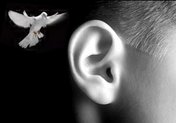
The ear, the organ of faith!
Consequently faith comes from hearing the message, and the message is heard throught the word of Christ (Romans 10:17)
ARCHIVE - click on the black arrows to see and select individual sermons
Luther writes: In the matter of faith one must let everything go and cling to the Word alone. When we have gripped that, let the world, death, sin, hell and every misfortune storm and rage. But if you let go of the Word, you will be doomed. (SL.XI.1767,15)