Showing posts with label Leviticus 11:44. Show all posts

Thursday, February 20, 2025

C, The Seventh Sunday after Epiphany - Luke 6:16:35–38a "Jesus on Judgement"

Luke 6:35–38a (ESV) But love your enemies, and do good, and lend, expecting nothing in return, and your reward will be great, and you will be sons of the Most High, for he is kind to the ungrateful and the evil. Be merciful, even as your Father is merciful. “Judge not, and you will not be judged; condemn not, and you will not be condemned; forgive, and you will be forgiven; give, and it will be given to you.”

Here at the centre of Jesus’ word on loving one’s neighbour is a succinct statement, “Be merciful, even as your Father is merciful. “Judge not, and you will not be judged; condemn not, and you will not be condemned; forgive, and you will be forgiven; give, and it will be given to you.

This directive by Jesus is for one not to judge and condemn and therefore one will not be judged or condemned.  

What happens when we are judged?  It all depends on the judgement. 

When we’re wrongly judged positively, when we’re guilty, we tend to keep our mouths shut agreeing with the judgement.  When someone says, “You’re a good bloke or a good lady.” Usually, one doesn’t cause a stink about being wronged.  Rather one quietly breathes a sigh of relief thinking,  “Gosh, I’m glad they didn’t see my true colours!”   

But when judge negatively, rather than being quiet, the heckles go up, and we voice a protest, despite being innocent or guilty of the allegation.

But as we’ve heard, Jesus encompasses his words on judgement and condemnation with mercy and forgiveness.  However, to be merciful and to be forgiving, one is required to make a judgement.

What is going on here? 

Today in the readings we hear about Joseph being revealed to his brothers after they had sold him into slavery and deceived their father into believing he was dead.  

Joseph was the least amongst his brothers, but highly exalted by Jacob his father.  The judgement made by his brothers; we would all agree was horrendous to say the least.  Yet when Joseph became second to pharaoh, although it was testing on his brothers, his judgement was ultimately encapsulated with mercy and forgiveness.

This is Joseph’s judgement: “And now do not be distressed or angry with yourselves because you sold me here, for God sent me before you to preserve life. And God sent me before you to preserve for you a remnant on earth, and to keep alive for you many survivors. So it was not you who sent me here, but God. He has made me a father to Pharaoh, and lord of all his house and ruler over all the land of Egypt.” (Genesis 45:5, 7-8 ESV)

So, it seems there is judgement and then there is judgement.  Jesus says to a crowd at the temple, “If on the Sabbath a man receives circumcision, so that the law of Moses may not be broken, are you angry with me because on the Sabbath I made a man’s whole body well? Do not judge by appearances, but judge with right judgment.” (John 7:23–24 ESV)

So how do you and I judge with right judgement?  How does one make just judgements, but at the same time, are made with infused mercy and forgiveness? 

Last week we heard Jesus speak blessings and woes to the people on the plain.  The Gospel reading today is a continuation of Jesus’ sermon on the plain.  It’s quite similar to the sermon on the mount recorded in Matthew’s Gospel.  In it, Jesus’ parallels being merciful with your enemies with being perfect or whole saying, “You therefore must be perfect, as your heavenly Father is perfect.” (Matthew 5:48 ESV) This is a repetition of what God said through Moses, “For I am the Lord your God. Consecrate yourselves therefore, and be holy, for I am holy.(Leviticus 11:44a ESV)

Our judgement is called to be in accord with our Heavenly Father’s judgement.  His judgement is complete, perfect, holy, and impartial.  So, is Jesus setting an impossible task for us?

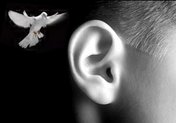
Our human brain is made up of two halves.  Both halves control the other half. The right half generally works on feelings, creativity, and intuition.  The left works is rational, logical, analytical, and is mathematical and factual.  However, the frontal lobe which is on both side of the brain is the largest part of the brain and it makes judgements both rational and emotional. 

We know for certain when Jesus says, “to not judge”, he’s not calling us to have a frontal lobotomy.  Judgement sometimes requires us to make rational decisions based on logical and factual information.  But then sometimes judgements need to be emotive, based on the intuitive and creative part of the mind.     

It seems we are still in a judgement jam!   

Paul makes a clear judgement about the resurrection to the folk in Corinth.  He works on both half of the hearer’s brain, emotively calling one who asks, “what kind of a body is raised”, as a “fool”, as one who is curved in on their own emotions!  But then he works on the other half of the brain,  the logical half, by painting the picture in the mind of the hearer about the reality of a seed which dies to produce life.  Beginning as a germ inside the husk or body, planted in the soil, just as people are buried in the grave.

But it’s what he says next regarding the resurrection, from where we can glean an understanding on how one might love their enemies, and make merciful, impartial, and just judgements, in the sight our Father in heaven.

He says about the body, “It is sown in dishonour; it is raised in glory. It is sown in weakness; it is raised in power. It is sown a natural body; it is raised a spiritual body. If there is a natural body, there is also a spiritual body. Thus it is written, “The first man Adam became a living being”; the last Adam became a life-giving spirit. But it is not the spiritual that is first but the natural, and then the spiritual.” (1 Corinthians 15:43–46 ESV)

Rather than dissecting the brain from left and right, or lobotomising the frontal lobe, Paul points to the natural and the spiritual.  Paul is speaking of the natural as the flesh or human spirit as opposed to those who have the mind of Christ by the power of the Holy Spirit.  This is a key theme Paul picks up back at the start of his letter to the Corinthians.

He says, “The natural person does not accept the things of the Spirit of God, for they are folly to him, and he is not able to understand them because they are spiritually discerned. The spiritual person judges all things, but is himself to be judged by no one. “For who has understood the mind of the Lord so as to instruct him?” But we have the mind of Christ. (1 Corinthians 2:14–16 ESV)

Judgement with right judgement comes as a result of us being judged at the cross and in our baptism as guilty natural people.  However, this judgement is executed upon us as mercy, forgiveness, and resurrection from death, to be God’s spiritual people.

By our appearances we still appear as enemies of God, when we sin.  Therefore, our judgement or condemnation takes into consideration the tension of our acquittal and freedom, despite still being natural people this side of the resurrection.  You and I are one hundred percent natural people, created from dust with the breath of God, but returning to dust as a result of our corruption. 

Yet, what was begun at the cross and is transmitted to us in Holy Baptism continues in those who make right judgements of God, themselves, their neighbours, and their enemies, judging the sin with the goal of releasing the sinner.  God is freeing you through the ongoing work of the Holy Spirit, through the death and resurrection of Jesus Christ. 

James tells us, “So speak and so act as those who are to be judged under the law of liberty. For judgment is without mercy to one who has shown no mercy. Mercy triumphs over judgment.” (James 2:12–13 ESV)

Therefore, those who receive the law of liberty or freedom are also one hundred percent God’s spiritual people.  God’s spiritual people judge with the intention to forgive and show mercy.

Because God the Father, Son, and Spirit are holy, we are called to be holy.  Because God is perfect, we are called to be perfect.  Because God is merciful, we are called to be merciful.

The law of liberty is such that you can judge with a right judgement.  As spiritual people God promises you’re covered by Christ and empowered by the Holy Spirit, to be holy, because God is holy.  You’re continually perfected in your suffering, because Christ was shown to be perfected in his impartial suffering for all.  And you and I have the freedom to be merciful and forgiving, because our Heavenly Father is merciful and forgiving.  Amen. 

Friday, February 18, 2022

C, Epiphany 7 - Luke 6:27–38 "On Being Merciful, Perfect, & Holy"


Luke 6:27–38 (ESV) “But I say to you who hear, Love your enemies, do good to those who hate you,  bless those who curse you, pray for those who abuse you.  To one who strikes you on the cheek, offer the other also, and from one who takes away your cloak do not withhold your tunic either.  Give to everyone who begs from you, and from one who takes away your goods do not demand them back.  And as you wish that others would do to you, do so to them.  “If you love those who love you, what benefit is that to you? For even sinners love those who love them.  And if you do good to those who do good to you, what benefit is that to you? For even sinners do the same.  And if you lend to those from whom you expect to receive, what credit is that to you? Even sinners lend to sinners, to get back the same amount.  But love your enemies, and do good, and lend, expecting nothing in return, and your reward will be great, and you will be sons of the Most High, for he is kind to the ungrateful and the evil.  Be merciful, even as your Father is merciful.  “Judge not, and you will not be judged; condemn not, and you will not be condemned; forgive, and you will be forgiven;  give, and it will be given to you. Good measure, pressed down, shaken together, running over, will be put into your lap. For with the measure you use it will be measured back to you.”

There are a lot of commands laid out here by Jesus in the Gospel reading before us.  Love your enemies, do good, bless, pray for those who abuse you.  Offer the cheek to those who strike you, do not withhold your tunic.  Give, do not demand back.  Love, do good, lend, and expect nothing.  Be merciful even as your Father is merciful.  Judge not, condemn not, forgive, and give.  For with the measure you use, it will be measured back to you.  Jesus makes seventeen demands in this text. 

He goes on to say, “For no good tree bears bad fruit, nor again does a bad tree bear good fruit,  for each tree is known by its own fruit.  For figs are not gathered from thornbushes, nor are grapes picked from a bramble bush.  The good person out of the good treasure of his heart produces good, and the evil person out of his evil treasure produces evil, for out of the abundance of the heart his mouth speaks”.  (Luke 6:43–45 ESV)

Sitting down to write this sermon proved interesting as there was commotion going on in the manse yard.  Our dog was excited by all the noise as chaps from the church assisted a fellow removing trees from the gardens.  And there I sat trying to write a sermon on mercy, while outside no mercy was being shown to the pencil pine that had to go because it had outgrown its position and was lifting the paths and fence around it.  And out back trees were being removed so fruit trees can be planted with the hope of getting a sweet crop.

A member who will remain unnamed, but use to be an accountant, asked me if the activity around the manse was inspiring me with my sermon writing.  I told him it’s hard to write a sermon on mercy when trees were mercilessly being chopped down.  To which, with a cheeky grin, he replied, “it’s for the greater good of the pastor.”

This made me ponder why Jesus has given us these seventeen rules!  Has he done so for the “greater good” or is there another point being made?  What fruit is being produced by doing these seventeen demands?  If it is for some greater good, what is this greater good? 

Thinking about trees, now chopped down and cleared away, I know I didn’t hate those trees.  In fact, they looked quite good.  But I know the pine out the front was going to cause ongoing problems that the parish would not love addressing.  And as for the trees on the back fence having to go, I love the pleasure of growing and picking one’s own produce more.

Jesus’ first command is to love your enemies.  But what if they bear bad fruit as the text says?  Am I to somehow love them, for the greater good?  Anyway, what is the greater good, the summum bonum, the ultimate of all goodness?  What would my motives be for doing so, and what measure would I use to determine how to love them.

It’s here I realise loving my enemy is difficult, to say the least.  I am unsettled by the fact that perfectly good trees are cut down for reasons that might be based more on my desire being deemed “the greater good’ or the desire of the parish to not have the “greater evil” by getting rid of the pencil pine now.  And these are non-issues, compared to my desire to have little to nothing to do with one that might be considered as an enemy.

If my thought process is so fickle,  and I can deem my enemy as a bad tree, what is to stop them from considering me the same?  Perhaps I’m a tree that’s lost its purpose and needs to be chopped down in the scheme of someone else’s greater good!   Whose greater good is more important?  World Wars have started over thinking like this!

Our motives are exposed like raw nerves by Jesus in this text.  He shows us we are constantly investing ourselves, our time, and our possessions in schemes that will benefit ourselves.  It may be for financial gain, acceptance of others, a selfish desire to smooth things over, creating a pseudo-peace, because we don’t want to give the time or effort to open and heal wounds in need of healing.  Our motives seem to follow the path of least resistance to pleasure within.

This being the case, then, how do I love my enemies?  How do we as a community under Christ, love our enemies?

Jesus says, “Be merciful, even as your Father is merciful.” (Luke 6:36 ESV)

In Matthew’s account Jesus says, “You therefore must be perfect, as your heavenly Father is perfect.” (Matthew 5:48 ESV)

Jesus here points us to the Law.  Jesus’ call, to be merciful and perfect, is the same as God’s call to be holy. 

Jesus is reflecting what God said through Moses to the people of Israel.  “For I am the LORD your God.  Consecrate yourselves therefore, and be holy, for I am holy.” (Leviticus 11:44 ESV)

Jesus calls us to cleanse ourselves of anything that defiles his holiness.

Why does God the Father and Jesus demand holiness?  The short answer is because he loves us and wants to preserve life?  This is the life he has given to us in love, and he wills us to have for each other. 

This love is not love for myself or my motives.  But it’s a love that brings a community together in God’s presence, where there is perfect peace, where God gives, where we receive together with joy, and where we worship him with fervent love for loving us.

Jesus reinforces God’s call to be holy, through being perfect and merciful, to reveal the lies of our love, no matter how great we think our good is, or how bad our evil actually is.  There are no lies in God’s love and holiness.  All is brought out into the light by Jesus.

As much as we, who are in Christ, have been given the holy will to be merciful, perfect, and holy to please the Father, we cannot be this by our own effort.  Jesus was incarnate in our human flesh, he lived a perfect and merciful life, and died in all holiness, because through our love, we cannot do it.

So, should we give up striving?  Well, yes and no!  Yes!  Because we will condemn ourselves if we believe we can be holy by our own efforts?  And no!  Because when we give up, we demonstrate faithlessness in he who is working salvation within us?

God’s holy plan for us is to show us we are as far away from perfection as ice is from steam, as white is from black, as sour is from sweet.

But God bridges the divide between holiness and evil; God’s good and our good intentions; his perfection and mercy and our motivations; his love, and our love.

Jesus is the good tree bearing good fruit, but he bore it on the terrible tree of the cross.  He takes that terrible tree, your terrible tree and makes it his.

Jesus’ love for you is a perfect and merciful love.  His love is compassionate towards all who call upon his name, for the forgiveness of sin. 

Jesus’ love for you is so great he sends the Holy Spirit to do the work of germinating and growing faith and love within you.  Jesus sends the Holy Spirit to mature us into healthy trees producing good fruit, the fruit of faith and love. 

This fruit of love for God, is confession of sin, allowing God to prune us of the dead wood within.  The fruit of love is faith, allowing the daily death of self, the carrying of our crosses, and the bearing of our neighbours’ crosses in prayer and works that spur them onto salvation. 

This fruit of love leads us to see the cross as the place showing us our blessed helplessness.  But it also shows us Jesus is our blessed help at that very same cross.  The cross is the good measure, pressed down, shaken together, running over, and put into your lap. 

On the cross, Jesus was measured, and shown to be the only one, who has the only good and holy motives, the only perfect love, and the most merciful compassion.

He is the Son of the Most High, higher than the highest good.  He is the Holy One of God, sending the Holy Spirit to help us in his Holy Word. 

We are being made holy because he is holy, we are being made perfect because his love is perfect, and we can give and forgive because of his mercy. Amen.