Showing posts with label Knowledge. Show all posts

Thursday, April 10, 2025

C, Palm/Passion - Philippians 2:5–11 "Cross the Crevasse"

Philippians 2:5–11 (ESV) Have this mind among yourselves, which is yours in Christ Jesus, who, though he was in the form of God, did not count equality with God a thing to be grasped, but emptied himself, by taking the form of a servant, being born in the likeness of men. And being found in human form, he humbled himself by becoming obedient to the point of death, even death on a cross. Therefore God has highly exalted him and bestowed on him the name that is above every name, so that at the name of Jesus every knee should bow, in heaven and on earth and under the earth, and every tongue confess that Jesus Christ is Lord, to the glory of God the Father.

The world is in trouble!  Everyone is running for their lives.  As people run, they cut adrift anything that might slow their efforts in escaping the trouble that looms large, like ominous storm clouds building and swirling.  You too, run for your life!  You see others lightening their loads and running on ahead, you contemplate doing the same thing.  You overtake a person who has stopped to cut away excess weight.  Soon, they too run past, with less on their backs than you.

Up ahead, those who have run ahead have stopped, they appear frantic and helpless, like chickens in a chook house invaded by a hungry fox.  You arrive with those who are milling around like startled sheep swirling and shunting each other in the yard.  Then it comes into view, a dirty great big crevasse has opened up in the earth. 

The world is trembling and in the violence of its quaking and shaking, the ground has opened up.  No one can work out how to get across.  It’s too far to jump, and it’s too deep to scale down, cross, and climb the other side.  Anyone who tries is a dead man. Furthermore, at the bottom bubbling larva boils and surges up from eternal depths, turning everything to ash before it even reaches the liquid orange fire.  You can feel its intention to incinerate you, just looking over the edge. 

Others arrive seeking their escape from the same erupting earthquake and melting mountains making their way to meet the molten abyss.  At the edge they gather with you, sandwiched between certain death on every side.  It’s a picture not unlike Moses and the Israelites trapped between Egypt and the Red Sea.  But this red sea is not a sea of water, it’s a sea of red fire!

Great minds gathered with children.  Youthful strength gathered with the elderly.  A unity of military might, greater than that of the United States and China combined, all gather at the edge nervously awaiting their fate.  There’s absolutely nothing they can do.  There’s not a desire or a piece of earthly wisdom that can help this situation!

But from what is humanity running?  And towards what is the chasm they’re running?  It all sounds like a farfetched action movie where the hero pulls off the impossible.  It sounds like an epic battle between humankind and mother nature’s climate change, or a menace from outer space! But it’s not!  It’s much simpler than that.  

The trouble in the world from which humanity is seeking to escape, and the horror to which it arrives is the abyss of ourselves, our humanity, our mortality.  It’s not a make-believe movie script, but the very real everyday struggle of your existence.  Human beings being human means we’re mortal. What are synonyms for being mortal?  In short, human existence is deadly, terminal, transient, temporary, or fatal. 

It matters not how many scientists hypothesise! Nor how many sports or militaries amount might! Nor how many wordsmiths philosophise! Nor how many theologians divide and dilute the Word of God! Nor how much makeup we try to manicure and beautify our being! From the greatest to the least, we cannot escape being human, being mortal!  The greatest fear in a human being, is not being anymore!   

In Philippians chapter two Paul demonstrates how Jesus has crossed the ravine of impossibility, and calls each of us to trust in him alone to cross the crevasse for our salvation.  We hear, “Have this mind among yourselves, which is yours in Christ Jesus”. (Philippians 2:5 ESV)

What is yours in Christ Jesus is a “ God-given-gut-discernment” since “mind” here comes from a Greek word meaning midriff.  This “gut instinct” is not born of your feelings though. Rather, in Jesus Christ, you have been given the Holy Spirit who gives us understanding of God’s Word in this troubled world.  Jesus’ gut instinct to look to our Father alone, is now yours.

Paul continues, “though he was in the form of God, did not count equality with God a thing to be grasped”. (Philippians 2:6 ESV)

The form of God, or morph of God, means Jesus shares in the divine nature of God, and therefore, is God.  He is the second member of the eternal Trinity!  Yet, he didn’t equal himself with God.  Unlike Adam and Eve, he didn’t seek to be “like God” and allow desire within, to take a hold of his divine nature, and grasp it, as they took a hold of fruit from the tree of knowledge and evil.

Instead of grasping his divine right, he did the opposite and emptied himself and willingly allowed himself to be born “like man”, in the likeness of man.  But even lower than man, he willingly allowed himself to be pushed through the birth canal of suffering, to walk the way of death as the servant slave of all people.  Jesus emptied himself and became the Son of Man.

Then Paul says, “And being found in human form, he humbled himself by becoming obedient to the point of death, even death on a cross.” (Philippians 2:8 ESV)

Picture that! Being knowingly and willingly born into flesh that is fatally flawed.  Just like us caught between the fatality of birth and the hellish chasm of death, Jesus knowingly allowed himself to be born into the shadow of death under Herod the Great and the suffering and death of the cross, to not only endure the human birth canal but to be pushed further and deeper into the depths of hell.

Then we hear, “Therefore God has highly exalted him and bestowed on him the name that is above every name”. (Philippians 2:9 ESV)

God “highly exalted” him, in the Greek is a single word with two parts meaning to “over elevate”.  Both parts of the Greek word have their origins in the Greek word “hyper”. 

One could say that after Jesus allowing the two steps of humiliation to occur, being born into death, and then being delivered over to death, albeit innocently and without sin, God then “hyper hypered” him in a two-part exaltation, as it were!  Jesus’ faithfulness to God as a Son and his faithfulness to us as the fatal servant Son of Man is the reason for God’s hyper exaltation of Jesus and his name!

 After all, Jesus is “the One” who calmly walks through convulsing crowds of panicking people.  He was born and baptised into mortality; to be a human in the face of death, that we’re not.  In fact, Jesus Christ was the only human ever born for the sole purpose to die.  A human being, intentionally being human without the fear of his humanity.  Jesus feared our Heavenly Father more than his humanity and its death and was faithful to his Father unto death.

This is why he calmly walked to the edge of humanity and allowed himself to be lifted up in hellishness on the cross, before being delivered into death’s dominion and separation from God, at his descent into hell. 

However, the innocence of his suffering and death, his holy humanity, was a light not even the darkness of hell’s death could extinguish.  Therefore, God raised him to his right hand, on the other side of the ravine of eternal death.  The mortal is now swallowed by immortality, death is swallowed by true life.

There will come a time when all people shall kneel at the name of Jesus Christ and confess him, to the glory of God the Father.  Those who have bowed to him will continue doing so with eternal joy.  But those who have trusted in their humanity, cutting Christ from their lives to flee immediate troubles, cutting back God’s Word to work their own ways, seemingly cutting off Christ for shallow success, will moan that they didn’t seek him before their mortality failed to save them.

As Paul says to the Philippians, I say to you, “Therefore, my beloved, as you have always obeyed, so now, not only as in my presence but much more in my absence, work out your own salvation with fear and trembling, for it is God who works in you, both to will and to work for his good pleasure.” (Philippians 2:12–13 ESV)

God has now implanted in you the knowledge of Jesus Christ, while you live in a world that’s in trouble.  Allow the Holy Spirit to teach you with God’s Word, what to discard, as you advance to the edge of your mortality. Don’t cut off Christ and the cross he calls you to carry.  Work out you salvation with fear and trembling, discarding your deadly understanding of good and evil, and in its place allow a Holy Spirit guided knowledge of what makes your humanity eternal — to cross the crevasse with Christ. Amen.

Thursday, January 25, 2024

B, The Fourth Sunday after the Epiphany - 1 Corinthians 1b-3 "A Conscience Known by God"

To see, to know, and to love.   Paul encourages the Corinthians to use their knowledge in a right way that upholds the person whose conscience is weak.  Use your God-given faith in a way, that encourages those who are weak, to have their consciences strengthened by God alone! 

Paul teaches the hearer about the direction of knowledge.  Paul says, “…we know that ‘all of us possess knowledge.’ This ‘knowledge' puffs up, but love builds up.  If anyone imagines that he knows something, he does not yet know as he ought to know.  But if anyone loves God, he is known by God.”  (1 Corinthians 8:1b–3 ESV)

To see, one is known by God, is to know that God knows the whole truth of who we are, and not just the half-truths we want others to see.  This is the faith to which God calls his church on earth, through Paul’s letter to the Corinthians!  It is a change of direction that sees knowledge, as not what we know, but that we are known by God!

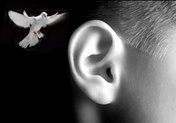
For those who wish truly to be Christian in belief and practice, the organ of faith is the ear.  True God given faith is nurtured when one hears the Word of God.  Not to our immediate glory, but, to God’s glory.  This is how followers of Christ, see, know, and love. 

We see, know, and love, trusting that the bible is the Word of God.  So, truly believing, one allows the Holy Spirit to lead one to works that, glorify God, and love our neighbour, which encourages them to glorify God too.

Moved by the Holy Spirit, this is what Paul teaches the Corinthians about eating food offered to idols.  God schools the Corinthian believers to look outwardly in what they do, so the weak are not led into sinning with their conscience.

Those who are weak, are the weak in faith, new Christians, and those unbelievers before whom the Christian faith is lived, in the hope of winning them for Christ.  Those who are weak, are weak because they have not one organ of faith, but many.  The ear, the eyes, sensations, feelings, touch, and taste, all contribute to one’s heart, and therefore, the collective tastes and feelings of the community’s conscience.

The difference between a believer’s conscience and an unbeliever’s conscience is that being known by God, the flow of knowledge is reversed.  Our knowledge brings a knowledge of our weakness that leads to repentance, receptive forgiveness, and joyful service, rather than a knowledge that puffs up!

Because the Christian Church lives in the world, we continue to struggle with the knowledge to love our neighbour, and please God.  This comes about, by what the world teaches us about knowledge, and how we allow a worldly understanding of knowledge to be impressed on God’s church.

We need to know what the conscience is! 

There is both the conscience of an individual and then there is the conscience of a community, or a collective conscience.

The conscience of an individual is moulded by a group’s conscience.  Conscience comes from a Latin word that means, “being privy to knowing”.  Having a conscience is having “shared knowledge” or “knowing together”. 

For a worldly knowledge or conscience, one sees and experiences what is going on around them and it becomes the norm, and then it’s expected to be common practice.  When one works with a worldly conscience one survey’s the self, fashioned by their experiences and emotions, and then their conscience places faith within what one hears from there heart!  The heart becomes conformed to the world, to keep in step with the shared experiences of the world. 

With our hearts driven by the world and its opinions, the church is oppressed, when we seek to impress, or allow, a worldly conscience to steer God’s church.  The direction of the conscience is turned about face.  As a result, our knowledge of good and evil is gleaned from the world and driven by the feelings of the heart, rather than God and his Word having singular authority.

The bible, God’s written Word, becomes a book that just “contains” words about God, rather than “being” the holy and inspired Word of God, written down by faithful servants of God.  With worldly suspicions then one can pick and choose what one wants to take from God’s Word.  Parts can be rejected because, those who wrote it were working with an alternative agenda.  In short, one then can stand in judgement over God’s Word, rather than remain under and in submission to it.

So called believers, no longer believe the Word of God.  But believes what the heart feels about the Word of God.  Knowledge is not being known by God.  But becomes puffed up in protecting what one thinks is God. 

Dear friends in Christ, when we do this, we stand naked before God, with an idol of God in our hearts. This idol is an image of the heart that imagines that we know something.  The idols of our imaginations tell us plainly that we do not yet know as we ought to know.  This faith is not from the Holy Spirit but from the imaginations of our human spirit, without the grace of God in Jesus Christ.  This faith covers what is truly known by God, our sin!

The Old Testament word for conscience is heart.  A heart pleasing to God is that which sees with the ear!  However, one’s heartfelt feelings that misplace having a true heart for God, is a common teaching we’re called to hear in God’s Word as sin. 

Jesus says, “For from within, out of the heart of man, come evil thoughts, sexual immorality, theft, murder, adultery, coveting, wickedness, deceit, sensuality, envy, slander, pride, foolishness.  All these evil things come from within, and they defile a person.” (Mark 7:21–23 ESV)

The first mention of man’s heart is recorded in Genesis chapter six, causing God to send the flood. 

“The LORD saw that the wickedness of man was great in the earth, and that every intention of the thoughts of his heart was only evil continually.  And the LORD regretted that he had made man on the earth, and it grieved him to his heart.”  (Genesis 6:5–6 ESV)

When we become conscience bound by anything other than God and his Word, it grieves God to his heart. 

Jesus pleases God the Father.  He does not turn away from following the Father.  Therefore, he is set apart as holy.  In his holiness, he became like you, without doing what you do, to set you apart from the evil intentions and thoughts of your heart, that is your nature and its sin.  By his holiness he continually prays before our Father in heaven and sends the Holy Spirit to make you holy. 

Jesus came to cleanse you and me from the unholiness of our hearts.  Jesus seeks to cleanse your spirit from the common corruption that the Law of God reveals in the heart, but that the world feels and says is okay.

Humanity’s sinful nature, from Adam and Eve, throughout the ages, to the end of time, seeks to reject the Word of God, outrightly, as a lie!  Even within the church it’s in our nature, to water down God’s Word to the point where we, with the world, are tempted to regard the Word of God as a lie.  With the world, our hearts become deceived in a shared knowledge, that evil is good and good is evil.  Humanity’s collective conscience of the “good and evil” lie, replaces the truth. 

Isaiah warned the priests and the people of Jerusalem, “Woe to those who call evil good and good evil, who put darkness for light and light for darkness, who put bitter for sweet and sweet for bitter!  Woe to those who are wise in their own eyes, and shrewd in their own sight!”  (Isaiah 5:20–21 ESV)

This same puffed-up worldly conscience continues to deceive pastors and people in the church today!  Many are shamed by the truth of God’s Word and have turned to idols of God in their hearts.  The love of God is exchanged for an image, a contrary imaginary puffed-up love.  

This love is a lie!  It’s love that’s opposite to a love of being known by God.  It’s a love that hinders the Holy Spirit, making us unable to serve our neighbour, like Christ serves us. 

Instead of hearing God in his Word, a worldly heart seeks the word within one’s conscience, deflating one’s knowledge of the power and holiness of God’s word within themselves.

However, knowing we are known by God; we stand accused by his holy Word of the Law.  We know, if we stand before God with a knowledge of good and evil based on the conscience of the world, we stand before God, calling what is written in his Word, a lie. 

Knowing that God knows our knowledge of good and evil is a lie, the Holy Spirit unites us with Jesus Christ, so we know Jesus Christ.  We know, he knows us, died for us, and now intercedes for us before our Father in heaven. 

Jesus Christ, the Son of God, pleases God our Father.  The Holy Spirit pleases God our Father and God the Son.  We please God our Father when we allow the Holy Spirit to lead us into God’s Word, to cleanse us.  We please God our Father when our hearts hear, receive, and believe Jesus Christ.  We please God our Father when we hear the Word of God, and not what’s within our sinful hearts or within the ways of the world.

Being a Christian requires that we are in the world and not a part of the world.  Jesus sets you apart from the world, so being known by God, you can love your neighbour in the world.

Let us pray.

Change my heart, O God, make it ever true.  Change our hearts, O God; may we be like you.  You are the potter; we are the clay.  Mould us and make us to be set apart as servants like Jesus your Son, in this we pray.  Amen.

Friday, June 02, 2023

A, Holy Trinity Sunday - Genesis 1:1–5, Matthew 28:20b "Let There Be Light"


Genesis 1:1–5 (ESV) In the beginning, God created the heavens and the earth.  The earth was without form and void, and darkness was over the face of the deep. And the Spirit of God was hovering over the face of the waters.  And God said, “Let there be light,” and there was light.  And God saw that the light was good. And God separated the light from the darkness.  God called the light Day, and the darkness he called Night. And there was evening and there was morning, the first day.

Matthew 28:20b (ESV) “And behold, I am with you always, to the end of the age.”

With headlamps on our helmets, we descended into the entrance of the cave, descending down a series of stairs into what seemed the bowels of the earth.  Once underground our family stood in a large cavity looking up at the light streaming in through the entrance.  It was dark, but still we could see what was in the cave. 

We saw tree roots from trees above, sending down their feelers through the roof of the cave for water some twenty metres below.  There on the bottom were bones from animals who had unexpectantly fallen through a hidden hole in the forest floor to their death in the darkness below.

At the bottom of this large cavity, we walked past the bones into a smaller area with crystal formations of stalactites growing down and stalagmites growing up from the bottom.  The light from our headlamps lit up this subterranean wonderland.

We went further and further into the cave, following the directions, many other tourists had followed before. The light from the entrance was now far behind us, and the only way we could see was with our head lamps and torches.

At one point we had to squat, moving nearly on our hands and knees, to get through the narrows of the cave into the last open section to explore.  In there, we sat on a bench and marvelled at the rock formations.

 It then occurred to us if our lights went out, we would have been in a bit of bother.  There was no one around to show us the way out, if our five headlamps went out.  I suggested as we sat there in the silence that we should see what the darkness is like.  So, we turned off our lamps.

We had a saying in my family, when I was growing up as a child, that something is as dark as the inside of a cow!  Now I’m not sure how that saying ever came about!  I don’t know of anyone ever going inside a cow, to know how dark it might be.  But sitting there in that cave, I suggested to my family that this is what the darkness must be like inside a cow!

It was dark!  Usually after one’s eyes adjust to the darkness you can see something.  We sat there for some time, and one couldn’t even see their hand in front of their face.  It occurred to me that getting out of the labyrinth of tunnels of rock would be near impossible, even with guided walkways.  What would it be like in the darkness with nothing?  There was nothing to see!  One could only hear the sound of darkness. 

The sound of darkness is deafening silence!  But the sound of darkness within myself, my wife, and children, was a clamouring cry of chaos and uncertainty.  It would have been some hundreds of metres of ups and downs, lefts and rights, ducking under stalactites and steps back up to the cavern of light and rebirth back into the light of day.

In the beginning God said, “‘Let there be light,’ and there was light.  And God saw that the light was good.  And God separated the light from the darkness.  God called the light Day, and the darkness he called Night.”  (Genesis 1:3-5a ESV)

We don’t realise how much we need God to let the light be light for us.  It came very apparent to us in the bowels of a cave, we needed light.  Even though we had torches and headlamps, the thought of not having them was frightening.

We take the light of God’s creation for granted.  The light God shone to create the first day of creation was not so much the light we get from the sun, moon, and stars.  But rather, the light of time and the light of God’s presence in time, bringing light to the chaos of darkness.  The light of the sun, moon and stars was only to be created on the third day to order time into the brightness of day, and the soft night-time light, of stars and reflection from the moon.

But even the lit darkness of night, brings fear, like being in a cave in the dark with treacherous jagged crystals and rocks lying in wait, to cause injury to flesh and bone.

Little children are often fearful of the dark, not being able to see, their imaginations see the worst in what they cannot see.  Likewise, the elderly, prefer not to go out into the night, for fear of falling over, falling into the hands of the ill repute, or the coldness of the night.

However, since the fall of humanity just after creation, the opposite is also true.  Jesus says, “this is the judgment: the light has come into the world, and people loved the darkness rather than the light because their works were evil.” (John 3:19 ESV)

The truth of the matter is, we have become accustomed to darkness.  Then, once the light is returned, it’s like having a torch shone in our eyes after being in the dark.

Yet, from creation, God has continued to “let there be light”!  Every day that comes to be, God has let it be.  In God’s creation he provides for us, he uncovers the darkness for us, and he gives us life.

In the beginning of John’s Gospel we hear,   “In the beginning was the Word, and the Word was with God, and the Word was God.  He was in the beginning with God.  All things were made through him, and without him was not any thing made that was made.  In him was life, and the life was the light of men.  The light shines in the darkness, and the darkness has not overcome it.”  (John 1:1–5 ESV)

The light that provides for us, uncovers darkness, and gives life, has not, and will not, become overcome by darkness.  This is the light of God’s Word which said, “let there be light”, and continues to say, “let there be light”, despite the darkness.

Jesus is the continuing Word of God’s light.  He says, “I am the light of the world.  Whoever follows me will not walk in darkness, but will have the light of life.” (John 8:12 ESV)

However, the question is, “How do we follow Jesus, when there is darkness within and all around us?”  We know that no one followed him to the cross!  All fell away from supporting Jesus in the darkness of night, leaving Jesus to bear the darkness of Good Friday alone.

But we also hear,  “For God, who said, ‘Let light shine out of darkness,’ has shone in our hearts to give the light of the knowledge of the glory of God in the face of Jesus Christ.”  (2 Corinthians 4:6 ESV)

Having just passed through Pentecost, we have heard how after Jesus’ death and resurrection, those who fled from the day of crucifixion, boldly bore the cross in their conviction and confession, even unto death!  God has sent the Holy Spirit, to let there be light in us. God is still letting the light shine in the darkness!   God is still saying, “let there be light!”

The same light of life that sustains all of creation, now sustains us with the light of his Son.  This is not the knowledge of good and evil, discerned through the human spirit of desire.  But it’s through God giving us the knowledge of God’s glory in the forgiving face of Jesus Christ, shone in us by the Holy Spirit.

This is why Paul says to the Romans, “The night is far gone; the day is at hand.  So then let us cast off the works of darkness and put on the armour of light.”  (Romans 13:12 ESV)

We can do this because the day of our resurrection has been enlightened within us, casting out the chaos and fear of darkness.  The Holy Spirit has ushered in God’s creative Word, enacting within us God’s baptismal power, which says, “Let there be light”.

Even when everything around you is suggesting the darkness is winning, God wants us to remember that the darkness has not overcome the Light of God.  We have a God of Triune creative and recreative power! 

In addition to this, the Son of God, who is the Light of the World, promises you and me, saying,  “behold, I am with you always, to the end of the age.” (Matthew 28:20b ESV)

Even when creation dies, and God promises us that it will, even then, without sun, moon, and stars, the light of eternal life will shine on us, as we glorify the Father, Son, and Holy Spirit forever around the Triune God’s throne of glory.  Amen. 

Thursday, October 20, 2022

C, Post-Pentecost 20 Proper 25 - Luke 18:8b, 9–14 "Postures of Faith"

Luke 18:9–14 (ESV)  He also told this parable to some who trusted in themselves that they were righteous, and treated others with contempt:  “Two men went up into the temple to pray, one a Pharisee and the other a tax collector.  The Pharisee, standing by himself, prayed thus: ‘God, I thank you that I am not like other men, extortioners, unjust, adulterers, or even like this tax collector.  I fast twice a week; I give tithes of all that I get.’  But the tax collector, standing far off, would not even lift up his eyes to heaven, but beat his breast, saying, ‘God, be merciful to me, a sinner!’  I tell you, this man went down to his house justified, rather than the other. For everyone who exalts himself will be humbled, but the one who humbles himself will be exalted.”

Jesus sets the scene for this parable.  The scene is set with the final words of his last parable, the parable of the faithful persistent widow, who never gives up crying out for justice.  His final words are, “When the Son of Man comes, will he find faith on earth?” (Luke 18:8b ESV)

Jesus then sets the scene with the arrival of two men at the temple.  He, the Son of Man, allows us to take his place to see if we find faith on earth through the parable!  In it we get to examine the faith posture of the two persons who have come to the temple in Jerusalem.

Temple worship is set around the daily atonement sacrifice for the people of Israel.  Jesus gives us his privileged position of hearing the faith of the pharisee and the tax collector.  Who are these two characters? 

One is a socially acceptable individual in the person of the pharisee.  This is a good person in the eye of the public, a law-abiding citizen, or a good bloke one might say!

The other man is a socially objectionable figure in the form of the tax collector.  He is a bad person, a rogue, a scoundrel, a lawbreaker, an extortioner, an enemy of the state, or one who works against the common good!

Against the background of public thanksgiving for the daily atonement of sins, through the priestly sacrifice of animals on the altar, to take away the sins of the nation, Jesus gives us the privilege position of hearing the private prayers of both men.

The pharisee’s posture is opposite to that of the tax collector.  I, I, I!  I thank you that I am not like other men, extortioners, unjust, adulterers, or even like this tax collector.  I fast twice a week; I give tithes of all that I get. I, I, I!

The tax collector beats the heart of his sinful being, from within where his extortion, unjustness, adultery, and unacceptability breeds loneliness, contempt of self, separation from God and from others.  He cries out, “God, be merciful to me, a sinner!”  Or literally, “make atonement for me, one who misses the ability to atone for myself!”

In this parable Jesus gives you a front row seat in finding the faith of these two. 

It’s obvious to us that the faith of the tax collector was firmly grounded in the fact that he was a sinner and could not atone for himself through acting good or bad.  No!  This was no act of false humility,  appearing bad to be good, or good to be bad!  He knew if his sin was to be atoned for, he needed an act of mercy on God’s part.

Whereas the pharisee, had great faith too!  However, his faith was in himself and what he did, separating and placing himself apart from those whom he thought were below him.

Now that Jesus has given you access into the hearts of the two, which one are you in this parable?

Scene two!  As we ponder who we are in the parable, the Holy Spirit paints a picture of you in this congregation.

When you got out of bed this morning, what were your thoughts about coming to church today?  “Do I really have to go?”, you may have asked yourself!  “I hope such and such is not there today!” Or, “I hope others are there, I don’t feel like it’s church unless such and such is there.  I, I, I, yet again, you hear!  I want more modern songs, I want more older hymns, I want, I want, want!  Jesus looks on, “will he find faith at church today?”

Perhaps your soul longs for the courts of the Lord, you love to dwell in the hearing of his Word, receiving the forgiveness of sin as you confess and receive absolution, and the reception of Jesus’ body and blood for your life and salvation.  But as you do, you receive resistance from others who seek to hinder you from coming to dwell in God’s atonement through word and sacraments.

And maybe you have come to observe.  You think, “Good sermon, good service pastor, THEY really needed to hear that! 

Or weighed down by the weight of your sin, you think, “If only I could stop doing that thing or stop acting this way, I would be a better person.”  Maybe you imagine,” If I was more like that person over there, I would be more acceptable before others — before God!” So, I’ll act humble or a certain way to appear as someone different.

There are those who live as if their goodness is too good for God, and there are those who believe their badness is too evil for God.  But then there are the faithful who focus not on their good or evil but on Jesus Christ, knowing they’re sinners — being forgiven, and they’re seated amongst likewise sinners — being forgiven. 

Together they collectively beat their chests and cry out for mercy.  They look for knowledge outside themselves for the atonement of their sin.  In the knowledge of Jesus Christ, they cherish and find the means of freedom from themselves.

They live with a steadfast struggle, feverishly fighting the pharisee within.  The old man within, seeking resurrection again, after sins have been forgiven.  He seeks to turn the repentant tax collector within, into a pharisee.  Going out once again to maintain separation from those from whom they are glad they are not like. 

Jesus watches on, as we picture ourselves in the parable, “When the Son of Man comes, will he find faith on earth?”

The reality in our knowledge of Jesus Christ is that we all have within us another tendency to be both a pharisee and a tax collector.  That is, we practise a good or bad faith in oneself, rather than practising faith in God for our atonement.  

We come as sinners each week and there is a real temptation to leave as pharisees and return as pharisees next week.  Such is our human nature we are tempted into a posture of prayer and practise saying, “God, I thankyou that I am not like that pharisee, as well as the tax collector.”

With a Holy Spirited knowledge of Jesus Christ, in submission to God’s Word, revelation of our sinfulness and the covering of sin in Jesus’ death and resurrection, we can pray,” I thankyou heavenly Father that being like all others you have saved and redeemed me a lost and condemned person.”

You and I can serve both the pharisee and the tax collector, knowing that without Jesus Christ we suffer from self-righteousness and unrighteousness.  Or put it another way, without Jesus Christ we die from the sin of believing we are not sinners and from the sins we know we cannot put right. 

We can lovingly serve the pharisee and the tax collector knowing that without Jesus’ love, we are the pharisee and the tax collector, the law faker and the law breaker, the socially acceptable hypocrites, and the socially separated undesirables.

Scene three!  As we leave this place and travel towards the cross in our lives.  Do you stubbornly set your face towards knowledge of your good and evil?  Or do you purposefully set your face towards knowledge of Jesus Christ, as he did towards you and the atonement of your sin when he resolutely set his face towards Jerusalem? 

“When the Son of Man comes, will he find faith on earth?”

Jesus quite clearly says, “For everyone who exalts himself will be humbled, but the one who humbles himself will be exalted.” (Luke 18:14b ESV)

Scene three plays out on the stage of eternity.  In fact, the old covenant temple worship, the new covenant worship of Jesus Christ, have been prerequisites for our re-creation and our eternal recreation with God the Father, Son, and Holy Spirit.

The Son of Man will come once and for all, but he also comes to us now.  The faith he seeks in us is the humble willingness to be served by this Son of Man, to have faith and trust in his faithfulness, despite the pharisee and tax collector within. 

He calls us to humbly run the race in the power of the Holy Spirit, not in our haughty human spirit which fails to follow in the strength of Jesus’ seemingly weak walk to the cross. 

Running in the Holy Spirit has its victory in the Son of Man’s exaltation from servant to the King of Creation!

This Son of Man is also the risen Son of God who serves us with the Holy Spirit, who fights the good fight within and with the world without our work or worry. 

Jesus Christ, both Son of Man and Son of God, in true humility, is now exalted at the right hand of the Father.  Likewise, our true humility will see us, in the eternal third act, exalted with Jesus Christ in eternity.  Amen.

Friday, August 13, 2021

B, Pentecost 12 Proper 15 - Psalm 34:9-14 "To Know is to be Known"

Oh yes I know!  I know how you feel!  I know! I know! I know!  Do you know?  I know!  We know how to do it? I know too!  He knows, she knows, they know! Okay smarty pants, how do you know?

You don’t know! You should know! I don’t want to know! I don’t know!  I know nothing!

How do I make it known?  How do I know?

How does one know that they know what they know?

If you haven’t guessed, today’s address is about knowing!  From where does one get knowledge?

People have been struggling to know how one knows since time began.  In fact, Adam and Eve wanted to know and they ended up finding out what they didn’t know, and probably wish they had never wanted to know in the first place.

The experience of all young people is they think they know everything.  Every successive generation has grumbled that their young folk think they know everything.  And the young, likewise, protest for being blamed for not knowing anything.  And as one ages and gains experience, they realise they don’t really know as much as one thought they knew. As teens and young adults there’s a tendency to believe one is invincible.  But failures, accidents, and bad experiences through life teach otherwise.

In Old Testament times elders of the people were those who had grey hair and beards through experience.  They were the knowledgeable ones; they were to whom one went for wisdom.

Wisdom literature in the bible is associated with the books of Job, Psalms, Proverbs, Ecclesiastes, and Song of Songs.  However, for believes in God all of Scripture is the central true source of wisdom.  For believers, our life experiences are secondary to God’s Word and the events of our lives are measured in the Word of God.

However, the Word of God can be used in the wrong way too.  We hear in God’s Word how Adam and Eve first used God’s Word in the wrong way.  Rather than standing under his Word in submission they stood over his Word as they were encouraged by the serpent to question the knowledge of God and then gain their own knowledge of good and evil.  Satan encouraged them to trust in themselves and their own understanding of what God said, and they chose the wrong way even though it seemed so right to them at the time.

Ever since then humanity has struggled to know.  The leaders in biblical times learnt through bitter experience to not trust themselves, realising what they knew, was not going to sustain them.  Socrates and Plato began the western philosophical tradition by asking questions about our being, how we know, and why we do what we do with this knowledge.  Thousands of years of asking questions has left humanity with only more unanswered questions.

Oh, fear the LORD, you his saints, for those who fear him have no lack!  The young lions suffer want and hunger; but those who seek the LORD lack no good thing.  Come, O children, listen to me; I will teach you the fear of the LORD.  What man is there who desires life and loves many days, that he may see good?  Keep your tongue from evil and your lips from speaking deceit.  Turn away from evil and do good; seek peace and pursue it. Psalm 34:9–14 (ESV)

Since Adam and Eve ate from the tree of knowledge of good and evil and were thrown out of the garden, God has sought to teach us.  Here in Psalm 34, we are taught the wisdom of God.  Those who are familiar with the older version of Luther’s Small Catechism will be reminded of the “fear and love” language in what each commandment means for us.  Here, like the Catechism, we are taught to fear, love, and trust God over all things.

The lion is the king of wild animals.  Coming across one in the Israeli wilderness, I imagine, would have caused great fear, especially a lion that suffered want and hunger.  But we are taught this big proud predator struggles with poverty and hunger, but even in the face of death, suffering poverty, and hunger, and one’s desire to live and love many days, those who seek the Lord will lack no good thing.

So, how do we know what is good and what is evil?  Do we turn once again to experience?  What about the senses?  What we see, smell, taste, hear, or feel?  Surely all these things are open to deception because they find their origin in the person.  What seemed good or evil to Adam and Eve, was not so for God. In the same way, what pleases and displeases me is not necessarily what gives God pleasure or displeasure.

Knowing what is good and evil enables us to seek peace and pursue it.  However, when I look at what I seek and what I want, and my pursuit of it, I realise the peace I get from it is rather superficial and subjective at best.  Just like two farmers living next door to each other one wants rain to grow his crop to grain, but the other doesn’t because he has cut his crop and wants to make hay. What one of us believes is good is not necessarily good for the other!

Or like a person being chased by a hungry Israeli lion. As they run, they cry out to God yelling, "PLEASE LORD! CONVERT THIS LION TO BE A CHRISTIAN LION!" They run until they reach a dead end. The hungry lion approaches slowly, as they cry out louder: "PLEASE LORD HEAR MY PRAYER AND CONVERT IT!" The lion stops walking, and the person praises God. The lion kneels, puts its paws together and says: "Come Lord Jesus be our guest and let this food to us be blest, Amen."

What becomes evident in our knowledge, or in our pursuit of knowing, is that we really don’t know what is good and what is evil outside our own narrow perspective.  Generally, we are a little better at naming evil as eviI. But history has proven if a large enough group of people deem something good, it is regarded as such even if the opposite is true for God and those who choose to follow him.

Look carefully then how you walk, not as unwise but as wise, making the best use of the time, because the days are evil. Ephesians 5:15–16 (ESV)

We are called to wisdom.  Paul tells the Ephesians to be careful, to look where they walk.  One needs to be wise because the days are evil and there are many ways that aren’t wise.  And we know this from witnessing what happens in the world and the church is more that often contrary to what God has called us to in his Word.  Inside and outside the church in our fears and desires we continue clinging to many destructive idols because of what we think we know is good.

But God’s Word teaches us to know that we know what we know, only because God knows us.  He knows you better than you know yourself and he has known it from before you existed in the womb. 

“Come, eat of my bread and drink of the wine I have mixed.  Leave your simple ways, and live, and walk in the way of insight.” Proverbs 9:5–6 (ESV)

The way of insight is knowing God knows us better than we know ourselves.  Little by little he makes known to us the grave depths why he needed to send his Son, Jesus Christ, to die for us.  He gives us knowledge of our sin and evil but at the same time increases in us our knowledge of the good which could only be done by his Son at the cross. 

Just like a proud lion whose lost his pride through poverty and hunger, we allow Jesus, the Lion King to devour the poverty and hunger of our sin. In fact, in knowing Jesus consumes our sin, the Holy Spirit increases our knowledge of God’s existence, and our trust in his providence.

Jesus says, “Whoever feeds on my flesh and drinks my blood has eternal life, and I will raise him up on the last day.” John 6:54 (ESV)

In a beautiful twist of God’s love, God fills us with faith to feed on him.  And this food of faith fills us with hope that once again we will be with him in the garden of paradise at our death and resurrection on the last day. Amen.