Showing posts with label 2 Timothy. Show all posts

Friday, October 22, 2010

C, Pentecost 22 Proper 25 - Luke 18:9-14 "Being Real Before God"

In Luke eighteen and the chapters preceding it, Jesus focuses on the human conscience in his ministry — as he resolutely marches towards Jerusalem, his crucifixion, and his death. These are the last days of Jesus’ teaching and revelation of humanity’s sin, before he faithfully rides into Jerusalem, and spends his last week, a very holy week, teaching about our end times and turmoil, before he is dragged into darkness and chaos, and is stripped of his authority and life there at the cross.

Good Friday is certainly the hellish day of all hellish days! But in contradiction it’s also the holiest of holy days. This Friday at Jerusalem was full of evil, but then again it was a very good day for you and for me. The reality of Jesus’ death day is also the reality of yours and my upcoming death days. It will be a day when evil and sin find there climax and cause us death. But then again, this day is the cause for much hope and will be a day of unimaginable celebration, as we continue setting our faces towards Jesus’ bitter suffering and death, but also his resurrection and glorification, and ours too!

So what type of a day, do you picture your death day being? It’s a confronting question! Perhaps it’s one which you try to avoid or put out of your mind as you go about busily living your life, clinging to all the temporary things which are passing away. But it’s a very real and sobering question for everyone, young and old, as we all move along the path towards our day of death.

With these things in mind, we hear Jesus’ parable of the Pharisee and the tax collector praying in the temple.

To some who were confident of their own righteousness and looked down on everybody else, Jesus told this parable: 10 “Two men went up to the temple to pray, one a Pharisee and the other a tax collector. 11 The Pharisee stood up and prayed about himself: ‘God, I thank you that I am not like other men—robbers, evildoers, adulterers—or even like this tax collector. 12 I fast twice a week and give a tenth of all I get.’ 13 “But the tax collector stood at a distance. He would not even look up to heaven, but beat his breast and said, ‘God, have mercy on me, a sinner.’ 14 “I tell you that this man, rather than the other, went home justified before God. For everyone who exalts himself will be humbled, and he who humbles himself will be exalted.” (Luke 18:9-14)

Now the conscience of a sinner is a shrewd thing! We humans are master manipulators always seeking to control our situation to suit ourselves. This parable can be completely misinterpreted, and is, if we think it’s about how we ‘should’ act in prayer. As if we can manipulate God’s will by what we do — by outwardly acting like the tax collector when internally acting more like the ‘holier than thou’ Pharisee.

Jesus’ word to us in this parable is not about what we do; it’s about what we are — how we like to picture ourselves — and the truth of what God really sees in us! God’s will for us is to forgive us our sin and for us to call on him in prayer.
Although the Pharisee prayed, he prayed a self-righteous prayer, and left God’s presence unjustified. Nevertheless he still prayed, he acknowledged God, and God would faithfully continue to work in him, as Christ did amongst the Jews of his day up until his crucifixion and beyond.

But, the work God does with the Pharisee is a far cry from what the Pharisee thought he needed in his life! God saw beneath his thin veil of righteousness to the pride and darkness within. And God sees what’s in us and continues to endure with us even when we pray those prayers of self-justification, thinking we can manipulate God’s will to forgive towards our will to sin. You know the prayers, ‘Lord just do this and just do that!’ Prayed with a handsome dose of external emotion to seal the deal, and win God over to our way! Acting out ‘just’ prayers in order to justify the self!

But Jesus is the one who acts, and he did act for the Pharisee, and the tax collector, at the cross. It’s in the face of death as a result of humanity’s sin that Jesus sets his sights to the cross to save us and all Pharisees from pride and self-righteousness, which left unchecked, would lead to an eternal, wrathful, hopeless death!

So it’s with the reality of our helplessness in the face of death that we come into God’s presence like the tax collector and seek God’s mercy! This is no act on the part of the tax collector. He was very aware of who he was in the presence of a holy God, and his prayer was a sincere real prayer for mercy, from one who in no way could justify himself past his sinfulness and the eternal death it deserved.

No the tax collector came to the temple with a cup full of sin and exposed his sinful righteousness before God! He was real; he knew there was no need even trying to pretend his cup was full of wholesome goodness. However, the Pharisee was full of himself. He sought to hide behind his righteousness and used it to glorify himself. But ultimately in death he would have been found to be completely empty, hopeless, and helpless.

We also do well to be true to ourselves, and pull the plug on our acts of righteousness, but rather seek mercy from the One who is righteous and full of grace and mercy. We do well to see ourselves in the face of death, and the hellish day Christ had on our behalf on our cross. We do well to understand like Saint Paul we are being poured out unto death — in that Jesus is crucifying the sinful nature within us with the help of the Holy Spirit.

We do well to see our faith in the things of this world is dying with the things of this world, so we might be filled with the faith that leads us to trust in Christ and live in hope of the resurrection joy, awaiting all who are baptised into his death and resurrection. We do well to live our lives as recipients of mercy, with the cross out in front, with all the horror it reveals about our deadly natures.

But we do even better to live our lives in the face of death knowing that just as Christ was crucified, raised, glorified, and now lives — we too will be raised to eternal life with him in glory because he is merciful to those who bear the reality of their sin, and in repentance allow that sin to be left at the cross with Christ. Amen.

Lord Jesus Christ, continue sending the Holy Spirit into our consciences to expose the sin in us, so it might die, and we might live before God the Father in the true faith, hope, peace and love, which surpasses all human understanding, even unto death. Amen.

Saturday, October 09, 2010

C. Pentecost 20 Proper 23 - Luke 17:11-19; 2 Kings 5:1-15; 2 Timothy 2:18-15 "Infections of the Skin"

Texts

 
2 Kings 5:1-15, Psalm 111, 2 Timothy 2:8-15, Luke 17:11-19

A Change in Life

The girl lay in bed it was just another boring school day. It was the first year of high school and the excitement of moving from primary school to the new school had worn off. There was no need to spring out of bed; there was nothing exciting to look forward to, it was just books, teachers’ looks, and the crook of homework assignments keeping her bound from the more exciting things in life.
However life was about to change forever, little did the girl know that when she rose from her bed, something would change in her life of boredom and monotony, something would bring her more attention than she would have ever expected, something that would bind her as one with all her peers.

Pimples and Leprosy

And then it happened! She hopped out of bed and wandered into the bathroom. It had been a quiet normal morning until then, but the cool morning air was broken with a shrilling screech, ‘Pimple!’
It was big, it was fat, it was right out there on the end of her nose, it was red and swollen, and it was full of puss. This glowing beacon on the end of her nose was going to bring her so much attention in all the wrong ways. It didn’t matter to her now, that she was good at sport, it didn’t matter that she had friends who suffered at the hands of the same injustice, it didn’t matter that her parents said they still love her just the same. No! She was now an outcast, this blemish was not just a zit on the nose, it was a mark of separation; she had lost her youthful complexion forever!
When one is struck with pubescent pimples or even some other kind of infection, self-imposed exile is often the norm in a bid to save face – literally in the case of pimples. In fact, she wasn’t separated at all, but she had become a part of a community; a community of teenagers similar in complexion. The attack of acne not sparing many; academic brilliance, sporting genius, the quiet achiever, both sexes, the shy, the bold, the struggler – all identify as a community of teenagers going through puberty by the common pimple.
Ten lepers were in a similar, but much worse predicament. Their skin was white with leprosy but unlike pimples, this skin infection was contagious and it kept them in exile from everybody. But in the same way teenagers’ pimples identifies them as a community of peers, this infection identified the group of ten. They lived in an area identified in the text as on the border between Samaria and Galilee, but these ten men are only identified by the stigma they bear on their skin.

The Universality of Sin

Leprosy is a direct result of sinful humanity, as is all sickness, all suffering, all imperfection, and all things that lead to death. So these ten lepers can be seen as a picture of all humanity suffering because of sin. All people, ten out of ten, are sinful. We are one because of our fleshy human natures. No matter whether we are Australian, city people or country folk, paupers or princes and princesses, all are sinners and all live with the knowledge of death as the closing chapter of life as we experience it.

God’s Great Love for Sinners

But the sinful existence in which we live is only temporary. Like pimples, this condition will pass for us. As we confessed in the Psalm, we have a God whose works are great, whose righteousness endures forever, and whose nature is gracious and compassionate. And the greatest work he has done directly for a community of sinners is the gift of his own Son to atone for our sins. And this atonement came at the expense of his death, even though he live as a human in the flesh, susceptible of sin, but without ever sinning.

God’s love in the Ordinary Things

We know of God’s great love for us through our baptism and through the teaching of the church; here in church, in the home, in Sunday school, confirmation class, and RE in schools. The baptism we received might seem in our eyes quite ordinary ­– using ordinary words and the very ordinary element of water.
But as we heard in the Old Testament reading, God works through the ordinary things of this world: through the not-so-extraordinary witness of an Israelite servant girl who told her mistress about the God of Israel’s power in the prophet Elisha. And even the seemingly lacklustre attention of Elisha himself when he sent Naaman to go and wash in the tranquil waters of the Jordan. And Jesus’ simple command to the ten lepers to go and show themselves to the priests, seemed to be overly simple too.
But as simple as these actions may have seemed, they were very powerful actions. We know that once Naaman was convinced to wash in the Jordan he was cured of his leprosy and once the ten left to present themselves to the priests, they too were healed. So we can rest assured that in our outwardly ordinary baptism something very powerful happens too.

Reassurance in the Word

Don’t believe because I say so; believe because God says so. Hear what he says in Ephesians 1:13&14:
And you were included in Christ when you heard the word of truth, the gospel of your salvation. Having believed, you were marked in him with a seal, the promised Holy Spirit, who is a deposit guaranteeing our inheritance until the redemption of those who are God’s possession—to the praise of his glory.
And also what he says in Titus 3:5–7:
…he saved us, not because of righteous things we had done, but because of his mercy. He saved us through the washing of rebirth and renewal by the Holy Spirit, whom he poured out on us generously through Jesus Christ our Saviour, so that, having been justified by his grace, we might become heirs having the hope of eternal life.
Also in our baptism, we are taught of God’s action in our lives, and in the teaching of the church we are taught to remember these things. The epistle encourages such remembrance:
Remember Jesus Christ, raised from the dead, descended from David. This is my gospel, for which I am suffering even to the point of being chained like a criminal. But God’s word is not chained. Therefore I endure everything for the sake of the elect, that they too may obtain the salvation that is in Christ Jesus, with eternal glory… Do your best to present yourself to God as one approved, a worker who does not need to be ashamed and who correctly handles the word of truth. (2 Tim 2:8-10, 14-15)
God wants us to remember the gospel into which we were baptised. He places a deposit on us, he marks us as one of his in our baptism, just as a explorer stakes his country’s claim on a piece of land when he plunges its flag into the ground. He wants us to remember our baptism and the gospel because we are sinful every day of our lives, and a lack of remembrance will result in backslide. In fact, because of our baptism, and the Holy Spirit he has placed in us as a result of baptism, he causes us to remember so we might continue in hope of eternal life. Just as a group of teenagers are identified by their spotty complexion, which clears, as they move into adulthood, we are identified as sinners living under the grace of the deposit placed on us in our baptism, which will one day result in the loss of sin and the gain of eternity with our Lord.
Let me conclude by repeating the trustful saying Paul spoke to Timothy, which serves as both warning to our sinful natures and comfort to us who have been made one in the blood of Christ, ‘If we died with him, we will also live with him; if we endure, we will also reign with him. If we disown him, he will also disown us; if we are faithless, he will remain faithful, for he cannot disown himself. (2 Tim 2: 11-13)
Don’t disown the gospel God has planted in you. God died for you, so let him live with you. He endured for you, now let him lift you up in endurance so you might reign with him. And know that he will always remain faithful to you in this life, the door is wide open for us to have our hearts filled with the food of the Holy Spirit, God’s holy word and Christ’s holy body and blood. And with these things in us, God will never let us go, no matter how leprous or pimply with sin we might seem. Amen.

Saturday, October 20, 2007

C, Pent 21 Proper 24 - 2 Timothy 4:3-4 & Luke 18:1-8 "Are you Itching?"

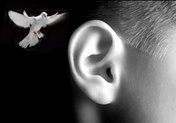
For the time will come when men will not put up with sound doctrine. Instead, to suit their own desires, they will gather around them a great number of teachers to say what their itching ears want to hear. They will turn their ears away from the truth and turn aside to myths. (2 Timothy 4:3-4)

It is the time and season for itching and scratching! Have you had a scratch today? Most likely you have! Upon waking this morning, most of us would have scratched an itch of some sort. Perhaps even now the psychosomatic desire to scratch an itch is burning within you, with just the mention of the itch. Lest we start talking about vermin like fleas, head lice, sandflies, mosquitoes, mites, and bedbugs.

And if that doesn’t get you scratching then there’s the good old October itch of harvest time. When the grain and straw dust finds its way into all the nooks and crannies, making you want to scratch! Or perhaps, the heat of summer sunburn, prickly pimples, or dermatitis irritations gets you going!

There’s nothing quite like the instant feel-good relief of scratching an itch. However, not scratching the itch, or not being able or allowed to give it a good old rub, can drive you to near madness. Anyone who has suffered at the hands of chicken pox, sandfly bites, or a prickly rash knows they’re not meant to scratch. But the time comes when one has to just give it a bit of a scratch to steal a moment of relief.

When the itch can’t be left alone and the scratching becomes addictive and habitual, then there’s a real problem of the itch becoming infected turning into an oozing swelling sore. The minor irritation becomes serious and perhaps even life-threatening.

It’s no wonder we have grown up hearing our parents tell us, “Stop scratching that itch! You’ll only make it worse!” And experience tells us they’re right, as we cover ourselves with bandaids in a bid to stop ourselves from making the itches and sores worse than what we’ve already made them!

What makes us itch? Why do our bodies crave relief with such intensity, that we must just scratch it? Well biologically speaking, the central chemical involved in itching is histamine, a molecule released by cells in the skin. Histamine is the chemical that causes the itch and reddening. It binds to local nerve endings on specific receptors. The feeling of itchiness can be caused by a movement of hair or the release of this chemical (histamine). Itchiness is regarded as protective, as it helps creatures remove parasites that land on their skin.

So we itch and scratch to remove parasites, or we do so as a result of the bite or sting left behind. However, the reaction to get rid of something by repeated scratching often leads to other problems too. Itching comes from our bodies reacting to something unhealthy, and although scratching occurs as a desire to feel better, it can lead to greater health problems in the future!

Saint Paul speaks to Timothy about unhealthy itching. He says, for the time will come when men will not put up with sound doctrine.

Paul addresses Timothy at a time of unhealthy trouble in a season of scratching. People are not listening to sound doctrine, which is God’s Word. In the Greek, sound doctrine, literally means: healthy instruction or true teaching. This unhealthy desire to scratch to feel good is relevant for us too. Even today there are so many parasites of impure, unhealthy, untruthful teaching, toiling for our attention. In fact this desire is applicable to every age, since we all suffer with the unhealthy parasites of sin, inherent in our human nature.

Paul continues… instead, to suit their own desires, they will gather around them a great number of teachers to say what their itching ears want to hear.

All of us have the intense desire to scratch the feel good desires of the flesh. But unfortunately like an itching lump that’s scratched into a septic sore, the unhealthy things with which we seek to soothe our natures only give short lived relief. They turn out to be the very things that make our condition much worse.

Instead of avoiding these things that make us itch in the first place, we cast off protection from unhealthy situations, believing we’ll be ok. Time and time again we never learn. We try to tell ourselves we haven’t been bitten when we have, and forget how bad scratching these itches can be. So as Paul says, they will turn their ears away from the truth and turn aside to myths.

Therefore, if it’s the season for suffering and scratching from the sensations of sin, what should we do? After all we should have known better! We’re only getting what we deserve — our just deserts! Are we not?

However, when justice is exhausted and it seems we are condemned to a life of scratching and suffering with sores, along comes the Unjust Judge and he unjustly gives us mercy! We are rightly set for a season of suffering at the hands of sin, it’s what we deserve! But when justice is exhausted, God who should rightly judge us and condemn us, saves us from the itching suffering of sin, by covering us with the soothing salve of our Saviour, Jesus Christ.

God is the Unjust Judge, for if he was to merit justice to us for who we are and what we do; we could only expect a life of miserable hopeless suffering, death, and eternal wrath. But glory be to God that he mercifully lets justice fall on his Son so we might be led to him and receive salvation from the sin that makes us silly with scratching and itching.

God want us to seek him to stop the itch. For as long as the itch of sin keeps up he desires that we not let up praying to him, nor give up. He says just this in the parable of the persistent widow.

1 …Jesus told his disciples a parable to show them that they should always pray and not give up. 2 He said: “In a certain town there was a judge who neither feared God nor cared about men. 3 And there was a widow in that town who kept coming to him with the plea, ‘Grant me justice against my adversary.’

4 “For some time he refused. But finally he said to himself, ‘Even though I don’t fear God or care about men, 5 yet because this widow keeps bothering me, I will see that she gets justice, so that she won’t eventually wear me out with her coming!’”

6 And the Lord said, “Listen to what the unjust judge says. 7 And will not God bring about justice for his chosen ones, who cry out to him day and night? Will he keep putting them off? 8 I tell you, he will see that they get justice, and quickly. However, when the Son of Man comes, will he find faith on the earth?” (Luke 18:1-8)

Unlike the weak widow who sought justice from the unjust judge, we deserve to come under justice from he who is holy and just. But we who are weak have been given mercy in Christ’s death and resurrection, for us, so we can constantly say to God, “Grant me justice against my adversary. Save me from the sin and suffering of myself; stop me from scratching!”

It’s the season of itching and scratching, therefore it’s the season for salvation from scratching. It’s the time of truth! Hear that which reveals, heals, and removes the myths, and the need to scratch the sin making you suffer! Receive the Word of God, in it you will receive the holy antihistamine — the Holy Spirit. He will soothe you and give you peace, even as you continue to suffer in the season of itching and scratching.

When the Son of Man comes, will he find us scratching our own itches of sin and suffering, or will he find us faithfully letting the Holy Spirit apply the soothing salve of God’s saving Word into our souls? Amen.

Saturday, October 13, 2007

C, Pent 20 Proper 23 - Luke 17:11-19 "Journey with Jesus"

Luke 17:11-19 On the way to Jerusalem Jesus was going through the region between Samaria and Galilee.12 As he entered a village, ten lepers approached him. Keeping their distance,13 they called out, saying, “Jesus, Master, have mercy on us!”14 When he saw them, he said to them, “Go and show yourselves to the priests.” And as they went, they were made clean.15 Then one of them, when he saw that he was healed, turned back, praising God with a loud voice.16 He prostrated himself at Jesus’ feet and thanked him. And he was a Samaritan.17 Then Jesus asked, “Were not ten made clean? But the other nine, where are they?18 Was none of them found to return and give praise to God except this foreigner?”19 Then he said to him, “Get up and go on your way; your faith has made you well.” [NRSV]

There is faith; and then there is faith! The account of the ten men with leprosy gives us a picture which we might use to reflect on ourselves. In the light of this narrative we can ask ourselves, “What “is” my faith?” Is my faith one which is religious? Is it about my religious duty to God; what I must do? Or is it one which is dependant solely on Jesus Christ, God the Son? What he has done in his death and resurrection? And what he continues to do through the work of the Holy Spirit?

These ten lepers are outcasts; they know they have no power in themselves to change their condition which relegates them as unclean. They must remain out of sight, away from others, and they must call out and warn anyone who approaches that they are unclean lepers.

Instead here in this instance, they look to Jesus to heal them; crying out to the holy “man” to do his thing and make them clean. Jesus, Master, have mercy on us!

Let us not quickly overlook their boldness here! These men with leprosy cry out to Jesus. They know he is one who has a high position amongst men, a master in fact, and yet cautiously, at a distance, they place themselves before him and beg for his mercy. There is no doubt they have faith. They believe this holy “man” can do something for them.

In Luke nine we hear of Jesus’ determination to fulfil his Father’s mission, as he resolutely sets his face towards Jerusalem, where, for the sins of the world, he would be crucified as though he was guilty, even though he was completely innocent. Yet as he sees Jerusalem and the cross as his Father’s mission — his purpose for being born as “man” — we hear in Luke seventeen that he “sees” the lepers too.

Instead of avoiding their contagious condition and continuing on his way to Jerusalem, as any holy person would have done, he stops and addresses their outcry for mercy. In fact his purpose in being born “man” and being crucified as a “sinner” was so he “the Holy Son God” might save us from the powerlessness of our sinful condition!

Jesus’ response is also quite remarkable, in that all he does is, grant them permission to come out of hiding and present themselves to the priests in Jerusalem. We do well to not overlook this either! His simple command to “go and show” was all the lepers heard, and then as they travelled towards the temple and the priests on duty there, they were healed. Surprisingly, they ask no questions at this simple command! These men once without any authority and power whatsoever are now given the gift of God’s powerful and forgiving Word embodied in flesh.

Imagine if you or I had had a contagious condition which excluded us from everyone else, rendering us powerless and diseased, wouldn’t you expect you would notice, say something, or at least question the power of the command? We would all agree that it’s quite obvious there’s power in God’s word! And we’d all agree Jesus deserved his due honour and glory doing what he did!

However, these ten lepers show us the truth of sinful humanity! Yes—even us Christians too—whom God sees along with all humanity, as he continues to patiently persevere and endure with our fleshy sinful condition, as we so quickly take the gift of his mercy, faithfulness and power and credit ourselves as if it was a power or a faith that came about as a result of what you or I have done!

As you and I, chosen by God the Father — having had his One and Only Son die for our sin — now having been raised from death and ascended from our sight — and, having received the Holy Spirit given in his Word, to show us Jesus by faith; how often do we remember these are of God and his gifts are the very things that empower every second of our eternal lives?

It’s no great surprise, we find ourselves more like the nine most of the time, as opposed to the one leper who returns to worship Jesus. One out of the ten! In fact, we would do well in reflecting and remembering God at all, let alone ten percent of the time.

Just like the lepers, we have received God’s power of mercy over the contagious condition which we have carried since creation’s fall. Just like the nine lepers, the old Adam in us, turns from God and in pride consumes the power and forgets the source that gives us the will to do anything!

However, in Psalm sixty-six we hear God’s deeds are awesome! See what he does on your behalf! He rules forever; there is not one moment where he lets down his guard! His power never rests; his eyes never close to sleep. He is the Lord God Almighty! God never forgets us, he remembers all people all the time!

Even greater are those he remembers because they are baptised into his Son. The Son of Man who travelled with a resolute face towards Jerusalem, now travels with us! He sees us in our sinful contagious condition; he calls us to travel with him, from the waters of Baptism towards the great cross we all must bear in this life, the fire and cross of death.

And as we travel with him, often forgetting he is there with us, he is putting out the fire of death in us with the waters of our baptism. And with the knowledge of our mortality, our upcoming earthly death, our contagious condition is being combusted and consumed by his sacrificial death on the cross. God is faithful to us, refining us and testing us with water and fire, as we travel throughout this life! Now the Son of Man, God the Son, sets his face towards us and travels with us as we suffer between the waters of baptism and the consuming fire our mortality, our cross, our death!

So having received Jesus’ powerful word of God in baptism, he calls us to “go and show!” Now at work in the members of your body, which more than nine times out of ten seeks to take God’s merciful power for granted, is also the Holy Spirit. The Holy Spirit causes us to stop and see God the Son cleansing us and healing us of our mortal contagious conditions, which is sin.

The Holy Spirit makes us realise — this holy “man” is our Holy God — that the Christ centred words of the Bible, that baptism, that the bread and the wine, are the forgiving power of God for us who are weak and full of deathly sin. The Holy Spirit leads us like the one leper returning to Jesus, aware of our weakness before the One who is the Lord God Almighty. Because of the Holy Spirit we can worship our Heavenly Father and his Son our Lord. Because of the Holy Spirit we are being led to know that Jesus is truly the Master over our sin and death!

God is faithful to us. He has healed us whether we are like the one leper or the other nine. Although God’s will for you is this: that you are healed for eternity rather than just for this life! We have been called to “go and show” since our baptism; so see the healing of his word, see the power over your contagious sinfulness, return to the Lord and give him the glory due for his faithfulness towards you!

In closing we do well to hear the trustworthy saying Saint Paul spoke to the young pastor Timothy, recorded in second Timothy chapter two, verses eleven to thirteen. If we die with Christ, we will also live with him; if we endure, we will also reign with him (as kings); if we will deny him, he will also deny us; if we are faithless, he remains faithful - for he is not able to deny himself.

God is faithful to us because he lives and remains with us. Our faith put simply is faith alone in Jesus Christ with us; doing his will in us since baptism. Our faith is not of ourselves; having been done in baptism, so Jesus might be done away with to do what we like. We are warned if we will continue to deny him, we will be denied.

We are dying, that’s a fact! So let us die with Jesus Christ; and let our sinful nature die to his will. Let us take hold of Jesus’ faithfulness towards us as we hear his Word and as we receive his gift of forgiveness through his means as the Holy Spirit brings us to worship him! Let’s live in the faith that he endures with us — in us in fact! Let us hear and trust his word to us, “Rise and go [with me] you faith has made you well [unto eternity].”

In hearing this, do not overlook the fact that God the Son has resolutely promised to raise you and me from death to reign in glory with him forever. Amen.