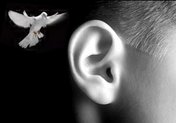
A, The Third Sunday of Easter - Psalm 116 "Resurrection from the Self"
The picture of two disciples, Cleopas and the other unnamed,
standing on the road to Emmaus discussing the Resurrection Day’s events is a
good picture of our human condition. These two men are completely turned in on
themselves. They are completely puzzled by the reports of Jesus’ resurrection
in the wake of his crucifixion three days earlier.
Their hopes seemed dashed as they report to the unrecognised,
resurrected Jesus. This Jesus was to be
the redeemer of Israel, they lament, and now there’s a confusing report from the
women who say they saw two angels at the tomb and that Jesus was alive.
The two on the road to Emmaus go over and over the events,
round and round in circles much like us today when something has happened and
the airways, social media, influencers, and commentators fill one’s ears with information
built on, truths, half-truths, gossip, and Chinese whispers. The longer the story is out there moving from
mouth to mouth, the greater the embellishments, the greater the speculation, the
greater the misinformation!
Notice that the discussion between the two left them
looking sad. Their conversation left
them without hope. So turned in on themselves,
they were kept from recognising Jesus. I
reckon Jesus could walk past me most of the time and I would not notice him. It’s not that Jesus is unnoticeable, but
rather it’s my inability to notice anything much other than my own self-centredness.
Like the two on the road to Emmaus, humanity in the presence
of God, has the uncanny ability to make it all about the self, so curved in on
ourselves that we are! It was not so much
that Jesus had died, that there were angels at the empty tomb, but how hearing these
things turned them in on themselves! The
meeting on the road to Emmaus shows us how much we need God to daily bring us
out of ourselves, from our thoughts, words and worries within, to be outward
looking in the place where God has put each of us!
We need Jesus Christ to bring us out of ourselves into an
outward looking posture that sees both him and the people we are called to
serve in his name. Unless this occurs and
continues to daily occur, we become no different to the Emmaus men before Jesus
opened the word of God to them and revealed himself in the breaking of the bread.
Unless Jesus does this work of resurrecting us from ourselves,
we act in just the same way as the Jews did throughout the history of God meeting
with them in the temple. Israel became fixated
on the temple rather than on him who gave them the temple through his
word. They became more concerned about
keeping the law than about the access gained to God’s mercy through the rituals
of the law.
What is the purpose of being a Christian? If you had to make a defence for your faith, what
would you say?
Now stop! I want you to notice what just happened in you
when you heard these questions? When
someone asks you why you are a Christian, or why you go to church on a Sunday, how
do you respond? Do you respond? Or do
you just freeze up, go blank, and don’t know what to say? How much worse is it when someone sets out to
prove your Christianity wrong, or tries to ridicule you or shame you for your
Christian beliefs? Does your defence of the faith fall short?
If it does it’s because you’re like the two on the road to
Emmaus. You’re looking within for the faith
to answer or understand. And looking
within fails every time! Just as the Jews
failed to find God even when God was present in the temple, just as we do today when we know the bible as a
book of biblical facts, without letting it function as the sole source of faith. In other words, Christianity just becomes a transaction
to make the individual impersonal, cold and clinical.
Some might claim that faith is personal, having undergone a
lifetime of conditioning by the copout that “Jesus is my personal saviour!” Yes! What
Jesus did for you was very personal for him, but it was a very public act for
you and me! Many hide behind Jesus as a
personal saviour, that Jesus died on the cross, rather than allowing him to
function as the public Saviour, who died on the cross, “for me”!
It’s when we come to testifying that Jesus died on the cross,
for me, that we begin to arrive at the need to allow true Christianity
to take effect within. It changes us
from being like the two disciples on the road to Emmaus to the Apostles who
stood with Peter at Pentecost to publicly declare Jesus Christ risen from the
dead, in the face of the Jews who put him to death.
Jesus challenges you just as he did the two on the road to
Emmaus, saying, “O foolish ones, and slow of heart to believe all that the prophets have
spoken!” (Luke
24:25 ESV) He leads us from within ourselves and the confusion and
quickness of the world to his word when we allow the Holy Spirit to help me,
for me!
God sent Jesus to resurrect the Jew from themselves. Jesus became the new Adam to save humanity from
itself—to resurrect you from yourself!
Why? It’s not to cleanse the slate
so we become good people; it’s much more than that! It’s to make us holy so we can be with God
forever.
The reality of Christianity, the reality of the cross, the
reality of God’s word is best summed up in Revelation chapter twenty-one verse
three, “And I heard a loud voice from the throne
saying, ‘Behold, the dwelling place of God is with man. He will dwell with
them, and they will be his people, and God himself will be with them as their
God.’”(Revelation 21:3 ESV)
Psalm 116 set down for today, the Third Sunday in Easter,
is the reality of those who tarry here in this existence of life and death. As is heard at a funeral service, “in the midst
of life we are in death”, but the greater reality proclaimed by the Psalmist is:
“In the midst of death we are in life!”
We who look inwardly to ourselves remain in death, but
those whose eyes are opened to the reality
of dwelling with God, covered with the blood of Jesus’ death and resurrection, live
face to face in the midst of life eternal, face to face worshipping God in his
glory. That’s what being a Christian is
all about! That’s what the gospel of Jesus’
death and resurrection is all about!
That’s what the temple in the Old Testament was all about! God with man was broken at Eden but was put
right by Jesus our Immanuel (God with us). Indeed, our humanity is continuing
to be put right in the calling, gathering, enlightening, and sanctifying work
of the Holy Spirit, who brings us into holy fellowship with God and each other
through the blood of Jesus.
Psalm 116 speaks of our human reality but does not leave us
in it. Instead, it reveals the reality
of our salvation despite affliction and the knowledge that I with all humankind,
are liars; that is, we are full of deception, disappointments, and cannot make
good with God. But Jesus has made good
what we never could.
Therefore, despite the deadliness of my humanity, the death
of his saints, is precious in the sight of the Lord!
God has saved you and me so we can be with him in his holy presence. Jesus has been raised from the dead, so like
the two on the road to Emmaus, we too might be resurrected in his resurrection.
Therefore, call on the name of the Lord; pray that he continues
to deliver your soul! Call on the name
of the Lord; life up the cup of his salvation!
Call on the name of the Lord; offer to him the sacrifice of
thanksgiving!
We are in God’s presence, he hears your voice and your pleas for mercy, therefore, continue to call on him as long as you live, Amen.
BIBLE STUDY: Resurrection from the Self
Psalm 116
& The Road to Emmaus
“From Inward
Curvature to Resurrected Living”
Psalm
116 and the Emmaus story (Luke 24:13–35) both reveal the deep emotional reality
of life with God. They show us people who are distressed, confused, inward‑curved,
and overwhelmed — and a God who hears, draws near, delivers, and opens eyes.
This study invites us to notice our own inwardness, to see God’s outward rescue, and to walk in the resurrected life the Holy Spirit gives through Jesus Christ’s death and resurrection.
1. OBSERVATION — What do you see?
Read
Psalm 116 and Luke 24:13–35.
1. What emotions
does the psalmist express in Psalm 116?
2. Which emotions
dominate the first half of the psalm?
What words or phrases show this?
3. Which emotions
dominate the second half of the psalm?
How does the tone shift?
4. In Luke 24,
what emotions do the two disciples show on the road to Emmaus?
5. What emotional
similarities do you see between the psalmist and the Emmaus disciples?
6. What emotional
differences do you see?
- What do
you notice about how God responds to these emotions in both passages?
1. What does the
psalmist’s distress, anguish, and fear reveal about the human condition?
2. What does
God’s response — hearing, inclining His ear, delivering — reveal about His
character?
3. How does the
emotional shift from distress → rest reflect the movement from death → life?
4. What does the
sadness and confusion of the Emmaus disciples reveal about how easily we become
inward‑focused?
5. Why do you
think the disciples could not recognise Jesus at first?
6. What does
Jesus’ response — drawing near, listening, opening Scripture — reveal about how
God meets people in confusion?
7. How do both
passages show that God must act first before we can see clearly or respond
faithfully?
- What does
this teach us about the nature of faith — especially the difference
between “looking within” and “receiving from God”?
1. Where do you
see yourself in the emotions of Psalm 116 or the Emmaus disciples?
2. When you face
distress or confusion, what is your usual instinct — to look inward or to call
on the Lord?
3. Psalm 116
shows a God who is present, who hears, inclines His ear, and delivers. How does
this challenge or comfort you? Your
current prayer life?
4. Where might
self‑absorption or inward focus keep you from noticing Christ’s presence?
5. Jesus opened
the Scriptures before He opened their eyes.
What does this teach you about how God forms faith in you?
6. The psalmist
responds with thanksgiving, vows, and public worship. What might a concrete
response of thanksgiving look like in your life this week?
7. Today’s sermon
emphasised that Christianity is not merely personal but public. Where, or how,
might God be calling you to speak or act publicly in faith?
- What is
one inward‑curved habit God may be calling you to release? What is one
outward‑looking practice He may be calling you to begin?
Lord
Jesus Christ, you draw near to us in our confusion, our distress, and our
inwardness. You open the Scriptures, open our eyes, and open our hearts. You
have given us the Holy Spirit to deliver us from ourselves. Let your Holy
Spirit turn us outward to see You, to love others, and to walk in the land of
the living. Fill us with your Holy Spirit to teach us to call on Your name, to
lift the cup of salvation, and to offer the sacrifice of thanksgiving. Remind
us that we are in Your holy presence all our days. Amen.