C, Advent 1 – Luke 21:25-36 “A Global Warning”
Download WORD doc here
Download WORD doc here
Over the next three weeks we will hear much about “end times” when Christ will return and the things hidden at the moment will be revealed for what they are – both things holy and evil! And in this context we hear much about “making judgments” and “judgment day”. Then as we move into Advent and Christmas our focus moves from the second coming and judgment day to Christ’s first coming in the wake of humanity’s habitual sin since Adam and Eve, and God’s subsequent judgement that we need a Saviour.
We humans feel very uncomfortable when speaking and dwelling on the subject of judgment, especially in this age of so-called “equality” or “political correctness”. Putting judgment on the table is countercultural, because it deals with absolutes in reality and truth, in a time where it’s proclaimed that there are no such absolutes. But judgment ultimately deals with death and its cause, and it’s this uncontrollable reality and finality that makes us very uneasy.
So therefore, a modern mantra is this: “We must not judge! Do not judge!” But in fact these very words are a judgment in themselves by individuals, who, in reality, live in fear of judgment – the reality of judgment and death, judgment day, condemnation over our righteous acts as justification, and ultimately the unmovable holiness of God the Father Almighty, our eternal judge. “Do not judge!” is not just a modern mantra; it’s a modern-day deception, misinterpretation, and mistaken belief!
Rightly or wrongly the reality is: judgment is here with us to stay. Although some might argue that the bible says, “Do not judge”. In fact, Jesus says these very words in the gospels of Matthew and Luke. However, if we isolate these three words from their proper context in Scripture, we end up condemning God’s word and placing him under judgment.
In Luke the complete text says, “Do not judge, and you will not be judged. Do not condemn, and you will not be condemned. Forgive, and you will be forgiven. Give, and it will be given to you. A good measure, pressed down, shaken together and running over, will be poured into your lap. For with the measure you use, it will be measured to you.” (Luke 6:37-38)
And in parallel, Matthew’s Gospel reads, “Do not judge, or you too will be judged. 2 For in the same way you judge others, you will be judged, and with the measure you use, it will be measured to you.” (Matthew 7:1-2)
But Jesus also says, “Why don’t you judge for yourselves what is right?” (Luke 12:59) Then in John 7:24 he says, “Stop judging by mere appearances, and make a right judgment.” And again in John 8: 15-16 he says, “You judge by human standards; I pass judgment on no one. But if I do judge, my decisions are right, because I am not alone. I stand with the Father, who sent me.”
Paul seems just as contradictory when he speaks on judgment. In Romans he says, “Do not think of yourself more highly than you ought, but rather think of yourself with sober judgment.”(Rom 12:3) And then, “Let us stop passing judgment on one another. Instead, make up your mind not to put any stumbling block or obstacle in your brother’s way” (Rom 14:13)
And in his letters to the Corinthians he says, “The spiritual man makes judgments about all things, but he himself is not subject to any man’s judgment” (1 Cor 2:15) “Do you not know that the saints will judge the world? And if you are to judge the world, are you not competent to judge trivial cases?” (1 Cor 6:2) “I speak to sensible people; judge for yourselves what I say” (1 Cor 10:15) “The person without the Spirit does not accept the things that come from the Spirit of God, for they are foolishness to them, and they cannot understand them, because they are spiritually discerned.” (1 Cor 2:14) And to the Thessalonians he says, “Test everything. Hold on to the good.” (1 Thes 5:21)
John calls us to test or judge things too, saying in 1 John 4:1, “Dear friends, do not believe every spirit, but test the spirits to see whether they are from God, because many false prophets have gone out into the world.” In fact the Scriptures connect making judgments and discernments with wisdom and purity. The teacher in Proverbs says, “My son, preserve sound judgment and discernment, do not let them out of your sight.” (Prov 3:21) And again, “Wisdom is found on the lips of the discerning, but a rod is for the back of him who lacks judgment.” (Prov 10:13)
And Paul says to the Philippians, “And this is my prayer: that your love may abound more and more in knowledge and depth of insight, so that you may be able to discern what is best and may be pure and blameless until the day of Christ, filled with the fruit of righteousness that comes through Jesus Christ—to the glory and praise of God.” (Philippians 1:9-11)
So should we judge or shouldn’t we judge? Well it all depends on our motives and the means we use as the motives of our judgments and discernments! As Jesus himself said, Judge and you will be judged, the measure used will be used against you too! And in Romans Paul says, “When you …pass judgment on them and yet do the same things, do you think you will escape God’s judgment?” (Romans 2:3) So when we judge we must ultimately stand under the same judgment before God too!
This is no surprise; in fact, Jesus leads the way as our example, although the only reason he does is so he might pour out mercy upon us! He made judgments over us sinners, and as a result he mercifully stood condemned under the very same judgments. As Almighty God the Son, he could have lorded eternal judgment and condemnation over us, but instead he received our full measure of wrath on himself, and we are receiving the Son of God’s full measure of mercy unto eternity.
We receive this mercy only when we allow the Holy Spirit to give us faith, so we believe Christ and receive him in the way he prescribes in his word. And that is to hear his word of the Gospel, to repent, to hear and receive the forgiveness of sins for life and salvation. And in these things we continue to receive the Holy Spirit, and therefore faith, so we might go on enduring in Christ, despite the three things that are always ready to deceive us. The first and main one being: our own deceptively sinful nature; the second: the many deceptions out there in the world; and finally: the focused attacks of the evil one, the devil!
So when judgment is motivated by these things we end up enforcing and exalting our own authority, self-justification, and self-glorification, we lord judgment over others, and do the opposite of Christ. When judgement is made with these sinister motives we seek God-status suppressing others and proclaiming ourselves. When we are deceived into doing this we move against God, and become anti, or against Christ!
Perhaps this is why Jesus says, “Do not judge!” But then in the next breath he also says, “Forgive”, which in contradiction needs mercy centred judgment to see the sin, which requires repentance and forgiveness in the first place!
We hear in James 2:13, “judgment without mercy will be shown to anyone who has not been merciful. Mercy triumphs over judgment!” So our motive for judgment must always be grounded in mercy, for ourselves and others. We judge others as we too are judged by God so that together we might live as equals, judged as sinners, but mercifully sentenced to eternal life because of Christ’s death on the cross.
And further to this, a discerning and wise person will always test everything with the measure and means of Scripture. This goes without saying for spiritual people who place themselves under the judgment of God in the face of their mortality, and are enduring and living in the comforting arms of Christ without hindering the Holy Spirit who always guides us to Christ through his word. For the word of God is the only source of truth over-against the questionable motives of humanity’s standards, which are governed by the sinful nature played out in our confused thoughts, fickle feelings, and deceptive deeds!
After all Hebrews 4:12 tells it how it is, “…the word of God is living and active. Sharper than any double-edged sword, it penetrates even to dividing soul and spirit, joints and marrow; it judges the thoughts and attitudes of the heart.”
So in these days of uncertainty God calls us to stand firm. We are neither to sit on our laurels thinking “she’ll be right”. Nor are we to move from where we’re called to take our stand! If we do we will surly move away from the means of merciful judgment and make judgment with human standards, compromised by our sinful nature, the world and men of lawlessness, or Satan himself. When we don’t stand firm in Christ and his word, we oppose God the Father, we become anti towards Christ, and participate in the lawlessness against his Spirit of holiness. Yes! All of us have the ability to be antichrists - men and women of lawlessness!
Therefore Paul’s message to the Thessalonians is also God’s message to us…
3 Don’t let anyone deceive you in any way, for that day (the day of Christ’s return) will not come until the rebellion occurs and the man of lawlessness is revealed, the man doomed to destruction. 4 He will oppose and will exalt himself over everything that is called God or is worshiped, so that he sets himself up in God’s temple, proclaiming himself to be God.
13b But …from the beginning God chose you to be saved through the sanctifying work of the Spirit and through belief in the truth. 14 He called you to this through our gospel, that you might share in the glory of our Lord Jesus Christ. 15 So then, brothers, stand firm and hold to the teachings we passed on to you, whether by word of mouth or by letter.
Amen
16 May our Lord Jesus Christ himself and God our Father, who loved us and by his grace gave us eternal encouragement and good hope, 17 encourage your hearts and strengthen you in every good deed and word. (2 Thessalonians 2:3-4, 13b-17)
Amen.
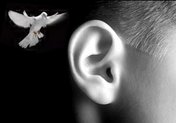
Text – Luke 21:25-36 "There will be signs in the sun, the moon, and the stars, and on the earth distress among nations confused by the roaring of the sea and the waves. People will faint from fear and foreboding of what is coming upon the world, for the powers of the heavens will be shaken. Then they will see 'the Son of Man coming in a cloud' with power and great glory. Now when these things begin to take place, stand up and raise your heads, because your redemption is drawing near." Then he told them a parable: "Look at the fig tree and all the trees; as soon as they sprout leaves you can see for yourselves and know that summer is already near. So also, when you see these things taking place, you know that the kingdom of God is near. Truly I tell you, this generation will not pass away until all things have taken place. Heaven and earth will pass away, but my words will not pass away. "Be on guard so that your hearts are not weighed down with dissipation and drunkenness and the worries of this life, and that day does not catch you unexpectedly, like a trap. For it will come upon all who live on the face of the whole earth. Be alert at all times, praying that you may have the strength to escape all these things that will take place, and to stand before the Son of Man." Sermon Where's that jolly noise coming from? It's driving you crazy! That rattle in the car you never seem to locate, or the bumping sound under the bonnet! Those cats fighting outside! Hidden by the stealth of darkness! That mosquito with its radar set to seek, somewhere above your face, so it seems, with its high pitched sonar. Or perhaps it's those rowdy neighbours having a party with their music turned up to test the most peaceful of neighbours. Then there are noises which might be an annoying distant din at first, but then grows to reveal a fury that just might prove to be fatal. Tsunami, bushfire, earthquake, cyclone, a severe electrical storm, or anything which turns hearts to jelly and announces something horrendous is about to happen. These noises, regardless of them being just plain annoying or even something worse, are sobering as they bring us out of slumber into a consciousness that demands we address the reality of the situation immediately. Maybe the rattle in the car demands you stop to fix the problem. So you turn up the volume of the radio to drown out that funny noise coming from under the bonnet. And those jolly cats! So you get out of bed and get the broom to chase them off. Or open the gate to release the hound, who's also been woken by the horrible din of cats snarling and sneering at each other outside your window. The mozzie squealing makes you clap your hands in the darkness, hoping you get the little blighter. But no, you hear him still! But then he stops! Is he on your face? Your ear! You wack yourself in the head eager to kill the mozzie, but sure as anything you lie there half concussed from hitting yourself and then in its own time that mozzie begins its sonar seeking squeal once again. Or it's two in the morning and all you hear is thump, thump, thump of a booming bass beat that makes it impossible to sleep. What do you do? Put your head under the pillow? Do you stuff cottonwool in the ears to block out the noise? Or do you get up, turn on some noise of your own, seeing you can't sleep! One person's noise is another person's nightmare! So what noises do you create, do you enjoy, at the expense of someone else's serenity? Most of the similar noises we make, as a group of human beings and as individuals, drown out what we need to hear from God. In fact, our noise is a nightmare! Not to God though, but rather to ourselves! Yes! God doesn't like our noise, that's for sure! But the noise we create is at our own expense, and it brings imminent chaos on us and our creation. But why are humans so hell-bent on creating such noise? Noise which deafens and threatens to destroy us! One might understand the accidental noise we inadvertently make. But we humans go to great lengths creating deliberate noise which only turns up the volume on our nightmares. We create such noise, knowingly and unknowingly, because our natures want to block out God and his noise. In our natural state of being we don't want to have anything to do with God. And so many go to great lengths to create noise to distract their consciences from hearing and knowing there is someone greater who is almighty and infinite and is the author of all things. Then there are those who accept there is a God who has created and still sustains all life. But they still make noise, refusing to hear God who announces to them that they need to be accountable to him. They think God has made us only to cut us free with unlimited boundaries so we might no longer look to him for anything. But still some know he exists, and seek to remain accountable to him. Nevertheless they turn up the volume so they can't hear God announce to them they are sinful, and that left in their natural sinful human state of being they will experience God's anger if something doesn't happen to unplug the noise of sin in their lives. And again, some realise they are sinners; they know God exists, and seek to remain accountable to him. But instead they make an ungodly sound as they seek to work off their sin. However, no matter how much noise they make, regardless of what type of song and dance they do, they will never do enough to earn the serenity of salvation from their sin. And so we come to the reality of God's noise. The noise of a mother heavily pregnant as she labours on a donkey, and in the stall amongst the animals! The noise of a baby born at Bethlehem as it takes its first gasp of air and cries for its mother's milk. This is the noise of God's own Son descended into the midst of our noise, our trouble, and our sinful reality. And God continues to make his noise! He calls you to trust he who came into his creation capable of making much noise, yet was silent, submissive, and sinless to slaughter on the cross. God calls you to know that although Christ Jesus was silent about his innocence, he cried out in suffering as he carried the nightmare of our sin which we all should be suffering. This is the noise of death, every generation and every person must undergo as a result of the sinful human nature. This noise of ours became Jesus' nightmare! So busy are we to rid ourselves of God, but instead Jesus got what our human nature fights for. And having heard the "sound of true silence" Jesus cried out "My God, My God why have you forsaken me?" (Matthew 27:46; Mark 15:34) And God withdrew letting Jesus die under the deafening din of your sin, and my sin too! Now, on the other side of Jesus' death, God's noise still remains! Having raised his Son Jesus Christ our Lord, "the Word made Flesh" now lives in all who believe and are baptised into him, in the name of the Triune God — Father, Son, and Holy Spirit. Knowing God has done all this for you, his noise is not something you should fear. Your death is now only a temporary glitch on your eternal radar! But, on the other hand, silence from God is all one can expect while continuing to reject his word and busy themself with noisy nightmares ending in eternal death minus the love of God. So as God turns up the volume of his word, his noise is a noise with which we can joyfully resonate as we're brought in time with his death and resurrection through his Word of eternal life. In the last days Jesus promises he will come again and things will happen in creation that forecast this! Just as the fig tree sprouts new leaves as a sign of summer coming, Christ's second coming will be expected for those who avail themselves to hear his Word. Severe events in the natural world will occur to sober all of us sinners to the reality of his Word. And with these events we will witness chaos in the hearts of people who have tried to block out the noise of God's coming, and his Word. As God turns up the volume of his return God call you to stand up, lift up your head, look and know that the kingdom of God is near. And all the more as his creation groans as a result of our sin, yearning for the final release promised since the day Christ's blood flowed into the earth from the cross. He also warns you to be careful, to watch and pray so you're not overburdened by the noises and anxieties of life which can weigh you down with dissipation and despair and cause you all sorts of terrors as we see God shaking creation before he comes in the clouds. But not so for us! When you witness these things beginning to happen, stand up and lift up your heads, because your redemption is drawing near, the kingdom is near, and the king is coming to take you home! Amen. May he (the Holy Spirit) strengthen your hearts (with the Word of Christ) so that you will be blameless and holy in the presence of our God and Father when our Lord Jesus comes with all his holy ones, Amen!
What are you waiting for? Waiting is one of the hardest things to do. Waiting for something to finish; waiting for it to start. Waiting for Christmas; waiting for work to finish, waiting for the weekend. Waiting for first love; fiancées waiting for their wedding day. Waiting for morning, for sickness to end, waiting for it all to be over. Waiting to become pregnant, waiting nine months to see who your child is, and kids always waiting for mum or dad so they can get going! What are you waiting for?
Ten girls were waiting. They were bridesmaids, they were virgins. As their excitement built while they waited it took its toll and they fell asleep. There was no way they could maintain this enthusiasm without exhaustion setting in.
These ten girls had come to honour the bride and groom at the wedding breakfast. Perhaps to entertain and dance for them and their guests! And accompanying them were their torches; poles with rag bound to one end and soaked in olive oil. These torches would burn for about fifteen minutes before going out, and the girls would then have to trim off the burnt rage before re-soaking in olive oil and relighting the torches once again. They knew they needed to be ready with more oil as they waited for the groom to arrive.
We know that five of these girls were not prepared as they waited. As the night wore on their excitement turned to slumber, so when the bridegroom arrived and they were called into service, a startling jolt raised them from sleep as they dashed to soak their torches to be ready.
The ill-equipped girls’ actions were inexcusable. Their lack of preparedness showed them to be quite naïve. One wonders what they must have been thinking; this was an important occasion. They were quite disrespectful if they thought the event would be over in fifteen minutes. They demonstrated they hadn’t thought about what was going to happen, nor did they think about what they needed. Their insolence revealed their immaturity and ignorance and when the groom finally arrived they had no one else to blame but themselves. Whatever was going on within their hearts and minds, they grossly misread the importance of the event and their negligence caused them to be excluded at the end.
However, the ten girls waiting for the bridegroom is a parable. It’s a story Jesus told to illustrate what’s going to happen when he returns at the end for the resurrection and judgement of all people. This parable of the five prepared and the five unprepared girls is about you, me, and all people as we dwell here in the times before Jesus returns.
It’s a sobering thought for us all. We’re in the last days and Christ’s return could happen at any moment. The seriousness of our situation also confronts us as we ask ourselves: What am I waiting for? Am I prepared? How should I prepare myself? And which of the five girls am I in this parable?
If we are quick to judge ourselves by what we do, we need to do so with caution. The ten girls essentially all did the same thing. They all had their torches and they all fell asleep. They were the same, their appearances didn’t negate them from entry into the wedding banquet, but rather it was their unpreparedness. Five of the girls were resting ready, and five were resting on their own laurels, waiting in naïve ignorance.
So what should we do? Should we give up working, sit on top of a hill and wait for the rapture? No! I guarantee that like the bridesmaids our enthusiasm would quickly wear off and we would end up of use to nobody, not even ourselves. After all, all ten girls were sleeping —not watching out for the groom to arrive — yet five were still taken into the banquet.
Therefore, thinking the act of sitting in wait for Christ’s return will earn us the reward of eternal life is just plain wrong. Rather, patiently waiting, resting ready, being prepared everyday, is much more beneficial than being completely unprepared when it comes.
So the question is this: How do I become prepared so when Christ returns he might take me into the wedding breakfast of eternal glory forever?
Imagine the ten girls standing around waiting for the groom to arrive looking each other up and down. After all they all look the same, they all act the same, and they all fall asleep as they wait. But as they wait those with reserves of oil would have continued to wait patiently while those without spare oil would have been secretly convincing themselves, thinking, “We’re alright we’ll get in, we’ve got plenty of time yet!” Or perhaps they thought, “If he lets the others in, he’ll let us in too!” And when the bridegroom comes and they get caught out, even still they thought their efforts would get them in the door, “She’ll be right, we’ll talk our way in!” But as we know it’s not to be as they come to work their ways at they door the bridegroom replies, “I tell you the truth, I don’t know you!”
Therefore, what should surely grieve all Christians is when we hear of others who call themselves Christian, yet do not think it necessary to go to church! They rest on their own laurels thinking they have done enough to be welcomed by the bridegroom at the end of the age. Or they’re too ashamed to come and receive the essentials to cleanse and prepare them for the bridegroom.
But even more dreadful are those who think going to church is some kind of justifying work that earns them the right of entry. However, in all the time they spend working their glory, churching themselves, they never stop long enough to obediently receive the one thing that prepares them for eternity. As a Christian and a minister of Jesus Christ, it distresses me to see brothers and sisters too busy to really hear and receive the message of Christ!
The one thing we all need is forgiveness, this is what prepares us. It is essential for our preparation for the bridegroom’s return. Forgiveness cleanses us of all our sins before God the Father. Forgiveness gives us peace with God the Father. And forgiveness from God gives us the victory Christ won on the cross. Forgiveness is the good oil, you need his forgiveness! This good oil makes you holy; be anointed with the Anointed One, the Messiah, God’s Son. To be prepared, rest ready having heard and believed the good oil of forgiveness given for you!
However, this good oil is not cheap. For God to forgive us our sins against him, it cost Jesus his life! Although we can forgive each other we can’t give God’s forgiveness to each other, nor can we produce it ourselves, it comes from God himself, through his Son, Jesus Christ. And this good oil makes us candles of Christ burning with the Holy Spirit until Christ returns. We get the good oil through the essential things Jesus gives us so we might bear the forgiveness of sins.
These essentials are the forgiveness of sins given in Baptism, and the burning of the Holy Spirit in us making us yearn, to return time and time again, to be forgiven by God himself through the words of absolution spoken by the pastor. This forgiveness also comes when we take the bread and drink the wine, which is the good oil of Christ’s body and blood. And through the preaching and hearing of God’s Word where the Holy Spirit is given, we are fed the good oil so we might rest ready, alive in Christ. Just like the five girls prepared with reserves of oil for when the bridegroom made his surprise return!
So we return to the first question: What are you waiting for? Perhaps a better question is this: What are you waiting with? Jesus calls us to be ready — to keep watch — yet all the girls fell asleep. So we have the peculiar occurrence that five of the girls slept but in fact were keeping watch, or were being kept in their watch as they rested in Christ. But the other five slept and were not ready. In fact they were sleeping in the slumber that leads to eternal death.
To keep watch is keeping watch over ourselves, to remain vigilant, resting in Christ and remaining immersed in the means he gives us, supplying us with the good oil of his grace.
Therefore, encourage one and other to return and receive the forgiveness and the refining fires of the Holy Spirit that God so dearly desires all to have. Allow the continual cleansing and preparation of yourselves with the good oil of God’s grace. Rest ready in Christ; trim your torches!
Do not put out the Spirit’s fire… Test everything. Hold on to the good. Avoid every kind of evil.
May God himself, the God of peace, sanctify you through and through. May your whole spirit, soul and body be kept blameless at the coming of our Lord Jesus Christ. The one who calls you is faithful and he will do it. Amen. (1 Thessalonians 5:19,21-24)
1 Thessalonians 1: 3 We continually remember before our God and Father your work produced by faith, your labour prompted by love, and your endurance inspired by hope in our Lord Jesus Christ.
The verse we have just heard, directs us to meditate on three things; faith, love, and hope. These three are not uncommon to us from scripture. We hear of them in many places throughout the New Testament. But more on these three in a moment.
There are also another three things in this verse we can examine too; work, labour, and endurance.
Whether one works or not, all know what work is; all know what work they should be doing, whether they have done it or not. Work here in this sense refers to one’s deeds or actions; to ‘do’ something.
Then we hear of labour. We might assume labour is the same as work, and when we labour at something we do work at it. However, labour is more intense than work in the general sense. Mothers, more than likely, have the greatest understanding of labour, as a more intense part of motherhood, over against the regular duties of a mother’s work. So labour here implies that there is hardship and difficulty, requiring commitment and passion, lest the labour not be finished.
The third word is endurance. It too has something to do with work, as does labour. However, with endurance we have the quality of constancy. One might see endurance as something one has to keep at, grinding away bit by bit, until the outcome is realised. Guts and dogged determination, stamina and inner strength are needed for endurance. Patience, fortitude, steadfastness, and perseverance are what endurance is all about.
So he writes his first letter to the Thessalonians to encourage them in the troubles they’re facing. We hear his encouragement for their work, labour, and endurance. But specifically for their work produced by faith, their labour prompted by love, and their endurance inspired by hope. The three fold theme — faith, hope, and love — common in the New Testament is present here, but Paul now couples it with their deeds and lives amongst the transient community of Thessalonica.
In these days we too live in a transient and temporary society. In communities where once everyone knew who was who, there was a consistent stability people could count on. But no more! Our world has gone and got itself a whole lot busier, and we have been caught up in the busyness of it too.
Our society is changing in many ways. We can now find out news from anywhere in the world with only a moment’s notice. People are becoming migratory in search of the almighty dollar. And those who stay put, can’t afford to sit still or they get left behind and buried under a pile of debt.
The church too faces this change and Christians within it face the very real pressures of the transient, live-for-the-moment desires of our age. Once upon a time Christianity was the centre of most communities; you would see the who’s who of the district in a church somewhere. And everyone made the commitment to be in church on Good Friday and Christmas day. But today, friends and family are sadly missed from amongst the ranks. The pews are empty; leaving us behind wondering if we should remain in something that seems like it might die.
The saddest thing though, is not that our society is changing, getting busier, or even becoming more and more heathen. The Thessalonians came through it and so has the Christian church in other ages too. No! The saddest thing is that as a result of these things we allow ourselves to backslide; producing less and less works, labouring in love is lost, and endurance becomes uninspired, bland, and boring.
The saddest thing is we let the godlessness of our age have more power in our lives than our Father in heaven, fearing godlessness more than God, giving it greater and greater power in our hearts and minds. We see numerical decline and lose trust in God who has his plan for his church which he ultimately sustains through thick and thin.
After the collection of the weekly offering we pray for God to receive it for the sake of Jesus Christ. We use various prayers, but usually they give thanks for what God has given us; ourselves, our time, and our possessions. We go on to ask God to accept our offerings as a sign of his goodness and as a symbol of our love.
The offering on the plate is a sign and a symbol, but it’s not the sum total of what we give! And so we can ask ourselves, regardless of how much or how little we might put on the plate, “With what intention do I give?”
The state of our faith, hope, and love are quickly revealed when we match them next to the offering of ourselves, our time, and our possessions.
Does the handling of our possessions speak well of our love; of God or of our neighbour? What does our time management reveal of our daily, hourly, and momentary devotion and glorification of God Almighty? And what type of faith do we radiate to others as a result of the faith we have received from God?
Faith and ourselves, our time and our hope, our love and our possessions; we ask ourselves, “What do they say about my intention towards God?”
Today, in the days of the Thessalonians, even back when the Israelites created the golden calf, and right the way back to Adam and Eve, humanity turns from the one true and living God to idols of one kind or another.
Much work, labour, and endurance has evolved from the hearts and hands of humans to serve these idols we’ve fashioned. But the question is; how do I turn from this habitual sin and idolatry back to the one true and living God, so faith in me produces work pleasing to God, I labour for the love of God prompted by the love of God, and I persevere, inspired with enduring hope of my eternal home, before those who seek heavenly moments in the fleeting pleasures of this world?
We could become better focused on our work, labour, and endurance; but that still would lead us on a path into idolatry. Even if faith, hope, and love within are fed by work, labour, and endurance could we together build something special and great? No! We couldn’t even make something as special or great as a golden calf or a
Paul thanks God for the Thessalonians because they didn’t do that. Rather they turned from their idolatry to serve the living and true God, waiting for his Son from heaven. They looked to Jesus Christ and to him alone who chose them through the gospel, convicting them deeply by the power of the Holy Spirit.
God has chosen you and me. Although the deep conviction to work, labour, and love might temp us to focus on these things and turn them into idols, it is the Holy Spirit’s intention with faith, hope, and love, to have us focus on Jesus Christ. And in him we will be productive in faith works, prompted to love, and inspired by hope.
You see faith, hope, and love are ours in Christ Jesus our Lord; we are in Christ because Christ is in us. Faith, hope, and love are in us and can only come from us because they are in Christ and are of Christ as a result of the Holy Spirit.
So let us not even be tempted to run after these other things which might seem good, lest they lead us away from God into the idolatry of ourselves. Let us fix our eyes on Jesus and run after him, so that in him, he in us will produce prompt and inspire, faithful good works, labours of love, and enduring hope, to the glory of God — the Father, Son, and Holy Spirit. Amen.