Saturday, September 15, 2012

B, Post-Pentecost 16 Proper 19 - Mark 8:34 "In Denial"

Download WORD doc here

And calling the crowd to him with his disciples, Jesus said to them, "If anyone would come after me, let him deny himself and take up his cross and follow me. For whoever is ashamed of me and of my words in this adulterous and sinful generation, of him will the Son of Man also be ashamed when he comes in the glory of his Father with the holy angels." (Mark 8:35, 38 ESV)
Civil unrest often manifests itself in riots on the streets of cities where one finds universities. When we turn on the television or computer, to see and hear the news, students of teaching institutions are the ones often seen hurling rocks and crude missiles at riot police or risking their lives in front of a country's military.
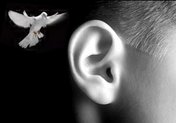
It seems those who avail themselves to be taught, place themselves under a force that is great. Teaching and being taught contain a power which sways opinions, influences ideals, and stirs up emotions and actions in the hearts of those who willingly hear. When a student's ears are opened to the words of another, energies can be raised so much in a community that even academics can rise up in rebellion against brutal dominance.
Added to this, deceitful or contrary teaching can raise up unjust rebellion and dissension in the hearts of the hearers too. Or, on the other hand, deliberate deafness and dumbness to right instruction can lead one into an apathetic, self-centred, rebellious and recalcitrant refusal to be taught.  So that what is powerfully passed on to the next generation is an obsession with the opinionated self, individualism, and stubbornness to listen and learn, to serve others - in wilful submission or as teachers. Refusal to be taught leaves a vacuum which allows other sneaky and dangerous forms of teaching to take its place. This is why James says…
Not many of you should become teachers, my brothers, for you know that we who teach will be judged with greater strictness. For we all stumble in many ways. …the tongue is a small member, yet it boasts of great things. (James 3:1–2a, 5a ESV)
So it sounds as if we should not teach, because we will be judged with greater strictness. We just might stumble and say the wrong thing and lead little ears into denial of the truth. It is here we realise the responsibility of teaching and the grave repercussions of wrong teaching. We realise the power in what we may or may not have taught.
What have I taught others? If I think I've left teaching to the pastor, the school teacher, the Sunday School or Confirmation teacher, not needing to take responsibility for my children's and grandchildren's learning, know that the child has already been taught and moulded by my actions and lack of active teaching too.
Realise then, that as parents and grandparents you are the primary teachers of your children and therefore know that parenthood has far reaching implications for all dads and mums given the responsibility to teach in the stead of God the Father in every earthy family.
This is big stuff. How then can I faithfully teach? It seems we are set up for failure before we've even been betrothed in marriage, before the relationship is consummated, and the child is conceived. But we hear in Isaiah how we are to go about the mandatory role we have as teachers of our families. Isaiah says…
The Lord God has given me the tongue of those who are taught, that I may know how to sustain with a word him who is weary. Morning by morning he awakens; he awakens my ear to hear as those who are taught. The Lord God has opened my ear, and I was not rebellious; I turned not backward. (Isaiah 50:4–5 ESV)
The first thing God does in all of this is he needs to teach us about ourselves. He needs to lead us away from the mentality of "Do as I say and not as I do". Why? Because learning and teaching are not just academic exercises. We teach and our children learn from what we do as well as what we say. In fact most of our children's learning occurs before and in the first couple of years of their formal education. It is true they might learn how to write and count; dotting the "I"s, reading, and working with numbers. But right from the moment a child is born they learn how their parents use words and by their attitude to the numbers in their wallets.
Right teaching is so necessary for good development of our young and old. Some might say you can't teach "an old dog new tricks", that once the child is set in its ways it's too late. In some cases maybe so, but the power of God's word can undo the tricks in the oldest and most set in their ways, when we allow God access into our stony hearts, he breaks us down, and reforms us as his children.
Peter's teaching was harsh. He had said all the right words to Jesus when asked, "Who do you say that I am?" I imagine Peter must have been pretty chuffed he got the answer right, proclaiming Jesus as the Christ! In his eyes Peter was now elevated to favour before his teacher. He had the stuff, he was good! If Jesus my Lord and teacher is the Christ, then I must be up there too!
Peter gets his answer and it's not as he would have expected. This old dog was being taught a new trick. However, this teaching was completed at the cross, the cross where Jesus taught his disciples he must endure death and rejection, the cross of which Peter would be so ashamed that he would deny his Lord. Completed after Jesus' resurrection from the cross, death and the grave where Jesus raised Peter from denial, reinstating him and filling him and the other Apostles with his power through the Holy Spirit.
Just as Isaiah had declared all those years before, Peter had been given the tongue of those who are taught. Jesus had taken him, broken him, and healed him. And in the wake of the cross we see a very different man deny himself and take up his cross and follow Jesus. What did this cross have installed for Peter? Pentecost, prison, a second Pentecost with Cornelius and the Gentiles, and a life that led to his martyrdom attested to by Origin, a theologian of the early Church (184 – 254AD), saying, "Peter was crucified at Rome with his head downwards, as he himself had desired to suffer."
This is why an upside down cross is generally accepted as a symbol of Peter, who would not have considered himself worthy enough to die the same way as Jesus Christ. But as unworthy as Peter was and thought himself to be, he was worthy of something much better. And that was eternal life with our Lord.
You might think you are not worthy to teach, but God can and does open the mouths and move the feet of those who listen to him. We now are called to bear our cross. And what is this cross we must bear? Behind all the struggles and suffering we face in this world everyone carries their cross of death, and we who believe, the cross to teach in all its various ways.
Now there are plenty who live in denial of this cross of death, even though they hopelessly walk towards it, lonely, overburden and overwhelmed by its cross. Then again there are others who carry their cross and in doing so look to the Lord to walk with them hand and hand to death and through it into eternal blessing.
I pray you live in denial of yourself and let God teach you "an old dog a new trick", this is the trick of repentance, confession of sin, and as Peter so harshly learnt, to put Satan behind. You can teach others in your actions of repentance and fellowship too. The greatest trick of the cross and bearing our cross is letting Christ beat the devil in us and in our relationships, making peace and reconciling us brothers and sisters in Jesus Christ, as the Father's little children.
Stand hand in hand together with our Lord Jesus Christ and confess these words of Isaiah…
But the Lord God helps me; therefore I have not been disgraced; therefore I have set my face like a flint, and I know that I shall not be put to shame. He who vindicates me is near. Who will contend with me? Let us stand up together. Who is my adversary? Let him come near to me. Behold, the Lord God helps me; who will declare me guilty? (Isaiah 50:7–9a ESV) Amen.

Saturday, September 08, 2012

B, Post-Pentecost 15 Proper 18 – James 2:10-13, Mark 7:24-30 “KnoW Judgement KnoW Mercy”

Download WORD doc here
 

How sweet the name of Jesus sounds in a believer's ear… may the music of your name refresh my soul in death.
Have you ever wondered why? Why does Jesus and his name sound so sweet in a believer's ear? And then again why doesn't he sound sweet in the ears of some? It's as if the ears become sealed over and the person has lost the capacity to hear. Like one who's lost the ability to taste, sweet, sweet, honey, because the sickly sweet is all they've ever tasted.
The Syrophoenician woman is a Gentile, a Canaanite considered a reprobate by the Jews, a woman unapproved under the law of God. This woman, a beggar with a demonised daughter, found Jesus' words to be as sweet as honey. And we should be taken back that she hears the sweetness because Jesus calls her a dog. Do you hear the sweetness of Jesus' words here?
If Jesus was to address you as a dog, how would you respond? Would you believe him? Perhaps only after you went away and rationalised it for awhile. Or would it cause you unbelief in his word?
Because, you and I, we are dogs, every bit as much as the woman and her troubled daughter!
Now I imagine that sounds a bit harsh to you. Why? Because our ears are taught to be super-sensitive to a judgemental word. On hearing the harshness of judgement, people in this day and age tend to seal over their ears to these kinds of words. We have grown, or better still, regressed to the point where these words are flatly rejected out of political correctness. But what if the words of judgement are true? What about when they're Jesus' words to you?
Why would Jesus say this to me, and be so harsh? Who do I consider the dogs of society? The underbellies of the underworld, the whoring beer-swillers at the pubs and clubs on Friday and Saturday nights! Perhaps the warmongers, the violent, the sexual abusers, the substance abusers or the welfare winos! Every one of us is able to picture someone we believe to be far more of a dog than ourselves. Right?
Now that you've pictured the person, someone real in your life, in an event that's not fiction. Know what you are doing right now is being judgemental.
How is it we find it harsh when Jesus judges righteously and truthfully when we ourselves judge others with a self-righteousness which is all things but right? How is it I and my fellow brothers and sisters have become so mixed up that the sweetness of Jesus' word has become wrong, and the opinions of the secret sour self have become so right?
What is the difference between Jesus' judgement and our judgement that so often leads us astray? The clues begin to drop into place as we hear from James chapter two…
For whoever keeps the whole law but fails in one point has become accountable for all of it. For he who said, "Do not commit adultery," also said, "Do not murder." If you do not commit adultery but do murder, you have become a transgressor of the law. So speak and so act as those who are to be judged under the law of liberty. For judgment is without mercy to one who has shown no mercy. Mercy triumphs over judgment. (James 2:10–13 ESV)
One who is a transgressor of the law is side stepper. Transgressor literally means to go across by the wrong means. The Greek word here for transgressor is parabate or one who walks parallel. You and I transgress the law if we break just one tiny section of it. Haven't we just broken it in our judgementalism? Aren't we now parabates, seeking to walk around the law of God? Yes! And it matters not whether it's accidental or a deliberate fracture of the law!
Therefore, James then says, "So speak and so act as those who are to be judged…" It's good for us to hear this first, "we are to be judged" before we hear "how" we are to be judged. In a society which asserts that one must not judge, this is countercultural! So it's right to judge in as far as we know we too are to be judged.
This judgement is not under a law that ends in condemnation. It's a righteous judgement that calls us the reprobates and parabates that we are. This is the law that names us as unapproved side steppers of the law, unrighteous in the sight of God. But it's a judgement that has to occur in order for mercy to be directed by the King. A stay of execution, as it were, a reprieve for those who are honest about their wretched lack of righteousness. For those who believe they need to receive mercy from whom they stand before, He who is without sin.
You see the problem of condemning judgement in this world is that the gift of mercy is lost. Yes we hear plenty of time in the bible not to judge, but a deeper investigation will reveal we are not to judge if its motive is something other than that which ends in mercy for those who have received judgement and repent. This is the law of liberty. We judge knowing we too are under the same judgement, we are merciful knowing we are under the same mercy, and we forgive knowing we too need to be daily, hourly, and momentarily forgiven!
Here we also know if we judge without mercy, we will be shown no mercy. And similarly Jesus tells us "…if you forgive others their trespasses, your heavenly Father will also forgive you, but if you do not forgive others their trespasses, neither will your Father forgive your trespasses." (Matthew 6:14–15 ESV)
This law of liberty is not a new law of death; we no longer forgive and show mercy because our sin has made us guilty. No! Rather our sin now makes us aware of our old nature and we freely confess that which once kept us in darkness but now has no power when confessed in the light of God's forgiveness and mercy.
Another way of looking at it is we now no longer "have" to forgive, we no longer "must" show mercy, we have no longer "got to" hear God but rather we "want to" forgive, we "love to" show mercy, and we "get to" hear the Word of God.
Blessed is he whose help is the God of Jacob, whose hope is in the LORD his God, who made heaven and earth, the sea, and all that is in them, who keeps faith forever; who executes justice for the oppressed, who gives food to the hungry. (Psalm 146:5–7a ESV)
Why Jacob? Why are we blessed when our help is the God of Jacob?
Jacob was one who executed his own selfish justice over others; he gave food to Isaac his hungry blind father and stole the birth right from Esau. He was nothing but a downright scoundrel, a reprobate, a parabate and yet God still helped him.
We too are the same as Jacob. Your struggle with others is really your struggle with God. He judges you, you deserve death, but he lets you limp away having had Jesus' blood poured out in death on the very cross which should have killed you.
As we endure in this life with the limp of Jacob this may not seem to be very merciful, but walking with the limp means that you and I, reprobates and parabates, are blessed by God's help. This help now comes as we willingly hear the Word of God, knowing we are judged, believing we need to be judged so we get to and want to live under the love of God.
Instead of being parabates—transgressors of the law, those who side step the law—we now are helped by a paraclete, one who walks beside us, the Holy Spirit, constantly showing us our limp, our sin, and even more the mercy of God.
When the Syrophoenician woman came to Jesus she knew she was a Gentile. In fact, she believes she was a dog, a reprobate. But she believed in the mercy Jesus had in store for her. She didn't turn away from Jesus' harsh judgement, she didn't seek to transgress or side step the law. But this Canaanite appealed for mercy even as a dog eats the children's crumbs from under the master's table.
…the one who looks into the perfect law, the law of liberty, and perseveres, being no hearer who forgets but a doer who acts, he will be blessed in his doing. (James 1:25 ESV)
Believe your judgement, receive mercy. You judge anyway so now put on Christ, go and show mercy to those whom you have judged. Be not just hearers of the word, but be doers of it. Persevere in asking God for the love to do it, and be blessed in what you are free to do. For Jesus' sake! Amen.

Saturday, September 01, 2012

B, Pentecost 14 Proper 17 – Deut 4:9, James 1:17-18, Mark 7:21-23 “A Gift for God the Father”

Download WORD doc here

What do you get for a father who's got everything? This morning in Australia and New Zealand fathers have been unwrapping gifts and hearing from their children and grandchildren. Because some fathers have what they need, some kids might buy a knick-knack of some sort – a puzzle, a card that makes silly sounds when you open it, or a new fandangle gizmo for the shed. Then again some receive the obligatory box of handkerchiefs, socks or box of chocolates.
But what kind of gift have you given God the Father, this morning? The unseen dad in your lives! Now I'm sure he's got everything. I reckon he might also not have much use for new handkerchiefs or a card that makes fatherly sounds when you open it. What do you get for God the Father, who has literally got the whole world in his hands?
In the Old Testament times one would make sacrifices to God at the temple in Jerusalem. You'd take a goat, sheep, or a beast to the Jerusalem and have it slaughtered and burnt on the altar. This would be a pleasing aroma before the Lord as the priests atoned for your sins. Or, perhaps one would make a fellowship or thanksgiving offering for what God had done in the course of their lives in recent times.
Yet the Psalmist, King David, pondered and sung before our Heavenly Father very similar questions.
In sacrifice and offering you have not delighted… Burnt offering and sin offering you have not required. (Psalm 40:6 ESV)
And again David says… For you will not delight in sacrifice, or I would give it; you will not be pleased with a burnt offering. (Psalm 51:16 ESV)
In Isaiah we hear what God thinks... "What to me is the multitude of your sacrifices? says the Lord; I have had enough of burnt offerings of rams and the fat of well-fed beasts; I do not delight in the blood of bulls, or of lambs, or of goats." (Isaiah 1:11)
Bring no more vain offerings; incense is an abomination to me. …When you spread out your hands, I will hide my eyes from you; even though you make many prayers, I will not listen; your hands are full of blood. Wash yourselves; make yourselves clean; remove the evil of your deeds from before my eyes; cease to do evil, learn to do good; seek justice, correct oppression; bring justice to the fatherless, plead the widow's cause. (Isaiah 1:13a,15-17)
God makes it quite clear he wants us to be perfect in his perfect presence, to hear him and respond appropriately. But how can we cleanse ourselves and be clean if any sacrifice we might make to God is unacceptable to him? This was the dilemma the Israelites faced when their sacrifices became inadequate before God. But it's also your problem if you still strive to make sacrifices or give gifts to him and not listen to what he really requires of you.
And what became impossible for the Israelites under the Law was made ten times harder to obtain when Jesus revealed what is really hidden in the heart, saying, "For from within, out of the heart of man, come evil thoughts, sexual immorality, theft, murder, adultery, coveting, wickedness, deceit, sensuality, envy, slander, pride, foolishness. All these evil things come from within, and they defile a person." (Mark 7:21–23 ESV)
What gift do you get God the Father who has everything and needs you to be every bit as holy as he is? How good is should one be to be good enough in the sight of God? None of us can be good enough, because we must be holy as God is holy!
It's at this point in time many just give up giving a gift to God. Where our earthly Fathers' Day falls once a year, our Heavenly Father's Day is every day! And it begins and ends each week in this one hour or so on Sunday. Or in any time of confession, absolution, hearing the Word and receiving the Sacrament of Christ's body and blood. The gift God requires is to believe and receive – to believe I am a sinner and receive forgiveness of sins, and life and salvation in his gifts.
Hear our Heavenly Father again from Isaiah… "Come now, let us reason together, says the Lord: though your sins are like scarlet, they shall be as white as snow; though they are red like crimson, they shall become like wool. If you are willing and obedient, you shall eat the good of the land; but if you refuse and rebel, you shall be eaten by the sword; for the mouth of the Lord has spoken." (Isaiah 1:11–20 ESV)
So the greatest gift we give to God is to listen to him and trust what he says and does for us. And listening to him means you allow yourself to hear his word so by his Word made flesh, that is the Lord Jesus Christ, your heart tainted to the core with scarlet sin is made as white as wool, like that of the Lamb of God. This is the one time sacrifice on the cross of Calvary that is the one and only pleasing atonement sacrifice to God the Father!
In James we are told… Every good gift and every perfect gift is from above, coming down from the Father of lights with whom there is no variation or shadow due to change. Of his own will he brought us forth by the word of truth, that we should be a kind of first fruits of his creatures. (James 1:17–18 ESV)
God has given us the most perfect gift, in his Son Jesus Christ. And he continually brings us into the presence of Jesus' forgiveness by the power of the Holy Spirit, making us the first fruits of his creatures in his creation. And he does it by the word of truth, when we allow the Spirit to open our ears and hearts.
Like King David we might come to ask and realise, "What shall I render to the Lord for all his benefits to me? I will lift up the cup of salvation and call on the name of the Lord, I will pay my vows to the Lord in the presence of all his people. I will offer to you the sacrifice of thanksgiving and call on the name of the Lord. I will pay my vows to the Lord in the presence of all his people, in the courts of the house of the Lord, in your midst, O Jerusalem." (Psalm 116:12-14, 17–19 ESV)
Therefore, on receiving the gift of Jesus' perfection from God our Father and the Holy Spirit, what should we do with it? As Fathers and Mothers of children, and as grandparents of grandchildren, there is no greater gift and joy than giving. To pass on the gift of God's word so our children too might receive it and believe they too are children of God.
"…take care, and keep your soul diligently, lest you forget the things that your eyes have seen, and lest they depart from your heart all the days of your life. Make them known to your children and your children's children—(Deuteronomy 4:9 ESV)
These things our eyes have seen are God's action in our lives and the power of God's word in our souls which places in us the greatest gift — the forgiveness of sins, life, and salvation! Why would we want this gift to depart from our hearts, and our children's and their children's hearts too? Let's remember God's word and make our sin forgiven hearts constantly known to our children and grandchildren. Amen.

Saturday, August 25, 2012

B, Pentecost 13 Proper 16 – Ephesians 6:10-20 “The Panoply of God”

Download WORD doc here

The medieval man returns from jousting on his horse. He and his wife lay eyes upon each other, thankful to see each other yet again. He takes his wife in his arms to passionately kiss her, but he cannot hold her properly nor can he feel her caress, nor kiss her. So he sweeps her off her feet and carries her off to their bedroom. But as he whisks her away there's an awkward clunking of metal.
They get to the bedroom but he can't bend over to lay her gently on the bed, so he drops her in that general direction. She falls uncomfortably, but still over come with passion recovers, and lies in wait for her husband. He walks over to a dressing table to take off his armoury, he takes off his helmet and the passion only increases.
The scene changes a couple of times as we see him peel off his layers. A time lapse occurs with shadows lengthening in the room as the medieval man sheds shield, breastplate, belt, and mesh suit. He is down to his one piece cotton underwear. You know the one that covers from wrist to neck to ankle! Now he is ready to engage with his wife and consummate their marriage once again.
But the crowd laughs as he finds her snoring loudly, unable to be woken. He rolls his eyes having gone to all the trouble of unsuiting, and because he's due back at the jousting front, walks disappointed and frustrated to put back on all his clobber. The whole charade's been a skit on a television show, mocking the awkwardness and time it takes to defrock from battle. And the crowd laughs as the skit ends.
Because we are products of our society, we sit at home and laugh with the television audience, having been drawn into the comedy of the skit. The laughs are heightened by our sense of desire and our need for immediate gratification in this day and age. We tune in to the feelings of the husband and the wife. The battle of waiting and wanting within is both tiring and frustrating.
In this battle of impatience it's easy to think we need to cut a few corners, to help things along to get to the destination. After all, this is how we're wired these days, this is how we think. We are convinced our battles are against time as we ravenously devour opportunities to appease our deepest desires. Therefore, our enemy becomes anyone who offends our feelings and emotions; who sins against our sense of self.
So we leave off some of the armour, after all it's a bit awkward, and let's face it how often do we really go into battle? I can leave the jousting to those who are meant to joust! I haven't enough time to put on all the pomp the pastor proclaims I need. He is my protector; he will do the work for me. Perhaps I'll use just a few of my own defences to defend myself too!
It's not surprising that within a relatively short amount of time, things begin to go haywire. We start to think there's a crack in the armour. We question our spiritual leaders; even begin to think we've been led astray by them, as we're pierced and stung and tempted to leave off even more of our armour.
Jesus tells us… When a strong man, fully armed, guards his own palace, his goods are safe; but when one stronger than he attacks him and overcomes him, he takes away his armour in which he trusted and divides his spoil. Whoever is not with me is against me, and whoever does not gather with me scatters. (Luke 11:21–23 ESV)
Without our armour we are not strong, there are cracks. Without our armour we cannot stand against the enemy. Why? Because without our armour we can't even see the real enemy and in defending ourselves in our own strength we end up fighting the enemy who's not the enemy at all. We end up waging war against our mothers or fathers, our brothers or sisters, our children, our politicians and public figures, our unorganised neighbour or even our pastor. We're deceived into believing we must battle against these enemies because they appear to be the strong ones.
Hear the Word of God, written especially for you.
…be strong in the Lord and in the strength of his might. Put on the whole armour of God, that you may be able to stand against the schemes of the devil. For we do not wrestle against flesh and blood, but against the rulers, against the authorities, against the cosmic powers over this present darkness, against the spiritual forces of evil in the heavenly places. Therefore take up the whole armour of God, that you may be able to withstand in the evil day, and having done all, to stand firm. (Ephesians 6:10–13 ESV)
Every battle you wage against flesh and blood (in other words, other people) is not the right battle but rather the deceptive schemes of the devil, piercing you without your appropriate armour. The devil is just using and hiding behind the flesh and blood of others to deceive you. In fact, most of the time it's not the flesh of others, but rather your very own flesh and blood of your old Adam which seems to wage war against you. But this too is Satan's scheme.
So how do we battle against the true enemy, Satan and his legion of lecherous demons? How do we stand against unnumbered hidden foes? How can we be strong in the Lord and stand in the strength of his might against the devil's deception?
God calls you to once again put on the whole armour, the gospel armour, each piece put on with prayer. This is how we stand in the Lord and withstand the real enemy.
This standing and withstanding however, deserves deeper investigation so we might understand what it actually is. In the Greek to stand or withstand has the same root as the word "history". Having history is to stand or withstand by knowing and seeing what has happened in the past. This is why history so often repeats itself, because we forget or fail to see what's happened in a previous age and repeat the same thing over and over again.
Nevertheless, history is there so we might stand or withstand what others have experienced or gone through. To stand or withstand is primarily the gift of being able to see and know, just who the enemy is, and what are the tricks used to deceive those who have been tempted in ages past.
So we put on the whole armour, every single piece so we can stand in the Lord, in the strength of his might. This "whole armour "in the Greek is the Panoply of God. We put it on so we may withstand in the day of evil, standing firm, standing still letting the Lord stand in us.
Now we might say, "But the armour is too bulky, how can we fight?" We remember and see the poor medieval sod comically held back from his wife, and his wife from him, because of his armoury. But this full panoply of God's armour is not for fighting but rather for victorious protection. You see the battle has already been won. We are called to just stand, see, and know what the Lord has done at the cross, at the resurrection, in our baptism, and in our daily dressing in the full baptismal armament.
If this then seems all a little farfetched for you, I encourage you to see who's gone before us in the armament. The examples may seem rather ironic but are in fact the heart of the matter. Paul teaches, saying…
…keep alert with all perseverance, making supplication for all the saints, and also for me, that words may be given to me in opening my mouth boldly to proclaim the mystery of the gospel, for which I am an ambassador in chains, that I may declare it boldly, as I ought to speak. (Ephesians 6:18b–20 ESV)
Paul is suited in the panoply of God, but yet he is an ambassador in chains! Paul is an elder in chains, a preacher shackled. The Greek for ambassador is presbyter, and a presbyter is one who has experienced and endured in the Lord, the tricks of the evil one, the devil. Paul has seen his own battle of the flesh played out in himself. He knows what history saw of him in his actively going out and arresting the enemy and watching them be stoned to death. He was one who was deceived but had the scales removed from his eyes to see the Lord of life who was standing against the real enemy.
And now, ironic as it may seem, he does greater work, a senior pastor, instructing not only in the full armour of God, but with his hands and feet shackled in chains too.
But let's turn our eyes from Paul to Jesus himself. Let's see the Victor standing very still in victory over sin, death, and the devil. Hear him forgive flesh and blood, for they know not what they do as his flesh is pierced and his blood is scattered and soaks into the tree and the dust of Calvary. He is not our ambassador in chains, but rather he is our commander and chief nailed to the deathly stillness of the cross. And in this stillness Jesus Christ won the battle… against the rulers, against the authorities, against the cosmic powers over this present darkness, against the spiritual forces of evil in the heavenly places.
So now we stand in Jesus, with Paul, an ambassador in chains, and with all others bound in Christ. We wear the full armour, the panoply of God.
Stand therefore, having fastened on the belt of truth, and having put on the breastplate of righteousness, and, as shoes for your feet, having put on the readiness given by the gospel of peace. In all circumstances take up the shield of faith, with which you can extinguish all the flaming darts of the evil one; and take the helmet of salvation, and the sword of the Spirit, which is the word of God, praying at all times in the Spirit, with all prayer and supplication. To that end keep alert with all perseverance, making supplication for all the saints. (Ephesians 6:14–18 ESV)
So take the sword of the Spirit, the Word of God, let it pierce the old Adam within, and place him in chains. Pray for those whom you were deceived into believing were your enemies. God is calling you to be still and see the error of seeking to nail them to your cross; the cross which Jesus has taken on himself for you. Allow the Holy Spirit to shield you with faith, and stand in the full panoply of God, bearing the helmet of victory and salvation which Christ has given you in exchange for the crown of thorns he bore as the Saviour of the world. Amen.