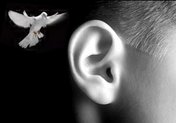
Wednesday, March 15, 2006

B, Lent 2 Midweek - 2 Corinthians 6:4, 9 "Known, yet regarded as unknown"

Text: 2 Corinthians 6:4,9

…As servants of God we commend ourselves in every way: in great endurance; in troubles, hardships and distresses; known, yet regarded as unknown…

Sermon

Tonight we focus on what it is to be know, yet regarded as unknown.

There is an old saying: It’s better to keep your mouth shut and have people think you’re a fool than to open it and prove it!

This saying goes along way in showing the distinction between being known, yet being regarded as unknown. Many in our society think they know and therefore desire to be known, but on opening their mouths demonstrate that they know very little. And those who don’t speak up, or fight for their rights, against hardships and distresses are perceived as fools.

Take teenagers for example; they think they know everything. Well at least I thought I knew everything when I was in adolescence. In fact all of us have been there, and still carry the fruits of those egotistical years – we still like to be seen as knowing it all.

Remember when you were an adolescent and an adult sought to help you do something. “Yes, yes I know”, you might have said. But after your dismissive words push away the help, you hadn’t a clue what you were doing.

Now put the shoe on the other foot. As adults, perhaps with a little more wisdom and life experience, helping teenagers or those with egotistical mentalities is often fraught with frustration. There is nothing more disturbing than helping and instructing someone who has no clue whatsoever and yet proclaims, “Yes I know, I know!”, when they really know nothing at all. As one who serves out of experience and wisdom you often get treated as if you came down in the last shower; as if you know nothing at all.

When God sent his Son to earth to carry the sin of the world, the Son of God was treated as if he knew nothing. He was treated in the same way as is an adult by a bunch of self-centred kids. Those that Jesus dwelt amongst thought they knew everything, they thought they knew the mind of God! But when God was in their midst they didn’t know him at all. In fact they thought he was against God and he didn’t know the right way for things to be done.

The disciples also knew nothing and Jesus came and chose them. He came knowing the will of God and called those who knew little if anything about themselves or God. But having chosen them, suddenly they thought they knew everything too. Peter rebuked Jesus for saying he must be treated as if he knew nothing; suffering much, being rejected and crucified. Then when Peter was questioned if he knew Jesus, he denied that he’d ever known him. Even one of Jesus’ closest disciples treated Jesus as if he didn’t know anything, even after Jesus had chosen him.

But Jesus did know. He was treated as if he didn’t know but really he knew more about the actions of those around him than they knew themselves. He knew why Peter had to reject him three times before the cock crowed. He knew why the Sanhedrin had to hand him over to Pilate, and he knew that Pilate would wash his hands of him. He knew these things because he knew his Father’s will and that the Father would also have to turn his gracious back on him and let him be handed over to a wrathful death for humanity’s sin; the sin of thinking we know better than God.

As the one and only servant of God, Jesus commended himself to all; in great endurance; in troubles, hardships and distresses. Jesus was known by God, in fact he was the Son of God, and he made himself known to humanity, yet they regarded him as unknown. He suffered great anguish in the garden of Gethsemane, and yet by not of his own will but by that of his Father he was taken to the cross and there all by himself he became unknown bearing a painful death and separation from God the Father.

So why was the known Son of God, left for dead by all? Why did he allow himself to be reckoned as unknown, by humanity - who thought they knew more, and by his Father - who knew his innocence and perfection?

Jesus commended himself to us in the hardships of the cross, enduring death. He allowed himself to be sacrificed, because like an adult instructing an egotistical teenager, he knows our failings. He knows our ignorance, he knows our lack of understanding, he knows our lack of wisdom, and he knows we dwell in the ways of the world. But despite all this he loves us. God the Father, Son, and Holy Spirit wants to be know by us, even though in our sinful state God knows that we know neither our true selves, nor him, nor his love.

So now that God has made himself known to us in his Son, Jesus Christ, and has allowed him to be unknown. Our sin has become unknown to God through his Son’s death. We now possess the knowledge of Christ, not because we have found it, but because God has given us the life of Christ in exchange for our sin. Jesus has carried our sin so we might know God and his love for us. And in knowing God, being wise in the ways of God, we too can endure in Christ, before a world that thinks our knowledge is foolishness.

But in this life we still struggle to know God fully. We are continually tempted and struggle not to flee back to the wisdom of the world. God knows this too. Just like a parent who knows the failings of their ego centred teenagers, and could cut them down in seconds, but regardlessly still loves them and endures them; God knows his love for us is made complete in Christ, and he lovingly endures us for the sake of Jesus’ death for our sin. And in loving us, he patiently calls us to also endure in this life with Jesus for his sake.

Although our knowledge of God is limited in this life, I would like to finish tonight with the encouragement Paul gives the Corinthians in his first letter to them, that we are fully known and loved by God.

9 For we know in part and we prophesy in part, 10 but when perfection comes, the imperfect disappears. 11 When I was a child, I talked like a child, I thought like a child, I reasoned like a child. When I became an adult, I put childish ways behind me. 12 Now we see but a poor reflection as in a mirror; then we shall see face to face. Now I know in part; then I shall know fully, even as I am fully known. (1 Corinthians 13:9-12)

Let us pray. Heavenly Father, even while you knew us to be completely sinful and turned away from you, you sent your Son, who was without sin to be sin for us. We thankyou for making yourself, and your love, know to us, through Jesus’ suffering, rejection, and death. Continue to send your Holy Spirit to us so we might know you more and more, and one day be perfected in complete knowledge of you in heaven. In Jesus’ name and for his sake we pray, Amen.

Saturday, March 11, 2006

B, Lent 2 - Mark 8:31-34, 38 "The Bridge of Life"

Text Mark 8:31-34,38

31 Jesus began to teach the disciples that the Son of Man must suffer many things and be rejected by the elders, chief priests and teachers of the law, and that he must be killed and after three days rise again. 32 He spoke plainly about this, and Peter took him aside and began to rebuke him. 33 But when Jesus turned and looked at his disciples, he rebuked Peter. “Get behind me, Satan!” he said. “You do not have in mind the things of God, but the things of men.”

34 Then he called the crowd to him along with his disciples and said: “If anyone would come after me, he must deny himself and take up his cross and follow me. 38 If anyone is ashamed of me and my words in this adulterous and sinful generation, the Son of Man will be ashamed of him when he comes in his Father’s glory with the holy angels.”

Sermon

Picture this: There’s a castle laden with riches. In it is everything you would ever need. At first you didn’t know about it, but when you heard the word on this place, you knew it was the place for you. Your deepest desire was to find this place, but you had no way of getting to it, in fact you didn’t even know where it was. The saying goes; a man’s home is his castle. Well, this castle was always meant to be your home. From the moment you heard about it, an unexplainable yearning to be there, filled your heart.

And then this fellow appears, he seems to know where this place is. He’s a little on the weak and frail side, not terribly attractive, just an average bloke; but buoyed by his knowledge of this place and his desire to take you there you follow him. He leads you to a deep gorge and a rough suspension bridge which crosses to the palace shimmering in the light of its riches. Seeing this place for the first time sets your heart on fire, it’s more than you could have wished, you’re overwhelmed by its splendour.

But your eyes look down from the castle to the rope bridge; it’s old, as if it’s been there forever. It swings in the breeze over an abyss that falls away to an eternity below. You can tell that this bridge is not well worn, not many have crossed it. But its ropes and planks seem archaic and weak with age. As you look down your heart sinks, fear of failure bubbles within as you think to yourself, ‘there’s no way I can get across that bridge!’

You hear the fellow who brought you to the bridge and you turn as he says to you, “I’ll get you across that bridge. I brought you here I’m not about to leave you now! Trust me, I know the way, I know just the person who will get you across this bridge.” But you look him up and down in doubt and begin to wonder if this is really a good idea. You start to tremble from the fear, there’s no way your legs will carry you across the bridge. They shake in anticipation of you being out in the middle and falling into the endless chasm below.

“Don’t worry; I know what you’re thinking! You can’t walk across this bridge, you’re not able because of weakness and fear, but that’s ok.” And just as your guide finishes these words, he introduces you to someone else. “My friend will carry you across the bridge, he’s the only one whose feet have ever walked on the planks, he knows ‘how’ to cross, he knows the way!” Your desperation to be in the castle palace across the void leads you to say yes, you don’t know why you said yes, it’s as if the guide who led you to the bridge said yes for you. After all his friend is no superman, in fact he’s a humble character, stooped over with his face to the ground. He seems just as weak if not weaker looking than the guide who brought you to the bridge. You think to yourself, “How can he carry me? I’m not light you know! How can he balance me on his back, swinging to and fro on that bridge?” But your guide looks at you anticipating your thoughts and says, “Trust him, he knows the way, he knows how!” So soothed by your guide’s words you climb on his back to cross the bridge.

Amazingly, climbing on his back, letting him carry you, fills you with mixed emotions. In one way it scares the living daylights out of you, you can see what is below and in front of you. “Why do I have to trust this bloke with my life?” you ask yourself. But at the same time, it seems right for him to carry you. A feeling of peace comes over you, just the same as when you first heard about the castle and was filled with a yearning to be there. You think to yourself that he can do it, he will do it. In fact he is doing it, and before you know it you’re out on the bridge. It’s at this point you realise that your guide hasn’t left you either. He’s still with you too. And he encourages you to trust the one who carries you.

As you are carried you realise you don’t know much about the one who carries you, so you ask your guide about him. He tells you, “The one who carries you comes from the palace across the way, from the same place as me. That palace belongs to his father!” “Ok”, you respond enquiringly, and then your guide continues, “You know, this fellow died when he was making this bridge!” It’s at this stage that you look down and see the hands with which he is holding you, and the feet which are carrying you. His body scarred with the injuries he received from his death while building the bridge. In fact these wounds still weep; his blood soaks your skin. You wonder to yourself, “Should I get off and take myself across the bridge or go back the way I came. We’ve only just left the edge!” The guide once again knows your thoughts and says, “Don’t get off; you can’t do it by yourself, your eyes will deceive you! He needs to carry you! He walks with his eyes closed!” Alarmingly you respond, “What do you mean eyes closed!?” The guide continues, “Well, he walks with his ears open, he listens and is led – he listens to his Father. He trusts not himself, although he could, however he trusts his father’s directions.” Then you ask, “So how did he die building this bridge?” The guide concludes, “By listening to his father!”

Jesus listens to his Father, he trusts him, and he calls us to listen to him and trust him too.

Jesus began to teach the disciples that the Son of Man must suffer many things and be rejected by the elders, chief priests and teachers of the law, and that he must be killed and after three days rise again. He spoke plainly about this, and Peter took him aside and began to rebuke him. (Mark 8:31-32)

Jesus calls us to trust that he is the way and he calls us to trust his word as the truth. Peter learnt his lesson the hard way, thinking that another way had to be the way. He was walking by sight, whereas Jesus was walking by what he heard.

Peter was there face to face with Jesus when he unveiled God’s plan to build the bridge for us to cross. However, Peter’s eyes were open but his heart and ears were closed. He could see the deep chasm; he knew it was fatal to fall into the chasm. But Jesus could only build the bridge by sacrificing his life. Jesus’ eyes were closed but his ears were open, he was obedient to his Father’s will, even unto death. So Jesus turns to his disciples, away from Peter and says, “Get behind me, Satan! You do not have in mind the things of God, but the things of men.” (Mark 8:33)

So here we are, riding on the means of Jesus, being counselled by the Holy Spirit, who has led us to Jesus, our heavenly bridge builder, our heavenly bridge. We are called to do nothing but trust the one who carries us to this palace of eternal riches. The Holy Spirit and Jesus both make it quite clear that to get off and walk by ourselves is fatal. Trust his broken but resurrected body to get your there. Trust his blood which stains you with his holiness to get you there. You know you can’t get there by yourself, he knows that too. Let him carry you!

Jesus makes it quite clear what will happen to us if we reject the one who brings us to him - the bridge of life. Jesus says, “I tell you the truth, all the sins and blasphemies of men will be forgiven them. But whoever blasphemes against the Holy Spirit will never be forgiven; he is guilty of an eternal sin.” (Mark 3:28)

He knows you’re a sinner, he knows you can’t walk across the bridge under your own strength, and he promises to forgive us for our sins of doubt and worry, offering to pick us up and carry us home. So don’t reject the Holy Spirit who brings us to Jesus in his written Word. He is sent by Jesus to bring you to Jesus – the Bridge of Life!

Jesus calls us to carry our cross, but let’s be quite clear: We can only carry our cross if we allow and trust Jesus to carry us the way he knows is best. And that is: Trusting the bridge he built through his suffering, rejection, and crucifixion. And trusting our baptism into his suffering, death, and resurrection, and trusting the life he brings by the power of the Holy Spirit through his Word, and his body and blood. Jesus calls us to repent, turn, and trust his word, and rest on him as he carries us home. He says, “If anyone is ashamed of me and my words in this adulterous and sinful generation, the Son of Man will be ashamed of him when he comes in his Father’s glory with the holy angels.” (Mark 8:38)

So turn from the faithlessness, disloyal, adulterous, and two-timing prostitution of yourselves with other untrue gods destined to eternal death. Receive and trust the forgiveness our sinful and weak generation is offered.

Trust your Holy Spirit guide. Trust your Messianic bridge to carry you – it’s Jesus Christ built - guaranteed. And see the Father welcomes you, his child, into his kingdom of eternal riches forever. Amen.

May Christ our crucified Saviour draw us to himself, so in him we find the assurance of sins forgiven and the gift of eternal life, Amen.

Wednesday, March 08, 2006

B, Lent 1 Midweek - 2 Corinthians 6:8 "Genuine, yet regarded as Impostors"

Text The title phrase in the context of 2 Corinthians 5:20-6:10

20 We are therefore Christ’s ambassadors, as though God were making his appeal through us. We implore you on Christ’s behalf: Be reconciled to God. 21 God made him who had no sin to be sin for us, so that in him we might become the righteousness of God.

1 As God’s fellow workers we urge you not to receive God’s grace in vain. 2 For he says, “In the time of my favour I heard you, and in the day of salvation I helped you.” I tell you, now is the time of God’s favour, now is the day of salvation.

3 We put no stumbling block in anyone’s path, so that our ministry will not be discredited. 4 Rather, as servants of God we commend ourselves in every way: in great endurance; in troubles, hardships and distresses; 5 in beatings, imprisonments and riots; in hard work, sleepless nights and hunger; 6 in purity, understanding, patience and kindness; in the Holy Spirit and in sincere love; 7 in truthful speech and in the power of God; with weapons of righteousness in the right hand and in the left; 8 through glory and dishonour, bad report and good report; genuine, yet regarded as impostors; 9 known, yet regarded as unknown; dying, and yet we live on; beaten, and yet not killed; 10 sorrowful, yet always rejoicing; poor, yet making many rich; having nothing, and yet possessing everything.

Sermon

Have you ever been afraid of being found out for who you really are? Totally exposed after having your whole thought process laid out before every one else to see! It’s a scary thing to ponder. No secrets, everything exposed! I mean the lot; nothing left hidden, every little thing you have ever thought about everyone else exposed; in church, male, female, your parents, your kids, work colleagues, everyone has revealed to them everything you have ever thought or said about them. Maybe the person that you project onto others is far different from the person you really are inside?

Imagine that all is revealed, what might people say about you? A hypocrite, a deceiver, a fraud, a complete con artist, an impostor perhaps? This is something that nobody ever wants, it‘s human nature to hide the reality of who we really are!

Yet last week at the Ash Wednesday service we all were exposed to each other’s reality. People came forward and had the ash cross imposed on their foreheads. We left the service advertising exactly what and who we are: hypocrites, deceivers, fraudulent, con artists, and impostors.

But we didn’t just leave this place exposed as impostors we also left as truthful witnesses of God.

We left after having our sinful natures put to death in the death of Jesus on the cross. We were reconciled to God having had our sins forgiven in Holy Absolution, a return to the waters of baptism one might say. And we ate and drank forgiveness of sins, life, and salvation, as we ate and drank Christ’s body and blood in bread and wine.

We received God’s grace and I implored you earnestly and with God’s word spoken through St Paul (2 Cor 5:20 – 6:10), not to receive this grace in vain. We left this place as sinners but forgiven. God calls us to believe this! To hear, trust, and uphold, that God made Christ who had no sin to be sin for us, so that we might become the righteousness of God. God calls us to believe that his grace is sufficient for our salvation.

So we left church last time revealed as 100% sinners and 100% saints; we may have come feeling like we were impostors but we were truthful witnesses carrying the ash of death and the cross of life out on our foreheads. And we left with the knowledge and truth of knowing that in the cross, Christ took our place as the impostor, and we took his place – reconciled to God. We left after being built up in the knowledge that God has made a joyful and great exchange with us.

So it’s been a week since Ash Wednesday, you may or may not have been in church last Sunday, but you are here tonight. Whenever you left church last (it doesn’t matter when) you left with God’s call to trust his grace, and now you have returned. Have you felt like a bit of an impostor in the last week, or do you feel like one now? How has your week been?

Have you been truthful and genuine in God’s call for you to endure in troubles, in hardship, distresses, hard work, and other trials? Have you commended yourselves in every way, in purity, in understanding, patience, and kindness? Have you walked in the Holy Spirit and in sincere love? Have you upheld God and his word in truthful speech? Have you been genuine with the weapons of righteousness in your right hand and your left? Have you conducted yourself as if you still had the ash cross on your head; revealing your weakness to sin and dependency on God for integrity?

Tough questions aren’t they? I suspect if you sought to carry Christ into the world, people would have called you an impostor, hypocrite, or deceiver. And I also suspect that every one of us is here weary from the battle to be truthful in the sight of God and people. And perhaps to receive God’s grace of forgiveness once again makes you feel like a bit of an impostor or hypocrite back here in God’s house.

However the truth is this: Since we have been led here again asking for God’s mercy, we acknowledge that God’s grace is effective, not taking it in vain, and have returned to the spring of life, which is God’s word to us. In fact we are enduring in the face of hardship when everyone else in the world, together with our sinful selves, would expect us to give up. And being here labels us as impostors or hypocrites by most people, but in fact we are genuine truthful witnesses, acknowledging our weakness to sin and God’s power over it. We’re allowing ourselves to be led by Jesus, walking on the tiring road to death, but also to the never-ending joy, rest, and peace of eternal life.

It’s not surprising that when we commend ourselves as God’s servants the world becomes hostile and we’re given the title of deceiver, hypocrite, or impostor. Jesus himself bore such a title when he walked the lonely road to the cross. However, it is surprising who might give us this name as we walk the lonely road with him!

Two days before the Passover when Jesus reclined at the table of Simon the Leper at Bethany, the chief priests and the teachers of the Law were looking for a way to arrest and kill Jesus. (Mark 14: 1-21) These men were the church of the day, but they were in a process of rejecting and taking in vain the grace which was being unfolded before them. In fact their insistence in the law as being the way to live was there death sentence, as they thought they could do what was required of them by the law. But Jesus coming, with no sin to be sin for all, set their stony hearts against him. Their sin and ours too was his death sentence. The Pharisees and teachers of the law actually called him an impostor or deceiver when they approached Pilate after his death and said, “We remember that while he [Jesus] was still alive, that deceiver said, ‘After three days I will rise again.’ So give the order for the tomb to be made secure until the third day.” (Matt 27:63-64) But who were really the impostors or deceivers?

Jesus himself bore our title as deceiver and impostor so that we might bear his title as the righteousness of God. He calls us to walk with him and not take his grace in vain. He calls us to be like the woman who broke the jar of perfume over him, trusting in Jesus as the one true and genuine Son of God who died for her sins and ours too. He also calls us to receive the bread and wine he instituted as his body and blood at the Last Supper as genuine. He calls us to trust this as his grace given for us for the forgiveness of sins, life and salvation; that this is his body and blood given to us, for us to remember and trust that he is physically with us. When we accept this and trustingly receive his grace, we certify that God is truthful (John 3:33), and Jesus says, “Whoever eats my flesh and drinks my blood has eternal life, and I will raise him up at the last day. For my flesh is real [genuine and true] food and my blood is real [genuine and true] drink. Whoever eats my flesh and drinks my blood remains in me, and I in him.” (John 6:54-56)

Which is better – To be called an impostor or hypocrite because we uphold the truth of God’s word; or, to be called an impostor because we have treated Christ, his means, and the Holy Spirit in vain?

Give your sin to God; trust and receive the grace for which Christ paid such a high price and gives to you for free. Christ has revealed us for who we really are but he has removed this stumbling block from our path; walk with him in truth to eternal life. Amen.

Next time (Wednesday 15/3/06) we look at the phrase in 2 Corinthians 6:9, to be known yet regarded as unknown, in the face of Christ’s great exchange with us.

Saturday, March 04, 2006

B, Lent 1 - Genesis 9:8-17 "Rainbows & other Vows of God"

Rainbows have to be one of the most marvellous things in creation. Everyone loves to stand in awe of the technicolour that span the sky from one horizon to the other. Children and grandparents gaze in wonder at the sight of a rainbow.

Rainbows are a sign of life. They appear in the sky as a result of light and water. They tell us that rain is somewhere nearby; they also remind us that water will never flood the entire earth ever again. Although one might argue that rainbows appear as a result of refracted light through droplets of water, God tells us that he is the one who put them there for us to see. We can stand in awe, not just of the rainbow, but of our Creator, who promises to give life to his creation and provide for us all we need to survive in this world. We are reminded of his protection, providence, and promise every time we see a rainbow in the sky.

God makes a promise to us when he…

…said to Noah and to his sons with him: “I now establish my covenant with you and with your descendants after you and with every living creature that was with you—the birds, the livestock and all the wild animals, all those that came out of the ark with you—every living creature on earth. I establish my covenant with you: Never again will all life be cut off by the waters of a flood; never again will there be a flood to destroy the earth.”

And God continues, “This is the sign of the covenant I am making between me and you and every living creature with you, a covenant for all generations to come: I have set my rainbow in the clouds, and it will be the sign of the covenant between me and the earth. Whenever I bring clouds over the earth and the rainbow appears in the clouds, I will remember my covenant between me and you and all living creatures of every kind. Never again will the waters become a flood to destroy all life. Whenever the rainbow appears in the clouds, I will see it and remember the everlasting covenant between God and all living creatures of every kind on the earth.” So God said to Noah, “This is the sign of the covenant I have established between me and all life on the earth.” (Genesis 9:8-17)

Did you hear the baffling mystery in this text? There is something very peculiar with this covenant. When two make an agreement or have a contract drawn up, don’t the two parties making the contract, both sign off on it? So where is Noah’s part of the agreement in the text we have just heard? There is none. In fact most of the covenants God makes with humanity are binding on himself, there is no emphasis on our part. And it has to be this way, because if it were up to us to keep the promise, we would fail every time!

So Noah and his sons make no response to what God has done. In fact they were powerless to do so and not long after the flood humanity got up to their old tricks once again. Later on in Genesis chapter nine, Noah gets drunk and his son Ham sees his nakedness. But even after returning to sin, they together with all creation stand in awe of the rainbow and remember that God immersed the whole earth in the flood because of sin and violence, yet he saved them. But more importantly, every time we see the rainbow we know that God sees it too and he remembers that he will never flood the earth ever again.

In the flood God rebirthed creation. He let a chaotic world return to the near complete chaos of Genesis one by allowing the boundaries, he put in place to keep the waters of chaos at bay, to split open and flood the earth. Every time we see the bow in the sky, not only can we marvel at its brilliance, but we are led to a deeper understanding of God’s love – just how overwhelming and endless it is, in the face of humanity’s sinfulness and the effects of our sin over all creation. Although we are sinners, although Noah was still a sinner, although God still sees us as sinners, he sees the rainbow and promises never to completely destroy his creation by immersion in flood ever again.

Ironically, in the face of Noah’s flood we have Jesus standing in the wilderness. In the Gospel reading we hear that he was immersed in the deluge of baptism by John the Baptist in the Jordan River. Out of the wilderness came John, baptising Jesus, and then led by the Holy Spirit, Jesus goes into the wilderness. The Son of God is immersed into the chaos of creation and was led into the sparse dry surrounds of the wilderness. But as contrary as these two stories seem, they are very similar, from the point of view of God’s loving kindness.

Noah became the new Father of God’s cleansed creation, but he was still sinful. But even in the face of sin, God still remembers his covenant when he sees the rainbow. Now Jesus is sent, God sends this new Noah, who is without sin, to pass through the flood of baptism, and give us life, as a result of the all the covenants he had made with humanity from Adam right through to the time when Jesus was baptised and led by the Spirit into the wilderness. Jesus is God’s love to us. Just like the rainbow, every time God sees us God remembers and sees his Son, Jesus Christ and his cleansing action over creation. God’s love for us is so great that he sent his Son to this creation of chaos to bring us to the kingdom of God.

Just like the rainbow, we couldn’t do anything to stop Jesus from coming for us. In fact there was nothing Jesus could have done to stop the Father from sending him either. And once he came he put off his privileges as God the Son, and walked in the desert a human. He was baptised into death – he was baptised into the creation of chaos. He gave up all that he had in obedience to his Father and was put to death in the body but made alive by the Spirit. (1 Peter 3:18)

We like Noah have been saved through water. We have had the destructive nature of our sin deluged in baptism. We have been given the promise of life in Christ in whom we have been baptised into his death and his life. Just like Jesus we have been put to death in the body but made alive by the Spirit. And as we walk in the wilderness of this world, still living in the sin of Noah and all humanity, Jesus, God’s vow of love, still shines on us calling us to remember the life he gives us through our baptism into eternal life.

Just like the rainbow, we can stand in awe of Baptism and God who gives us this gift for life. We can stand in awe of Jesus who comes to us in baptism and continually calls us to turn from the sinfulness engrained in our beings but now has no power to destroy our relationship with God. In fact we are new creations having been made dead in the body but now given Christ’s life by the Spirit in baptism.

And as we continue to struggle in this earthly life, we live waiting for this new life to be completed, where the old will be removed forever. We wait looking forward to the day when the Spirit will take us from this life and reveal to us the hidden reality of heaven. On this day we will no longer see just the rainbow God gives us on earth, but we will see him in his radiant splendour. No longer will we be led by the Spirit in the wilderness of this life, but we will see the rainbow of heaven as the Spirit leads us home to the throne of God.

In the book of Revelation John reports what he saw of heaven; we are called to see it too, because we are a part of it now and forever.

At once I was in the Spirit, and there before me was a throne in heaven with someone sitting on it. And the one who sat there had the appearance of jasper and carnelian. A rainbow, resembling an emerald, encircled the throne. …Day and night they never stop saying: “Holy, holy, holy is the Lord God Almighty, who was, and is, and is to come.” Whenever the living creatures give glory, honour and thanks to him who sits on the throne and who lives for ever and ever, the twenty-four elders fall down before him who sits on the throne, and worship him who lives for ever and ever. They lay their crowns before the throne and say: “You are worthy, our Lord and God, to receive glory and honour and power, for you created all things, and by your will they were created and have their being.” (Revelation 4:2-3,8-11)

Stand in awe of God! Stand in awe of the One who loves us so much that he would give up his Son in death, he would give us his Son’s life in baptism, call us to repentance, forgive us our sins, lead us with his Spirit, and bring us to his himself, more beautiful and life giving than any rainbow we might ever see on earth. In Christ we are recreated and have our being with God in heaven, Amen.