A, The Third Sunday of Advent - Isaiah 35:8 "The Way of Holiness: Prophets True or False"
Isaiah 35:8 (ESV) And a highway shall be there, and it shall be called the Way of Holiness; the unclean shall not pass over it. It shall belong to those who walk on the way; even if they are fools, they shall not go astray.
Jesus speaks to the crowd after John the Baptist’s disciples
are sent back to him to report that Jesus is “the one”. Jesus questions the crowd as to why they went
to see John. After all, John was not a man
dressed in soft clothing, he was dressed like a nobody, a wandering nomad. And the message he brought wasn’t a gentle
message to the ears that heard it! No! John
was calling Judea, those who lived in the region of the Jordan River and all of
Jerusalem to repentance.
Other prophets before John weren’t treated favourably for
calling Israel and Judah to repentance. We know of Elijah fleeing from the
wrath of King Ahab and his vindictive wife, Jezebel, after he killed the false
prophets on Mount Carmel. Also, Jeremiah
faced ridicule, arrest, and was dropped into an underground dry well as punishment.
The author of Hebrews continues, “Others suffered mocking and flogging, and even chains and imprisonment.
They were stoned, they were sawn in two, they were killed with the sword. They
went about in skins of sheep and goats, destitute, afflicted, mistreated— of
whom the world was not worthy—wandering about in deserts and mountains, and in
dens and caves of the earth.” (Hebrews 11:36–38 ESV)
John the Baptist knew the plight of being God’s prophet or messenger! We also know he ultimately had his head
chopped off for his trouble! So why did
he put himself in this situation? Why did
the prophets before him risk life and limb to call God’s straying people to
account? In today’s standards it seems like
a foolish thing to do!
So, what is a prophet?
And what is a false prophet? How
do you discern the difference? In the
New Testament the Greek word for prophet is a “foreseer”. Literally a prophet is shown something by God
and then called to tell others what they have seen! This could be a future physical event or something
that is going to occur to a person or persons. But it always comes from the
faithfulness of God to save someone from danger or error.
On the other hand, a false prophet is one who is faithful
to themselves. Who appears to proclaim
on behalf of God but really leads people away from God’s faithfulness into
deception, to believe the false prophet’s dreams and desires. A false prophet glorifies the god of the self
and not our Heavenly Father. Their dreams and desires usually end up being the nightmares of those who
are deceived by their message.
John the Baptist with his camel skin clothes, his diet of
wild honey and locusts, shows us a couple of things. He did not need the sponsorship of others to
survive. Therefore, he wasn’t promoting
anyone’s message in exchange for favours.
Also, he wasn’t seeking honour for himself. He was a dirty and dishevelled looking individual,
doing a deed that disturbed and disrupted those to whom he was called to speak.
John the Baptist was selfless, blunt and abrasive to those who could have comforted
him with their comfortable positions.
Yet he just didn’t care about his wellbeing in the world, as opposed to
his wellbeing in the face of God, who called him to be God’s foreseer of Jesus
Christ.
So why did the people flock to John the Baptist? There was power of some sort that drew people
to him. Likewise, prophets and false
prophets operate with power and authority too.
Many are led by prophets, and more are led to false prophets. Saint Paul rightly reflects to Timothy, “For the time is coming when people will not
endure sound teaching, but having itching ears they will accumulate for
themselves teachers to suit their own passions, and will turn away from
listening to the truth and wander off into myths.” (2 Timothy 4:3–4 ESV)
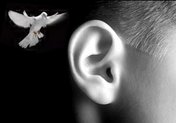
Peoples’ ears never itch to be
called to repentance! No! But God knew
that is what was needed! John the Baptist’s
preaching was induced by the Holy Spirit as was promised to his father,
Zechariah, by the angel of the Lord who said of John, “…he will be filled with the Holy Spirit, even from his mother’s womb.
And he will turn many of the children of Israel to the Lord their God, and he
will go before him in the spirit and power of Elijah, to turn the hearts of the
fathers to the children, and the disobedient to the wisdom of the just, to make
ready for the Lord a people prepared.” (Luke 1:15–17 ESV)
The only reason John, with his hard looks and message, drew
and baptised people for the repentance of their sins, was that the Holy Spirit
was doing the work of softening hearts!
To most today, even within the walls of churches, the way
of John the Baptist, seems the way of foolishness. However, “the
foolishness of God is wiser than men, and the weakness of God is stronger than
men.” (1 Corinthians 1:25 ESV) And “God
chose what is foolish in the world to shame the wise; God chose what is weak in
the world to shame the strong.” (1 Corinthians 1:27 ESV) Also, “Let no one deceive himself. If anyone among
you thinks that he is wise in this age, let him become a fool that he may
become wise.” (1 Corinthians 3:18 ESV)
John the Baptist was not concerned about what people
thought. His care factor was zero and it
shows in the way he dressed, in what he ate, in what he said, and to whom he
said it! Rather, he was concerned about
God and the message he called him to proclaim. Led by the Holy Spirit, John walked the highway of heaven, albeit by the
humblest of ways! This way Isaiah names the
Way of Holiness. He may have looked like
a fool following this way, but his foolishness shamed the wise of the world.
As God’s people we are called to follow the Way of Holiness. Some are called to be prophetic speakers on
behalf of God, for his glory, and patiently endure suffering from sinners
inside and outside the church. However, all
are called to follow God’s word, on his Way of Holiness. It makes no difference if it’s a bishop or a fledgling
disciple, whether one is seemingly wise or foolish, none are above God or the word
he sends through his messengers, no matter how unpopular it seems.
Because some of us have been marinating in the way of the
world for most of our lives, we’re deceived into thinking we can choose who and
what we want to hear when it comes to God speaking to us. How might it make you feel when someone chooses
to ignore what you say? Now consider how
God feels about us when we choose to reject what he wants.
Jesus endured similar anger and rejection. “Consider
him who endured from sinners such hostility against himself, so that you may
not grow weary or fainthearted.” (Hebrews 12:3 ESV)
This consideration goes both ways! Firstly, you’re called to consider the hostility
Jesus endured from sinners to save you.
Hostility that put him on the cross.
Secondly, you’re called to consider what could happen to you when you
also act in hostile or passive aggressive ways towards those God sends in the
name of Jesus to lead you to eternal salvation!
Are your actions in accord with the Way of Holiness?
In your consideration, let the Holy Spirit determine in you
if you’re hearing God through those, he has sent to proclaim his word. Establish
where your glory is going in your conduct. Is your foolishness, folly to the world, or is
your foolishness, folly in the eyes of God?
Consider your grumbling might be against God when you
grumble against God’s called servants. We’re told, “Do not grumble against one another, brothers, so that you may not be
judged; behold, the Judge is standing at the door. As an example of suffering
and patience, brothers, take the prophets who spoke in the name of the Lord.”
(James 5:9–10 ESV)
It’s better to be judged by the world as a prophetic fool
and receive mercy from God who forgives repentant people who seem like fools. Alternatively, it’s foolish to be judged faithful
by the world and reject God’s faithfulness in sending you, his servants, even when
their prophetic message seems foolish in popular thought. All need to consider what foolishness to
follow. Foolishness that follows the Way of Holiness, or foolishness that falls
and follows a hellish way thereafter!
Every person needs to pray for the Holy Spirit’s help to
test the spirits! To test the prophets, to test the bishops, to test your pastor,
and establish which way is truly the Way of Holiness. Not all ways are ways of forwarding the faith
to future generations and glorifying God! Other “ways” that glorify itching
ears, popularity, immediate gratification, visual growth, and deviation from
God’s word might forward the fruit people want. But when these ways are not the Way of
Holiness, Jesus’ way, truth, or life, they won’t faithfully forward the eternal
fruit God desires.
We are called to, “Remember
your leaders, those who spoke to you the word of God. Consider the outcome of
their way of life, and imitate their faith. Jesus Christ is the same yesterday
and today and forever.” (Hebrews 13:7–8 ESV)
However, don’t just blindly be led by those who lead. After all, Jesus confronted the blind guides of
Judaism, and they put him on the cross. Jesus
Christ is the same yesterday and today and forever. Therefore, allow the Holy
Spirit to make sure your guides have been sent by Jesus to lead you to the
cross for eternal salvation. Make sure
you are not re-sacrificing Christ on a false prophet’s cross of vainglory and eternal
shame. Amen.