Saturday, July 09, 2011

A, Pentecost 4 Proper 10 Matthew 13:9; Isaiah 55:10-11 “He who has Ears”

He Who Has Ears
A sermon on Matthew 13:9; Isaiah 55:10-11
Pentecost 4 Proper 10 (Year A)
10/07/11 Pastor Heath Pukallus Katanning-Narrogin Lutheran Parish

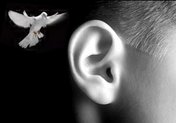
Jesus says, "He who has ears let him here!" This is a strange phrase! It sounds as if there were those around the place without ears. Some people are born without ears, some lose the outer ear through accident or skin cancer, and some are born deaf. But this is not what Jesus is talking about here. The deformity was not physical but rather spiritual, as the people had perfectly good ears, but some were not prepared to stop and hear Jesus speak to their hearts; into their personal situation.

One of the teachers at seminary, often remarked, the organ of faith is the ear. Faith enters us through the ear. We believe in many things that grow out of our experience, our education, or our environment, but true faith comes to those whose ears are permitted to hear the word of God.

The reason faith may not come to someone is because the person fails to trust in the word of God. The readings this week focus extra attention on the word of God, calling us to see it is not God nor his word that need to be reviewed, but rather you and me need to render our hearts so we can be returned to the only thing that matters in a mortal's life. In other words if you wish to dwell in the eternal kingdom of heaven, let you who have ears hear!

In Isaiah 55 we're told quite clearly, "For as the rain and the snow come down from heaven and do not return there but water the earth, making it bring forth and sprout, giving seed to the sower and bread to the eater, so shall my word be that goes out from my mouth; it shall not return to me empty, but it shall accomplish that which I purpose, and shall succeed in the thing for which I sent it." (Isaiah 55:10–11 ESV)

Yet mistrust over things like rain coming are common, and even greater faithlessness in God to provide regardless of feast or famine. So if we can't even trust God's promise in his word to provide seed and bread, the earthly things, how much more is the unbelief in the eternal things promised which are never seen in this life without faith? If you can't trust God for the simple seen things, how do you expect to trust him for the hidden treasures of heaven?

Make no mistake, we stand at the crossroads. It's time you allowed Christ to lead you as he did St Stephen. Is this congregation going to glorify Christ in its members' move towards death? And therefore grow in faith as a congregation in this place. Or, is it going to die not having allowed God to let his word water it and return to heaven having done what he intends it to do?

Jesus tells the parable of the seed scattered in different places; on a path, on rocky ground, amongst thorns, and then in good soil. What is the same for each seed? It dies! Every seed the sower casts, dies, but only the seed sown on good soil brings glory to he who has sown it. Like Saint Stephen it is God's will for you to lay down your lives as living sacrifices bringing glory to God and allowing faith to increase within, rather than continue dying while trying to keep up appearances.

At this point there will be some of you who are shutting down to what God is saying to you. Indeed the hammer of the law has fallen hard, and it needs to! But my prayer and God's will is that a majority of you are struck in the core of your being by the Holy Spirit and want to know, how we might be this "good soil" so God is glorified in our dying and we as individuals are caught up into the bountiful harvest at the Lord's return?

It can all be summed up in the simple words of Jesus – He who has ears let him here! Now one might joke that without ears, someone who needs to wear glasses will not see either. On what does one hang their glasses if they have no ears? But spiritually speaking this is no joke, it’s truth. Without ears to hear, one will not see or eternally experience God’s love, instead only his wrath and separation.

The greatest problem is not that we don’t have ears, but that you with ears are keeping them from hearing God’s word. This is either done practically by not regularly bringing your ears into the hearing of his word, mainly due to hardness of heart. Or, the worries of this world choke you and deafen you to his word. Or, there’s an expectation that the word is a quick fix and when in sinfulness it doesn’t suit you, you let the word within die.

But why anyone would have that for themselves by thinking they don't need to hear God is beyond me! Jesus has already bore the wrath of God on the cross and now he seeks to lift us up in glory through his resurrected power over death! St Stephen died full of the Holy Spirit trusting in this resurrection power. In fact he saw the glory of the Father and Jesus at his side as his assailants covered their ears and stoned him to death as he proclaimed the resurrection. God calls you to unblock your ears and hear. He who has ears let him here!

Just about any soil can be made good if it's acted upon. Even good soil not acted upon in the right way can become saline and good for nothing. So while we have ears to hear there is hope. But you who cut yourselves off from hearing God is like soil which refuses to receive water and nutrient becoming more and more a wasteland. Yet it need not be like this at all!

Hearing with ears connected to the heart allows the Holy Spirit to work deep within us, rooting out the darkness of sin, taking the salinity out of the soil. Unlike the saltpans left to produce nothing, showing the dying and dead trees of a bygone era, when God exposes the salinity of sin in you he excavates it leaving rich organic soil worked by the Holy Spirit. And the sin he takes out is heaped on a hill called Calvary.

He who has ears let him here!

But there's a final part to this message. When you allow yourself to hear, you are allowing the community of God to work upon you.

We are not called to read the word of God. Don't get me wrong, there's nothing wrong with reading the bible, but it happens in response to hearing it. Hearing however, calls you into community, first with the Trinity, and then with all others who have been called into this triune fellowship.

It takes one to read but it takes a community to hear. God the Father speaks to you, he speaks his Word, and this is Jesus Christ – the "Word made Flesh". And when he speaks the Holy Spirit is the carrier of the Word made Flesh to the ear and the heart. This in turn switches on the eye of faith so we might see the faith community here on earth and those who are in need of hearing the word of God. Others who like us were once dying seed on rocky, hard, thorn strewn ground.

And as the Holy Spirit uses us to enrich others with Jesus' gifts, he also continues his residual effect in us of tilling and fertilising us with forgiveness and faith in the gifts of Jesus' body and blood and written word.

So what is it for us and our congregation? There are worse times just ahead. Strife we Australians have never experienced is coming and it will devastate all who trust in themselves. But for those who have ears to hear, faith will only increase in the midst of suffering, just as St Stephen's faith held fast in his hour of death.

It's more crucial to rend the heart at the moment, than the garment! Now is the time to allow the depths of the heart to be worked with the Word of God, so the salinity of sin deep within can be saturated in forgiveness and salvation. Those who have ears to hear will allow God's word to return to him having done what God sent it to do! Amen.

Friday, July 01, 2011

A, Pentecost 3 Proper 9 – Matthew 11:16-19, 25-30; Romans 7:15-25a “It Croaks and then it Croaks”

It Croaks and then it Croaks
A sermon on Matt 11:16-19, 25-30, and Romans 7:15-25a
3rd Sunday after Pentecost (Proper 9, YR a) 6/07/11
by Ps Heath Pukallus Katanning Narrogin Lutheran Parish

Key Texts

'15 I do not understand what I do. For what I want to do I do not do, but what I hate I do. 18 I know that nothing good lives in me, that is, in my sinful nature. For I have the desire to do what is good, but I cannot carry it out. 19 For what I do is not the good I want to do; no, the evil I do not want to do—this I keep on doing. 24 What a wretched man I am! Who will rescue me from this body of death?' (Romans 7:15, 18-19, 24 NIV)

18 "For John came neither eating nor drinking, and they say, 'He has a demon.' 19 The Son of Man came eating and drinking, and they say, 'Here is a glutton and a drunkard, a friend of tax collectors and "sinners."' But wisdom is proved right by her actions. 27 All things have been committed to me by my Father. No one knows the Son except the Father, and no one knows the Father except the Son and those to whom the Son chooses to reveal him. 28 Come to me, all you who are weary and burdened, and I will give you rest. 29 Take my yoke upon you and learn from me, for I am gentle and humble in heart, and you will find rest for your souls. 30 For my yoke is easy and my burden is light." (Matthew 11:18-19, 27-30 NIV)

Sermon

There was a little frog who came up out of the ground when it began to rain. As he came up through the mud and darkness he realised he had company with many other frogs. They sat in the rain and croaked; in fact so much so, that the croaks of a thousand frogs created such a din that nobody could hear a thing. These frogs are noticeable and identified by their call; yeah-but yeah-but yeah-but yeah-but. Maybe you have heard one lately!

From the Word of God Jesus says, 'Come to me all you who are weary and burdened and I will give you rest'…yeah-but yeah-but. 'Go and make disciple of all nations baptising them in the name of the Father and of the Son and of the Holy Spirit, and teach them to obey everything I have told you'…yeah-but yeah-but. 'Blessed are you when people insult you persecute you and falsely say all kinds of evil against you because of me'…yeah-but yeah-but. 'If you forgive those when they sin against you, your Heavenly Father will also forgive you. But if you do not forgive them their sins your Father will not forgive your sins'…yeah-but yeah-but. 'Whoever believes and is baptised will be saved'…yeah-but yeah-but

The frogs get very noisy these days. It's hard to hear the word of God with all their croaking. From where is that sound coming, I wonder? Sometimes it's even harder to hear Jesus tell me just what he has done for me. 'I am the way the truth and the life, no one comes to the Father except through me'…yeah-but yeah-but. 'I am with you always even to the end of the age'…yeah-but yeah-but. 'The Son of Man did not come to be served, but to serve and give his life as a random for many'…yeah-but yeah-but. 'The Son of Man will be betrayed to the chief priests and the teachers of the law. They will condemn him to death and will turn him over to the Gentiles to be mocked and flogged and crucified. On the third day he will be raised to life'… yeah-but yeah-but. 'Take eat and drink this is my body, this is my blood given and shed for you'…yeah-but yeah-but. I'm sick of that noise where is it coming from?

That frog is wallowing in the mud alright, wallowing and croaking doubt within me! You've probably heard that same species of frog croaking in you. It never really seems to go away. Yeah-but Jesus that's too ridiculous to believe. Yeah-but they are not Christians see how they acts. Yeah-but if I can just prove it then I will believe. Yeah-but why should I forgive them I am much better than them. Are the frogs of doubt, the frogs of mis-trust, the frogs of self-importance, the busy feel good frogs of human understanding so loud in you that you fail to hear God or receive the benefits from being in his rest?

Jesus likened his generation to children rather that frogs. Kids playing with each other in the marketplace squabbling and fighting because one won't play and dance while others won't be mellow and mourn. A parent might say, 'you shouldn't have started the fight!' And then all the excused follow, 'yeah-but yeah-but yeah-but'. In Jesus' generation and today he calls us to be discerning; he calls us to sharpen our focus, train our ear, and silence our tongues so we might hear his word, repent, and receive the forgiveness we all need so desperately.

Jesus tells us those who are not discerning are in dire trouble on the day of judgement if they do not repent. Against those who excuse him Jesus denounced their cities in which his miracles were performed, because they did not repent. Like our little frog croaking, so much so, he doesn't stop long enough to be fed, dying once the mud returns to a hard clay pan, so too are those who find every excuse to croak about themselves rather than receive the life giving food of God and repent. The one who croaks loudest croaks it first! These little frogs are prophets of evil and death!

Who are you? Who am I? Why am I the way I am? What makes me do the things I do? These are all very good questions for us Christians on the quest of recognising who we are, as we struggle with sin, and all the baggage these noisy little frogs croak up in us, trying to distract us and those with whom we come in contact.

In Paul's letter to the Romans, he gives us a very privileged look at his disgust with the frogs of evil that harm him. Paul bears his soul to us and struggles with who he is; he is a Christian and hears the Word of God, he is a sinner croaking within and carrying it out. This text in Romans seven is a hard text to digest. I encourage you to dissect it, but for now hear the confusion and angst bubble over as Paul writhes with his reality under Christ and the reality of living with sin in this life. Hear and know that it is not just you who struggles with the frogs of evil. '15 I do not understand what I do. For what I want to do I do not do, but what I hate I do. 18 I know that nothing good lives in me, that is, in my sinful nature. For I have the desire to do what is good, but I cannot carry it out. 19 For what I do is not the good I want to do; no, the evil I do not want to do—this I keep on doing. 22 For in my inner being I delight in God's law; 23 but I see another law at work in the members of my body, waging war against the law of my mind and making me a prisoner of the law of sin at work within my members. 24 What a wretched man I am! Who will rescue me from this body of death?' (Romans 7:15, 18-19, 22-24)

These would have to be some of the most passionate words spoken by Paul. You might think he should have it all together being a noteworthy apostle; having been confronted by Jesus himself on the road to Damascus and undergoing the definitive conversion experience. But troubled by sin and death he cries out, 'Who will rescue me from death?'

It might seem that we are failures in our Christian lives. So often we only hear the croaking death knells of sin. In fact we see the destruction we cause to ourselves and others all around us, and continually croak, yeah-but to excuse it. But Jesus calls us to stop croaking and rest in him. Yes, stop, listen, and rest!

Listen to this, 'No one knows the Father except the Son and those to whom the Son chooses to reveal him.' That is you to whom he has chosen to reveal the Father. And before those little frog croaks begin again, let me give you a "but" from God. One to silence all the yeah-buts within. 'But now a righteousness from God, apart from law, has been made known, to which the Law and the Prophets testify. This righteousness from God comes through faith in Jesus Christ to all who believe. There is no difference, for all have sinned and fall short of the glory of God, and are justified freely by his grace through the redemption that came by Christ Jesus. Where, then, is boasting? It is excluded. On what principle? On that of observing the law? No, but on that of faith. (Rom 3:21-24) God says, 'you are a sinner, yeah-but you are my child now because of Jesus Christ'.

In the gospel we hear that John came neither eating nor drinking and they said yeah-but he has a demon. Let God's messengers reveal to you the demon-like yeah-but frogs croaking in you, so you might repent and seek forgiveness. We also hear Jesus came eating and drinking and they said yeah-but he is a glutton and a drunk, a friend of tax collectors and sinners. Let Jesus carry the gluttony and debauchery of your sinful lives. Let him take your sin to the cross so that it no longer weighs you down, let him take the guilt of your sin on himself, so that sin has no power in your lives even though the frogs will never go away while you live in this life. Let Jesus, the wisdom of God, prove you right before God. After all, as we have heard in the gospel, wisdom is proved right by her actions. (Matt 11:19) God is proved right by the actions of Christ on the cross, for you and me!

Jesus says in the Word of God, "Come to me, all you who are weary and burdened, and I will give you rest. Take my yoke upon you and learn from me, for I am gentle and humble in heart, and you will find rest for your souls. For my yoke is easy and my burden is light." So hold back the croak of death and put on the yoke of Jesus instead. To Jesus Christ and him alone, let us flea. Amen.

Prayer
"I praise you, Father, Lord of heaven and earth, because you have hidden these things from the wise and learned, and revealed them to us, your little children. Yes, Father, for this was your good pleasure." Amen

Saturday, June 18, 2011

A, Trinity Sunday – Matthew 28:16-20; 2 Corinthians 13:11-14 “God With You”

God With You
A sermon on Matthew 28:16-20; 2 Corinthians 13:11-14
Holy Trinity Sunday (Year A)
19/06/11
Pastor Heath Pukallus Katanning-Narrogin Lutheran Parish

The church is full of language not common to the person on the street. In fact, even amongst us who use these words regularly, if tested we would be hard pressed to justify the jargon we use.

What is faith? What is grace? What is justification or righteousness? What is the gospel? What is peace, or sanctification? What are these things and just as important, what are they not?

If abruptly approached in the street and asked, "Why do you go to church? What do you believe? What does all this church jargon mean?", how would you respond? All of us would be set back on our heels, gasping for an appropriate answer.

So let's unpack the jargon a little, which in fact is a part of what happens in Sunday School and Confirmation. But, why should we be jargon busters? Why deconstruct church terminology? So we know what it is we believe and so we're better equipped to engage the friend, the neighbour, or even the enemy when they inevitably ask about who we are and what makes us tick as Christians.

But before we do this, a word on why we teach our children in Sunday School and around the family table, and our young adults in Confirmation, and all of us in sermons and bible studies.

We hear in the Gospel today Jesus' command to baptise! Not just baptise but to teach as well! He commands saying…

"Go therefore and make disciples of all nations, baptizing them in the name of the Father and of the Son and of the Holy Spirit, teaching them to observe all that I have commanded you." (Matthew 28:19–20a ESV)

Do you hear the commands? Go! Make! Baptising! Teaching! Here Jesus gives parents and the church the how, the what, and the where. We might well also ask, "What does this mean?" But from experience, I believe, this is where many of us become confused seeking to explain how God's work affects my being – what's it mean to me? However, it's better to answer the primary point of the Gospel and that's not "what it means" but rather "what God does and why he needs to do it"!

The work of God is a whole lot easier to explain than the confusion within us, which really only God understands! Besides, how God works is the same for every person! But on receiving his work through baptism and teaching, there's a myriad of possible responses in those who believe what they've received. Therefore, the exercise of testifying to what we believe is best left to concisely explain what God has done and is doing, rather than delving into the "what's it mean for me" question.

So what does the Father, Son, and Holy Spirit do? And how do they do it? The most critical point in all of God's doing can be read in the last verse of Matthew's Gospel account. God promises you and me with yet another command…

And behold, I am with you always, to the end of the age." (Matthew 28:20b ESV)

Matthew end's his account with lasting words of Jesus by saying "behold", or perhaps better understood as "See!", "Look!", "Attention!" We hear Jesus' promise with an exclamation, "Hey! Know I am with you always!"

This comes as comfort to us for we don't go, make, baptise, teach, or do anything without God being present. Although he's not seen in the regular sense, we can rest on this promise as we live out our calling as Christians.

It's actually in God that we live and move and have our being. No longer has God withdrawn his presence from us who believe, as he did for four hundred years when the Israelites were in Egypt or for four hundred years prior to Jesus' birth as Immanuel. So just as Jesus was born as Immanuel, God with us, he continues to be with us, being born in us so we might live in peace with God.

And so the next piece of Jargon we need to unpack is the last verse in Second Corinthians. In doing so we can apply the simple but often overlooked practise of letting the word of God interpret the word of God. Rather than seeking to conform God's word and will into of our will. In other words, we need to let God do what God needs to do to our desires and determination rather than being determined to force God and his word into our narrow-minded perception of ourselves and the creation around us.

We hear the last words from Paul to the church in Corinth… Finally, brothers, rejoice. Aim for restoration, comfort one another, agree with one another, live in peace; and the God of love and peace will be with you. Greet one another with a holy kiss. All the saints greet you. The grace of the Lord Jesus Christ and the love of God and the fellowship of the Holy Spirit be with you all. (2 Corinthians 13:11–14 ESV)

Here is a whole bunch of church terminology set to baffle the untrained ear. Words like peace, grace, fellowship, comfort, love, restoration, and saints can confound us in knowing what is going on. But from the outset we have the same promise here as in Matthew 28… that God will be with you.

How is he with us? By the blessing promised in his word as we hear it. The grace of Jesus Christ, the love of God, and the Holy Spirit's fellowship are exactly what we receive. But what are they, what do they do, and how do they do it?

If I were to ask confirmation students what grace is? I would expect that after much of the confirmation course hearing me bang on about grace, they would say it's "Jesus' death on the cross – for me!" And they might also tell me grace is, a gift, the Good News, or the Gospel.

What does Jesus do with this grace? That's easily explained if grace is a gift, the Good News or the Gospel "for me" – Jesus gives it to me; he gives it to you, for free, as a gift! This is why it's such good news!

The love of God the Father is next. What is his love? And what does it do? Firstly, his love is about being in the same place as God, co-existing, living under his favour, free from blame.

And Secondly, how is this done! The example we look to here is Jesus cry to God the Father in Gethsemane, "Abba"! God's love allows us access to God just as a child has access to its father by saying "dad-da or daddy". God's love for Jesus his Son allow Jesus complete confidence to call out, "Dad-da, Abba save me from this hour of death".

God's love allows us to call out to him as our most personal caring Daddy. But his love comes to us and we can come into his being of love because of Jesus' grace given to you and me at the cross and at baptism. God's love is all about restoration and rejoining us with him and the creation he lovingly gives us but has been polluted because of our sin. God's love is about living in peace, being at peace, and allowing his peace to flow through us so our hearts and minds are kept in him.

How does this happens? How do we know about the Father and his holy loving being that allowed Jesus to be the great love offering for us on the cross? How do we know it's safe for us to be in God's perfect presence without copping it as a result of our far from perfect existence? Furthermore, how do really know about Jesus, and the work he's done for me?

Thankfully, we have the Holy Spirit doing what the Holy Spirit was sent to do. This is the work of fellowship! This is the work of making holy individuals, bringing us together into a community with each other and God, and teaching this community how it is they as individuals and as a common group believe they are saved sinners with access to a loving God. In short his work is to give us faith.

The Holy Spirit comes from Jesus Christ and God the Father, to bring you to attention to make you holy, to gather you, and teach you. That is why Scripture says, no one can say Jesus is Lord except in the Holy Spirit (1 Cor 12:3).

We bust jargon for one purpose: to know how God's relationship with us occurs in a practical way. Then, we can live with eternal confidence and bear witness to God's assurance in a life eternal with him.

But even here on earth, as we struggle with understanding, living, and seeking to do the right thing by our families and neighbours, we know we have God with us despite who we really are, but usually keep hidden.

We can as Paul encourages — be joyful, aim for reconciliation, and agree, comfort, and live in peace with each other. Why? Because God is doing the very same thing with us by means of the grace of Jesus Christ, the love of God the Father, and the fellowship of the Holy Spirit.

In grace God brings joy, through the love of God he seeks reconciliation, and in fellowship the Holy Spirit brings us as one holy community into community with each other worshipping and glorifying God.

God is with us and we are with God. This is what God calls us to see. Perhaps this is the difference others see in us leading them to ask about "what we believe"!

God is with you! Therefore go and make disciples of all people because it is God who seeks to do it by using you! Amen.

Saturday, June 04, 2011

A, Easter 7 – John 17:11b-12 “In His Name”

IN HIS NAME
A sermon on John 17:11b-12
The Seventh Sunday of Easter (Year A) 5/06/11
Pastor Heath Pukallus Katanning-Narrogin Lutheran Parish

This prayer in John 17 is known as "the High Priestly Prayer". Jesus prays it just before his betrayal, arrest and crucifixion. Perhaps what we hear here in John 17 might have been some of the content of Jesus' prayer in the Garden of Gethsemane recorded in the other Gospels. Yet as Jesus is led to the horrendous events about to be subjected upon him, we find him praying this High Priestly Prayer.

He is about to enter in and make the atonement sacrifice just as the high priest would have done in Old Testament Israelite tradition. Yet here he is the not only the high priest he is the sacrifice too. He is entering into death for you. And it's his sacrifice on the cross which enables him to pray in the way he does, atoning for your sin and unifying all of us, forgiven believing sinners, with him before the Heavenly Father.

Although not the central focus for the address today, there's a healthy lesson here for us to see modelled in Jesus' actions. And not only is it modelled for our observation, Jesus does it for us too.

As Jesus nears the chaotic events of Good Friday and his death, he is drawn into prayer. As the going gets tough, Jesus doesn't get tough, nor does he get going; rather he stops to pray more and more.

This is a reminder for us to turn from our faithless efforts in times of fiery trials towards our Father in prayer. When we pray we face God and not the problem. The action of prayer literally leads us from anxiety and worry working within, to exhausting the issue onto God's plate. And in doing so we open up the avenue for God to give us peace despite the trials we face.

But even greater than this moral lesson is the fact that as we enter into times of trouble Jesus has not just given us a template of prayer, we can be reassured that he has entered into the eternal realm face to face with God the Father, and prays for us. Now that we are one with him through baptism into Jesus' death on the cross and resurrection, the prayer Jesus prayed here on earth in John 17 is fulfilled and is eternally being fulfilled for all who trust in him.

Why can we trust in Jesus, why can we know he prays for us? Because we're told just that in his word over and over again. As you listen be reassured by the what is written…

…We have such a high priest, one who is seated at the right hand of the throne of the Majesty in heaven, a minister in the holy places, in the true tent that the Lord set up, not man. (Hebrews 8:1–2 ESV)

and…

Christ has entered… into heaven itself, now to appear in the presence of God on our behalf. (Hebrews 9:24 ESV)

And still if that's not convincing enough, it is written…

Consequently, he is able to save to the uttermost those who draw near to God through him, since he always lives to make intercession for them. (Hebrews 7:25 ESV)

So while he was on earth he prayed and now before the Father he prays. And as he prays we know this prayer is effective because Jesus prays…

Holy Father, keep them in your name, which you have given me, that they may be one, even as we are one. While I was with them, I kept them in your name, which you have given me. I have guarded them, and not one of them has been lost except the son of destruction, that the Scripture might be fulfilled. (John 17:11–12 ESV)

His prayer for those who believe him is effective because we are kept in God's name. That is the name of the Father, and of the Son, and of the Holy Spirit. And we know the Father and receive the Holy Spirit as a result of the work of God's Son, Jesus Christ.

But what is it to be kept in God's name? Why do we pray in God's name? Why is our help in the name of the Lord? What's this "name" business? Are we not one with God, surely then we can just speak to him? We can and should speak with him just as a child speaks to its loving father, but we should also address him by name, call on him by name, and believe we are heard and helped by praying in his name.

Firstly, Jesus prays that all believers are kept in God's name, the very same name he has given to Jesus. This is the name of identification. We know being in Christ is being in God the Father. We are identified as God's children, through Jesus' identification as being the One and Only Son of the God. This is reassuring for us having been adopted as God's children. If Jesus hadn't received God's name then how could we be sure we could enter into God presence and receive peace that will endure into eternity?

So being kept in God's name allows you to know God, but it also allows you to be known as his child too. You receive God's identity and being which are one and the same as his name. In the same way you are known as the child of your earthly father by name, and if your family is known then your name reveals a lot about you to others, even before they might meet you face to face.

We are identified as beings of God. We have God's stamp on us, we bear Christ inwardly and outwardly as he lives in us and the Holy Spirit bears the fruits of Christ from within us. Just like a coin which bears the image of its country's sovereign. Or, the envoy who bears a letter or message from a monarch whose seal is placed on the letter by way of their signet ring. We bear the image of our Creator, Saviour, and Sanctifier.

And because we know God as our Father, Jesus as our saving brother, and the Holy Spirit as the one who works our wills with God's word, and are therefore known by those around us as his children, you all can be sure you will not fall into eternal destruction. You can trust this new holy identity, and existence, given to you and sustained in you.

Jesus prays that we are kept or guarded in his name. The holiness of God's name sustains and keeps us like a boundary or a fence placed around us to protect us from danger. This is danger both from that which is around you, as well as that which is within you, which if left without God's name being placed on you all of us would soon walk into eternal destruction.

God's name is holy in itself but we call on his name that it might be kept holy in our being. As this occurs in us we knowingly and unknowingly live out our everyday lives as living sacrifices to God; giving glory to him and shining his glory on those whom he calls you to serve.

There are many stumbling blocks in this life, which seek the undermine our identity as God's children and lead us away from knowing him and trusting in the power of his name. Peter tells us…

Be sober-minded; be watchful. Your adversary the devil prowls around like a roaring lion, seeking someone to devour. (1 Peter 5:8 ESV)

We cannot resist the devil by ourselves; yet firm in the faith given by the Holy Spirit, you can pray, turning away from his temptation towards your Father from whom you have his name of blessing and protection.

This boundary of protection we have in God's name, is best demonstrated by the words of Luther in his well known hymn "A Mighty Fortress" where in one verse is written…

Though devils all the world should fill,
All eager to devour us,
We tremble not, we fear no ill,
They shall not overpower us.
This world's prince may still
Scowl fierce as he will,
He can harm us none;
He's judged, for e'er undone;
One little word can fell him.

This world's prince is the devil whom Peter tells you is your adversary prowling around like a roaring lion looking for one to devour. But you need not be anxious, nor tremble, nor fear. Nor do you have to advance out to take on the devil at his own game. If you did he'd win every time!

Rather we stand against him and his evil entourage and resist by trusting in one little word — the name which keeps us. Our trust in his name proclaims their judgement and destruction as it keeps us and surrounds us with protection.

And the name that cuts down the devil and his demons is given to all of us to pray, as you pray with him — the Word made flesh — who is also interceding for you before the Father. And his holy name is Jesus Christ, our risen Lord. Amen.